Understanding Baby Pee: Wet Diapers, Frequency, Colour, and Smell


Key Takeaways
Trying to figure out baby pee? You're not alone—it's actually a big deal for keeping your newborn healthy and comfy! During those first few days, your baby's pee might be such a light yellow it's barely there, or you could spot a pink or orange stain in the diaper. That’s likely those harmless and common urate crystals in newborns showing up (generally not blood). This is common in the first 3–5 days as your little one settles into feeding and hydration. Once your baby starts feeding for real, you’ll probably see the pee getting clearer—and more wet diapers stacking up, which is a good sign of healthy newborn urine output.
The more you know about what's normal (and what to look out for), the more confident you'll feel taking care of your little one. Let's dig into what baby pee can say—and when to contact your healthcare provider.
How Many Wet Diapers Should a Newborn Have?
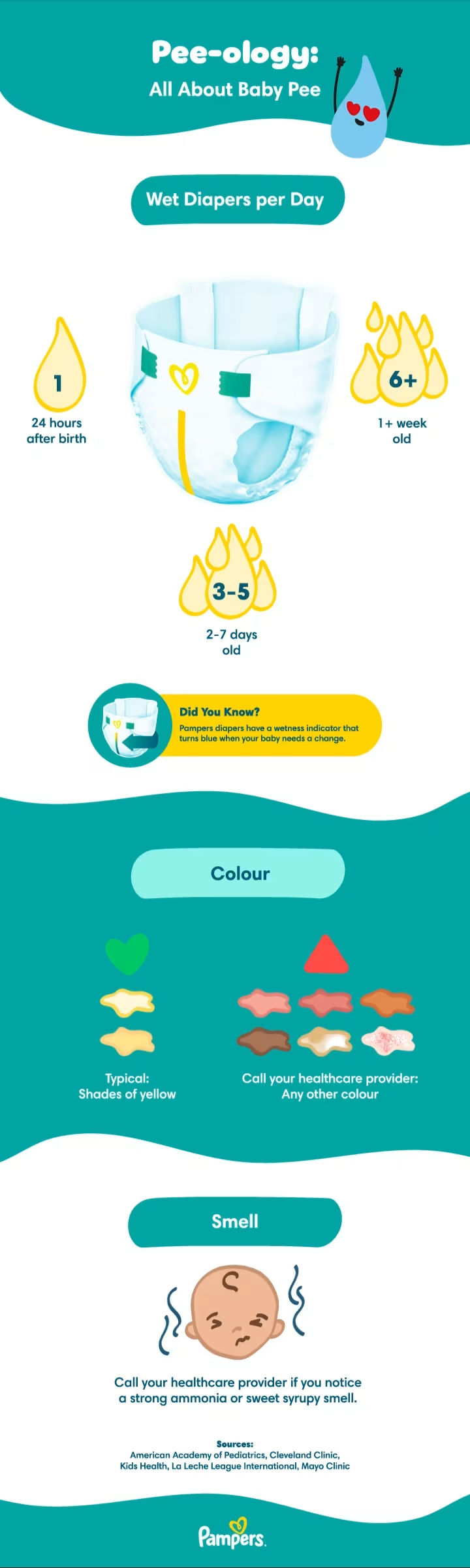
Ever wonder if you're tossing out enough diapers? Honest answer—everyone does! Most babies only have one pee (so, one wet diaper) in the first 24 hours. Once your little one gets the hang of feeding, you’ll likely notice those diapers filling up more often. After about a week, most parents notice at least six wet adiapers a day. This generally indicates healthy newborn urine production.
Counting diapers is a great way to learn your baby's bathroom routine. All babies are a little different! Some pee every one or two hours, others every few. Aiming for around 6 wet diapers a day is a good ballpark—remember, how many wet diapers for a newborn may vary from baby to baby.
If you’re curious about how many diapers-per-day is "right," it’s best to go by weight and size rather than age. Here’s a chart to help you figure out what to expect on diaper duty:
| How Many Diapers per Day Chart by Weight and Size | |||
|---|---|---|---|
| Pampers diaper size | Baby weight (in pounds) | Average number of diapers per day* | How long your baby might need this size (in months) |
| Size P1 diapers | <6 | varies by need | varies by need |
| Size N diapers | <10 | up to 10 | 1.6 |
| Size 1 diapers | 8-14 | up to 9 | 1.7 |
| Size 2 diapers | 10-22 | up to 8 | 2.8 |
| Size 3 diapers | 13-26 | up to 7 | 5.8 |
| Size 4 diapers | 15-34 | up to 7 | 6.8 |
| Size 5 diapers | 20-37 | up to 6 | 5 |
| Size 6 diapers | 23-44 | up to 6 | 5.8 |
| Size 7 diapers | 26-50 | up to 6 | 4.1 |
| Size 8 diapers | 30+ | varies | varies by need |
What Does It Mean if Your Baby Is Not Peeing?
If you don’t see many wet diapers (fewer than 4 a day after day 5), your baby could:
Producing less urine during illness, fever, or when it’s hot outside is pretty common—it can drop by half! But as soon as your baby feels better or the weather cools, things generally bounce back.
If your newborn is not eating enough, that might be another reason why they're producing less urine. And honestly, breastfeeding makes it super tough to know exactly how much they’re getting. Beyond peeing in a diaper and pooping less, watch for extra sleepiness or your baby snoozing for four hours or more at a time. Those are signs to reach out to your baby's healthcare provider.
If your baby still isn’t peeing after being sick, after a hot spot of weather, when there’s no other explanation, or goes 6–8 hours without peeing, call your provider (especially for newborns).
What Does It Mean if Your Baby Is Peeing a Lot?
Peeing loads? Most of the time, this is awesome news and just means your little one is eating well. In the first month, six wet diapers a day usually means plenty of food and a healthy, hydrated baby—especially when you’re breastfeeding, and milk supply is established. This can be reassuring, especially when wondering how many wet nappies for newborns are normal.
If you notice your baby is peeing way more than what seems typical (like more than once an hour), or something seems a bit off, contact your healthcare provider. Sometimes, peeing more frequently can come with a urinary tract infection (UTI)—watch for crying or tension while peeing.
In Summary
Newborn Pee Colour
Most newborn urine is pale yellow (totally healthy)—super dark yellow usually means your baby needs more fluids and might be a hint of dehydration.
Your baby’s pee colour is almost exactly like a grown-up’s: from barely-there yellow to richer yellow. The darker it is, the more concentrated. If your newborn's urine is a very dark shade, it might mean they need a bit more breast milk or formula.
Although your baby’s urine may occasionally vary in colour, many shades are perfectly normal and not a cause for concern, while others could signal a potential issue.
Need a quick reference? Check our Baby Urine Colour Chart just below. Plus—we’ll talk about what light yellow, dark yellow, pink, red, orange, and even brown might mean for your baby.
Light to Dark Yellow Baby Pee
Yellow is what you want to see—especially light yellow! It means your baby’s well-fed and staying hydrated. The darker the yellow, the more concentrated, and that might mean your little one needs to feed a bit more (again, only breast milk or formula if they’re under six months! ).
Quick reminder: don’t give your little one water before 6 months. After that, you can slowly introduce small sips of water.
In Summary
Newborn pee that’s a yellow colour is healthy and normal. The lighter the colour, the better. When baby pee is dark yellow, it usually means the urine is highly concentrated, and your little one may need some more fluids (only breast milk or formula if younger than 6 months).
Pink, Orange, Red, or Brown Baby Pee
Pink, orange, red, or brown pee can mean all sorts of things. Some conditions are temporary, some are harmless, and some need medical attention.
Pink It’s easy to think you’re seeing blood, but it’s usually just very concentrated urine. If your baby is peeing plenty, you probably have nothing to worry about. That said, if the pinkish colour sticks around, contact your healthcare team just to be safe.
Baby girls: If you notice a pinkish stain in the diaper or what looks like blood in your newborn’s urine during the first week after birth, this is commonly caused by the birth parent’s hormones. If your baby girl continues to have pink spots on her diaper or pink pee after she turns 1 week old, contact her healthcare provider. Blood spots in your baby’s diaper or urine after the first week for baby girls (or in general for baby boys) are not normal.
Orange, Red, or Brown
These colours could mean there’s blood present. For any baby, blood in the pee (after week one for girls, any time for boys) is not normal and often means there’s something that needs checking—could be hematuria (medical term for blood in urine) and comes from things like:
If you see pink, orange, red, or brown pee, contact your child’s provider right away. If it’s hematuria, they’ll want to catch and treat it quickly.
Once your baby is eating solids, some strong colours (especially red) can come from food, like beets or blackberries! Still, if you’re unsure, reaching out to your provider is the best way to ease your mind.
In Summary
Pink pee is usually just concentrated urine, but red, orange, or brown can mean blood is present, which needs medical attention. Touch base with your healthcare provider—especially if you're concerned about newborn uric acid crystals.
Red or Brown and Cloudy Baby Pee
If pee is cloudy and tinted red or brown, it could be a UTI or a kidney infection (kidney infections are a type of UTI). If you notice this, don’t wait—contact your provider!
In Summary
What does cloudy urine mean? Cloudy urine with the presence of blood may indicate a UTI or a problem with the kidneys. Contact your child’s healthcare provider immediately.
“Brick Dust” Baby Pee
"Brick dust" pee has little red-brown crystals that look like dust in the diaper, often mistaken for blood. It’s usually from urate crystals in infants, common in the first days if your baby isn’t feeding enough. These crystals should disappear as feeds increase, but if they stick around or you’re unsure, contact your baby’s healthcare provider.
Blue or Green Baby Pee
Blue or green pee is super rare. Most often, it comes from certain foods, dyes, or medications. If it doesn’t go away in a day or two, ask your healthcare provider about it.
Parents also ask... Can baby pee change colour as they grow? Yes. As your baby gets older and tries new foods, you'll spot tiny changes in colour and smell. It's all good as long as things mostly stay a pale yellow. Can teething or trying new foods change pee smells? Yes. Teething and new foods can shift hydration a bit and might change odour or how often your baby pees. If your baby is comfortable and peeing regularly, you’re set. |
Baby Urine Colour Chart
Just like our baby poop colour chart, we’ve made one for pee, making it easier to figure out what your baby’s urine says, especially if you're tracking newborn urine colour changes.

Infant Urine Smells
Got a diaper that smells extra strong? Don’t worry, you’re not the only one! Let's talk about when that's normal, and when it might mean your baby needs some extra fluids or a trip to the doctor. Sometimes, strong-smelling newborn urine can be related to hydration levels.
Strong Smelling Urine in Babies
A little bit of smell is totally normal. If it’s really strong or comes with other symptoms, let your provider know.
If you ever get a whiff and wonder, "Is this right? "—sometimes super-strong pee can be from things like dehydration or a UTI. Ammonia-like smell, blood, cloudy pee, or your baby acting fussy means you should contact your healthcare provider. Be alert to other changes in newborn urine, too.
Toddlers can get UTIs too—especially if they’re potty training and suddenly have accidents or pain. If anything seems off, it's always best to check in.
It’s not always an infection. If your breastfed baby’s urine is dark and concentrated (and smells strong), it could just be dehydration—more breast milk or formula (not water before 6 months) usually helps. For parents, knowing how many wet diapers is normal for a newborn can help them spot dehydration quickly.
Sometimes it’s just food or medicine behind the smell! If you’re ever in doubt, reach out to your provider.
Sweet-Smelling Pee
If your baby’s pee smells sweet, kind of like maple syrup, it’s important to contact your healthcare provider right away. This could point to a rare but serious illness called Maple Syrup Urine Disease (MSUD), which makes it hard for the body to process certain foods. Diabetes can also cause sweet-smelling urine. Both need quick attention.
Baby Pee: Breastfed Vs Formula Fed
Does your breastfed or formula-fed baby’s urine smell strong? And are you wondering if there’s a difference in the smell? While some parents notice a difference in the smell of a baby’s urine depending on feeding type, medical guidelines do not confirm a consistent, feeding-type-specific odour difference. More pertinent factors include hydration, urine concentration, and whether there’s an infection.
Common questions: What’s the best diaper for keeping a baby dry? Pick a super-absorbent diaper that fits snug and doesn’t leak. Pampers diapers lock in wetness to keep your baby’s skin soft and healthy while keeping newborn urine away from the skin. Can diaper style affect how wetness shows up? Yep! Some diapers are so good at soaking up pee that you barely notice when it’s wet—especially ones with a Wetness Indicator, like lots of Pampers diapers. Checking every few hours is an easy way to keep your baby dry and happy. |
FAQs at a Glance
Healthy newborn urine is generally yellow—light, dark, or in between. Darker yellow just means it’s more concentrated, and your baby might need a bit more milk. Babies under 6 months? Stick to breast milk or formula. At 6 months, you can slowly offer water.
The Bottom Line
Lots of wet, light yellow diapers? That’s a healthy little one. If you worry about pee colour, smell, or number of diapers, just reach out to your provider—they’re there for you if you have concerns about newborn urine.
Baby pee is a bit more complicated than just diaper changes, but those changes give you a peek into your baby’s health. Keep tabs on pee colour, number of wet diapers, and even the smell—you'll spot problems early or get peace of mind. So remember:
Now you know what to look out for, you can change diapers with confidence. Want a reward for all that work? Download the Pampers Club App and get Pampers Cash for all those diapers!
The information in this article is based on the expert advice found in trusted medical and government sources, such as the American Academy of Pediatrics and the American College of Obstetricians and Gynecologists. You can find a full list of sources used for this article below. The content on this page should not replace professional medical advice. Always consult medical professionals for full diagnosis and treatment.
- American Academy of Pediatrics. Caring for Your Baby and Young Child: Birth to Age 5, 7th ed. (New York: Bantam Books, 2019).
- Cleveland Clinic: Urine Changes
- Cleveland Clinic: Maple Syrup Urine Disease
- Healthy Children: Bowel Movement & Urination
- Healthy Children: Signs of Dehydration in Infants and Children
- Kids Health: Blood in the Urine
- Kids Health: Bringing your baby home
- Kids Health: Fevers
- Kids Health: Urinary Tract Infections
- Kids Health: Vesicoureteral Reflux
- LLLI: Is my baby getting enough milk?
- Mayo Clinic: Glomerulonephritis
- Mayo Clinic: Kidney infections
- Mayo Clinic: Urine odor causes
- MedlinePlus: Urine odor
- NIH: Proteinuria and Hematuria in the Neonate
Baby Poop—The Ultimate Guide
Black, green, yellow, brown, red, or gray—baby poop can come in many different colours. Find out what your baby’s poop can tell you about their health.
Read more
How Many Newborn Diapers Do You Need?
While preparing for your baby’s arrival, you might ask yourself the question, “How many newborn diapers do I need?” We’ve got the answer and more!
Read more
Meconium: Your Baby’s First Poop
Meconium is your baby’s first poop. Find out what’s in meconium, how to deal with it, and when to contact your provider.
Read more
Swim Diapers: Fun and Mess-Free Water Play
Learn how swim diapers like Pampers Splashers keep your baby comfortable and protected in the water with leak-proof designs for worry-free fun.
Read more
Diaper Rash Home Remedies and Cures
Discover effective home remedies for diaper rash, tips on what to avoid, and when to seek medical advice.Keep your baby comfortable and rash-free.
Read more
How to Dispose of Diapers in the Best Way
Disposing of diapers requires more care than simply tossing them in the trash. Discover our expert tips and methods for disposing of diapers responsibly.
Read more
Diaper Rash Bleeding
Learn how to manage diaper rash bleeding, learn how to keep your baby comfortable, and when to contact a healthcare provider. Discover essential care tips here.
Read more
Diaper Bag Essentials and Checklist
Here is our must-have checklist for what to pack in your diaper bag. Discover the essentials and nice-to-haves, and learn some helpful diaper bag packing tips.
Read more
When and How to Use Diaper Cream for Your Baby
Are you wondering about the uses of diaper creams? Discover when to use them and follow our detailed step-by-step guide on how to apply them for the best results in protecting your baby’s sensitive skin.
Read more
Materials and Safety: What are Pampers Diapers Made of?
By Amy Wiford
Learn what's in Pampers products and our commitment to safety.
Read moreBaby Poop—The Ultimate Guide
Black, green, yellow, brown, red, or gray—baby poop can come in many different colours. Find out what your baby’s poop can tell you about their health.
Read moreHow Many Newborn Diapers Do You Need?
While preparing for your baby’s arrival, you might ask yourself the question, “How many newborn diapers do I need?” We’ve got the answer and more!
Read moreMeconium: Your Baby’s First Poop
Meconium is your baby’s first poop. Find out what’s in meconium, how to deal with it, and when to contact your provider.
Read moreSwim Diapers: Fun and Mess-Free Water Play
Learn how swim diapers like Pampers Splashers keep your baby comfortable and protected in the water with leak-proof designs for worry-free fun.
Read moreDiaper Rash Home Remedies and Cures
Discover effective home remedies for diaper rash, tips on what to avoid, and when to seek medical advice.Keep your baby comfortable and rash-free.
Read moreHow to Dispose of Diapers in the Best Way
Disposing of diapers requires more care than simply tossing them in the trash. Discover our expert tips and methods for disposing of diapers responsibly.
Read moreDiaper Rash Bleeding
Learn how to manage diaper rash bleeding, learn how to keep your baby comfortable, and when to contact a healthcare provider. Discover essential care tips here.
Read moreDiaper Bag Essentials and Checklist
Here is our must-have checklist for what to pack in your diaper bag. Discover the essentials and nice-to-haves, and learn some helpful diaper bag packing tips.
Read moreJoin Pampers Club and get:
- PAMPERS COUPONS
- TOOLS & QUIZZES
- PARENTING TIPS
 PAMPERS COUPONS
 TOOLS & QUIZZES
 PARENTING TIPS