
When Do Car Seats Expire?


You might notice that your milk, bread, and coupons have an expiration date, but did you know that car seats expire, too? Because this is such an important topic, we’ve rounded up all the essential details, including when and why car seats expire, how long they are good for, finding your car seat’s expiration date, and what to do once expired.
Why Do Car Seats Expire?
Perhaps it sounds odd that car seats have an expiration date but think of them like a sturdy pair of running shoes. After so many runs, the shoe’s materials break down and don’t support your feet and movement as they should. The same happens with a car seat, which weakens over time with constant use and exposure to heat and cold.
The purpose of a car seat is to keep your child safe when traveling—in the car, flying on an airplane, taking a taxi, etc. After so many uses, the materials wear down and aren’t as strong as they once were. Therefore, car seats have a specific lifespan and will eventually expire.
In Summary Why do car seats expire? Car seats have an expiration date because the parts and materials used to keep your child safe gradually weaken or wear down after constant use and because of exposure to heat and cold. |
How Long Do Car Seats Last?
If car seats have an expiration date, what is it? Every car seat brand is different, but all manufacturers must
Therefore, you shouldn’t use or buy a car seat that doesn’t meet the above criteria and that’s older than the date specified on your particular model.
Where Is the Car Seat Expiration Date?
To know exactly how long car seats are good for—whether using them for infants, babies, toddlers, or older kids—you can find the expiration date for your particular model on the bottom of the seat or stamped into the plastic car seat frame. If you can’t find the expiration date, contact the manufacturer.
If you purchased pieces separately (such as a separate base from the car seat itself) check each piece for an expiration date, as they could be different. This information will help you make an informed decision when purchasing and using a car seat for your child.
Car Seat Expiration After an Accident
There’s one big caveat to this expiration rule: If your car seat has been in a moderate or severe car crash, it immediately expires. In fact, some manufacturers advise replacing the car seat even after a minor accident (one defined as resulting in no outside car damage, no injuries, and no air bags detonating). If your car sustains any damage internally while in an accident, then your car seat might also be damaged.
With minor accidents, damage might not be noticeable to the naked eye, which is why some manufacturers recommend replacing car seats in these situations. Their mantra is, simply, it’s better to be safe than sorry.
However, before running to the store to purchase a new car seat try the following:
In Summary A car seat immediately expires after a moderate or severe car crash, even before it’s official expiration date. If you’ve had a minor accident, check with the manufacturer. In some cases, as long as there was no car damage, no visible damage to the car seat, no injuries, and no air bags detonating, you might still be able to use the car seat. |
New Vs. Used Car Seats
It’s best to always buy a new car seat, for expiration and recall purposes. With a new product, you know that it’ll keep your child safe, as it hasn’t been in an accident or recalled. With a used or older product, it becomes increasingly difficult to know the history of the product. Because the safety of your child is most important, we don’t recommend purchasing a used car seat.
However, it’s not always possible to purchase a brand-new car seat. In that case, consider the following before settling on a used product:
Do Car Seat Bases and Boosters Also Expire?
When replacing your car seat, it’s important to swap the entire product. Although it’s easy to assume the plastic base may break more than the cushy seat, the entire product is susceptible to regular wear and tear or damage during a crash. Therefore, it’s important to replace both the base and seat.
Of course, if you’re using a base that’s older than the seat, and you didn’t experience an accident, you can replace them separately as each piece expires. If you have any questions at all, contact the manufacturer.
Likewise, booster seats have an expiration date just like car seats. Check the expiration date on your specific model, and if buying used or after a car accident, adhere to the same advice above regarding car seats.
The Four Stages of Car Seats
To help you get a better idea about when to use car seats, boosters, and traditional seat belts, consider the four stages your child will experience:
In Summary Car seats and booster seats expire; check under the seat or on the frame of your particular model to find the specific expiration date. Try to always buy new a car seat when your current model has passed its expiration date or after any car accidents. However, if you must buy used, ensure that there’s a National Safety mark and no damage or recalls by consulting the manufacturer. |
Is it Illegal to Use an Expired Car Seat?
Yes, in Canada, car seat safety regulations require all children to use an appropriate restraint and anchor system (car seat or booster seat). Additionally, provincial and territorial laws require car seats and boosters to be certified by Canada Motor Vehicle Safety Standards and used according to the manufacturer's instructions, which is why it’s important to have and read your model’s instruction manual.
What to Do With Expired Car Seats
Once your car seat has expired, you’ll want to know what to do with it. It’s best to dispose of an old car seat that has reached its expiration date in a way that prevents anyone from using it in the future. Safety experts recommend taking the car seat apart and disposing of the parts separately. If you have a recycling centre near you, check to see if it accepts car seat parts.
In Summary Using an expired car seat is not safe for your child and is illegal in Canada. When your car seat does expire, break it down and dispose of the parts separately to prevent anyone from using it in the future. |
FAQS AT A GLANCE
You can find the car seat expiration date on the bottom of the seat or stamped into the plastic car seat frame.
The Bottom Line
Car seats are at the top of the list of baby gear essentials. If you plan to travel in a vehicle, train, or airplane with your child, you need one, starting with that first ride home from the hospital. However, a car seat can be a big expense. It’s tempting to avoid buying a new one but remember that car seats have an expiration date for a reason—they carry precious cargo, and a model that’s too old won’t be as safe for your little one.
So, how long are car seats good for? Check your specific model’s expiration date (found under the seat or stamped onto the frame), but most manufacturers advise replacing your car seat after six years.
And don’t forget that other super important baby gear travel essential: 12-hour baby-dry diapers for long road trips! Earn rewards for those endless diaper changes (whether on the road or at home) with our Pampers Club app.
The information in this article is based on the expert advice found in trusted medical and government sources, such as the American Academy of Pediatrics and the American College of Obstetricians and Gynecologists. You can find a full list of sources used for this article below. The content on this page should not replace professional medical advice. Always consult medical professionals for full diagnosis and treatment.
- Book: Caring for your baby and young child, birth to age 5, Sixth Edition Paperback – November 2, 2014, by American Academy of Pediatrics (Author)
- Transport Canada: Child Car Seat Safety
- Medline Plus: Child Safety Seats
- KidsHealth: Booster Seat Safety
- Safe Kids: Ultimate Car Safety Guide
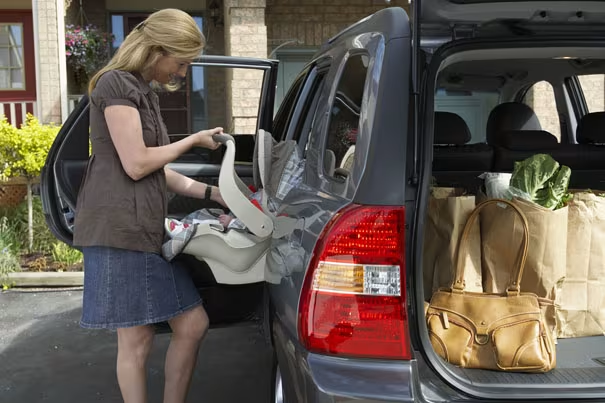
9 baby car safety tips every parent should know
Keeping your child safe in and around cars is one of your most important jobs as a parent. Follow these tips and guidelines for car safety.
Read more9 baby car safety tips every parent should know
Keeping your child safe in and around cars is one of your most important jobs as a parent. Follow these tips and guidelines for car safety.
Read more9 baby car safety tips every parent should know
Keeping your child safe in and around cars is one of your most important jobs as a parent. Follow these tips and guidelines for car safety.
Read moreJoin Pampers Club and get:
- PAMPERS COUPONS
- TOOLS & QUIZZES
- PARENTING TIPS
 PAMPERS COUPONS
 TOOLS & QUIZZES
 PARENTING TIPS