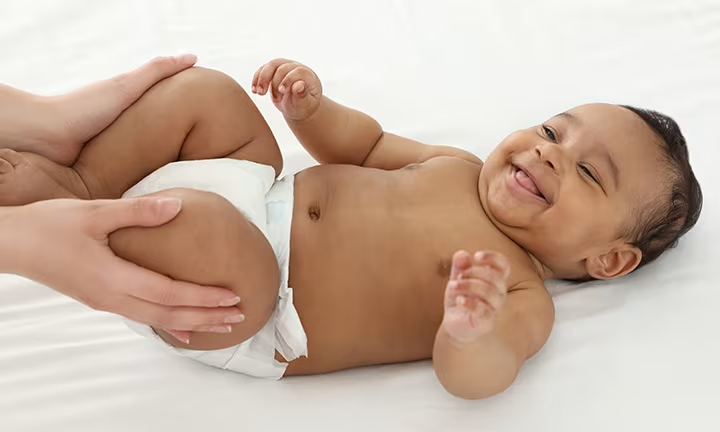
How to Massage Your Baby
Babies can enjoy a massage, just like us! A relaxing massage can be beneficial to infants—and what’s better than a calm and content baby! Massage can also strengthen the bond between you and your baby. Read on to learn more about baby massage and the benefits for your little one.
What Is Baby Massage and What Are the Benefits?
Baby massage is a soothing therapy that involves gently touching and stroking your infant in a way that communicates your love and care. The benefits of massaging your baby may include:
How Do You Massage Your Baby?
With just a little bit of prep and some basic massage techniques, you are all set to start massaging your little one. Follow these five easy steps:
If you still feel hesitant about starting infant massage, look for a book on the subject at your local library, watch some videos online, or reach out to your child’s healthcare provider for guidance. There may even be classes on infant massage at your local medical centre or a massage specialist you could consult for more information. If your baby has any special medical issues, be sure to check with his healthcare provider before beginning massage.
When and How Often Should You Massage Your Baby?
You can start massaging your baby as early as you like. Just be sure to be extra gentle with newborns. Here are some tips on choosing the right times to massage your baby:
What Can You Use for Baby Massage?
This is a personal preference. You may benefit from using an oil (that you may already have on hand for your baby’s skin care) during your baby’s massage to help reduce any friction created between your hands and your baby’s delicate skin. Some experts recommend vegetable oil, which won't be absorbed as quickly as a standard baby oil. Or, you may decide using an oil is just too messy. If you do decide to use a massage oil, choose one that is free of harsh chemicals and fragrances, and one that's edible, in case it gets into your little one’s mouth. Before using the oil for the first time, you’ll want to test it to gauge the reaction on your baby’s skin. Do this by applying a tiny bit to an area of their skin and wait to see if there’s a reaction. If there is, stop using the oil and consider trying another type of baby oil, or skipping it altogether.
FAQS AT A GLANCE
You can massage your baby any time, but ensure you are gentle with newborns. You can also:
- wait at least 45 minutes after eating
- ensure your baby is in the right mood.
The Bottom Line
Massaging your baby is a great way to soothe and bond with them. You might find that you enjoy this time together just as much as they do! Choose a time when they’re in a good mood, and, who knows, it could turn into a routine that your little one comes to love and expect. In between your baby’s massage sessions, you’ll probably be changing lots of diapers. Why not make it a bit more rewarding? Download the Pampers Club app, scan all your diapers and wipes purchases, and earn rewards points. Then simply redeem the points for cool rewards like gift cards.
The information in this article is based on the expert advice found in trusted medical and government sources, such as the American Academy of Pediatrics and the American College of Obstetricians and Gynecologists. You can find a full list of sources used for this article below. The content on this page should not replace professional medical advice. Always consult medical professionals for full diagnosis and treatment.
- Mayo Clinic: Infant massage: Understand this soothing therapy
- Kids Health: A Guide for First-Time Parents
- Kids Health: Bonding With Your Baby
- Pregnancy, Childbirth and the Newborn: The Complete Guide. Penny Simkin, P.T., Janet Whalley, R.N., B.S.N., Ann Keppler, R.N., M.N. Meadowbrook Press, 2001.
What Is Newborn Jaundice and How Is it Treated?
What is baby jaundice? It's when your newborn's skin turns yellowish after birth. Learn more about why this happens and treatment measures.
Read more
Giving your Baby Medicine
Even though they need it to get better, our kids might not want to take their medicine. Here are a few practical tips for getting it done.
Read more
Understanding SIDS: Risk Reduction and Safe Sleep Practices for Newborns
Learn about SIDS (Sudden Infant Death Syndrome), its risk factors, and how to reduce the risks with safe sleep practices for your baby.
Read more
Essential Items for Your Medicine Cabinet
Learn what essentials to include in a baby-friendly medicine cabinet and what items to avoid for kids. Keep your baby safe with this comprehensive checklist.
Read more
Oral Thrush in Babies—Why Does It Happen?
Oral thrush in babies is a common yeast infection that can easily be treated. Read more about the causes, symptoms, and treatment of oral thrush in infants.
Read more
Pinkeye (Conjunctivitis) in Babies and Newborns
What is pink eye? Find out what you need to know about conjunctivitis in babies and newborns, and how to treat it.
Read more
Baby and Newborn Hiccups
Find out how to get rid of baby hiccups. Learn how to soothe your newborn if she gets hiccups.
Read more
Vitamin D Drops for Newborns and Babies
Newborn babies need vitamin D drop supplements—they can’t get enough of the nutrient naturally. Learn why and discover how much vitamin D your little one needs.
Read more
How to Help Your Gassy Baby
Learn all about gas in infants and babies: what is it, why it happens and how you can help your baby get relief.
Read more
What Is Ringworm and How Can It Be Treated?
Ringworm in kids is a skin condition caused by a fungal infection. Read about why it's called ringworm, causes, and treatment.
Read moreWhat Is Newborn Jaundice and How Is it Treated?
What is baby jaundice? It's when your newborn's skin turns yellowish after birth. Learn more about why this happens and treatment measures.
Read moreGiving your Baby Medicine
Even though they need it to get better, our kids might not want to take their medicine. Here are a few practical tips for getting it done.
Read moreUnderstanding SIDS: Risk Reduction and Safe Sleep Practices for Newborns
Learn about SIDS (Sudden Infant Death Syndrome), its risk factors, and how to reduce the risks with safe sleep practices for your baby.
Read moreEssential Items for Your Medicine Cabinet
Learn what essentials to include in a baby-friendly medicine cabinet and what items to avoid for kids. Keep your baby safe with this comprehensive checklist.
Read moreOral Thrush in Babies—Why Does It Happen?
Oral thrush in babies is a common yeast infection that can easily be treated. Read more about the causes, symptoms, and treatment of oral thrush in infants.
Read morePinkeye (Conjunctivitis) in Babies and Newborns
What is pink eye? Find out what you need to know about conjunctivitis in babies and newborns, and how to treat it.
Read moreBaby and Newborn Hiccups
Find out how to get rid of baby hiccups. Learn how to soothe your newborn if she gets hiccups.
Read moreVitamin D Drops for Newborns and Babies
Newborn babies need vitamin D drop supplements—they can’t get enough of the nutrient naturally. Learn why and discover how much vitamin D your little one needs.
Read moreJoin Pampers Club and get:
- PAMPERS COUPONS
- TOOLS & QUIZZES
- PARENTING TIPS
 PAMPERS COUPONS
 TOOLS & QUIZZES
 PARENTING TIPS