
When to Start Tummy Time?
As a parent of a newborn, you’ve probably heard the term “tummy time” and may have thought it was just a simple playtime activity with your baby. Well, yes, it is, but it’s also an opportunity to help your baby build strength and work on motor skill development.
Read on to find out when to start tummy time, learn more about its benefits, how to give your baby tummy time, and how you can make it fun for your little one.
What Is Tummy Time?
Tummy time for your baby involves placing your wide awake baby on her belly for short periods of time while you closely watch her. This activity is important for your baby’s development as it can help strengthen the neck and shoulder muscles as well as boost motor skills.
Just remember that your baby should always be supervised during her tummy time sessions.
Check out this video for a quick 101 on tummy time:
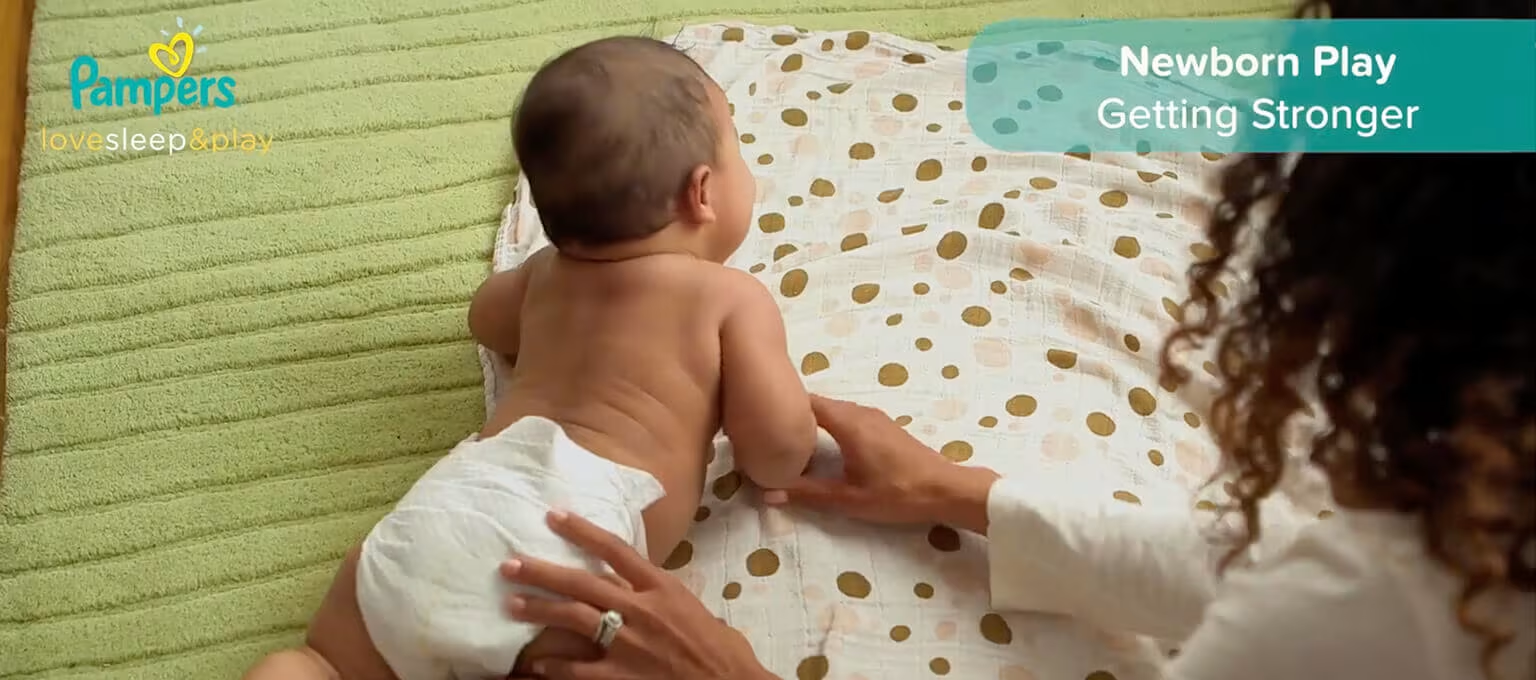
When Should You Start Giving Tummy Time?
You can start tummy time sessions while you and your newborn are still in the hospital, or as soon as your newborn is home from the hospital.
It’s a good idea to start early so your baby can get used to the activity. Keep in mind that you don’t have to worry about the umbilical cord stump when you start doing tummy time—the stump will be just fine.
To get started in this early stage, place your baby on your chest or stomach while you are in a reclined position in a chair, on a bed, or on the floor. Take this time to engage with your baby, make lots of eye contact, talk animatedly, and make exaggerated facial expressions. This is a great way to bond with your new baby!
What Are the Benefits of Tummy Time?
Offering tummy time to your baby every day offers a variety of benefits:
How to Do Tummy Time
Tummy time can be slightly different for newborns and older babies. Read on to find out more about the specific tummy time techniques.
Tummy Time for Newborns
As your little one is just beginning to develop head and neck control, follow these guidelines for doing tummy time for newborns from 0 to 3 months old:
Although your baby may have more control over her head and stronger neck muscles by the end of the first month, you still need to support her head when you hold her. She won’t be able to hold her head up on her own until she’s about 4 months old.
Tummy Time for Older Babies
Here's how to give your older baby tummy time when she’s about 4 to 7 months old:
Around this time, your baby most likely will be able to fully lift her head while she’s on her tummy, and she may also start to push up on her arms, arch her back, and lift her chest. This newly achieved upper body strength will aid her in eventually being able to sit up.
You may also notice her rocking on her stomach, or even kicking her legs or “swimming” with her arms when she's on her tummy. This often happens at around 5 months, and indicates she’s getting the strength and skills needed to be able to roll over and maybe even crawl.
How Often Should You Do Tummy Time?
It’s a good idea to do tummy time two to three times a day. As your baby starts to get used to this activity, you can do so more frequently or for longer sessions.
Where Is the Best Place to Do Tummy Time?
In the newborn stage (from 0 to 3 months), you can start doing tummy time with your baby placed on your own belly or your lap.
Later on, the best place to do tummy time is on a low, safe surface, such as a clean floor, or a floor spread with a play mat or a blanket. Just make sure the blanket doesn’t slide around as your baby moves.
You may be wondering if you can do tummy time on another surface. Avoid doing tummy time on a sofa or bed, or any other raised or soft surface. These locations can put your baby at risk of suffocation or of rolling off and falling unexpectedly. Also avoid doing tummy time on pillows and other soft surfaces.
Ways to Turn Tummy Time Into Play Time
Tummy time is a great opportunity to play with your baby. Here are four ideas:
What If Your Baby Hates Tummy Time?
Your baby may not like being on his tummy in the beginning—after all, it’s a position that he’s trying for the first time.
Here are a few strategies you can try:
Eventually, your baby will get the hang of this new activity, and may come to like it. If you’re concerned that your baby really isn’t enjoying tummy time, ask your baby’s healthcare provider for advice.
FREQUENTLY ASKED QUESTIONS
Tummy time can be a fun activity for both you and your baby as it’s a great opportunity to bond. It’s also a chance for your baby to develop the muscle control needed for all the progress to come, such as sitting up, crawling, and eventually walking. Practicing tummy time each day will bring lots of rewards in terms of your baby’s ongoing development.
Speaking of rewards, have you had a chance to download the Pampers Club app? If not, don’t delay, because every Pampers product you buy earns you points you can redeem for gifts, coupons, discounts, and more.
How we wrote this article
The information in this article is based on the expert advice found in trusted medical and government sources, such as the American Academy of Pediatrics and the American College of Obstetricians and Gynecologists.
The content on this page should not replace professional medical advice. Always consult medical professionals for full diagnosis and treatment.

- Healthy Children: Back to Sleep, Tummy to Play
- Healthy Children: Tummy Time Activities
- Kids Health: Tummy Time
- Kids Health: Infant Torticollis
- Mayo Clinic: What's the importance of tummy time for a baby?
- Book: Caring for your baby and young childbirth to age 5, Sixth Edition Paperback – November 2, 2014 by American Academy of Pediatrics (Author)
Read more about Newborn Baby
Join Pampers Club and get:
- PAMPERS COUPONS
- TOOLS & QUIZZES
- PARENTING TIPS
 PAMPERS COUPONS
 TOOLS & QUIZZES
 PARENTING TIPS