
Comfort measures during labour


For some lucky women, labour is less challenging. For others, it can be very uncomfortable and painful — but it doesn't have to be. There are lots of ways to make yourself more comfortable during labour. You can learn and practice natural pain-relief techniques prior to labour, and you can try others as your labour progresses. Drugs and medical procedures are also available as needed.
You'll want to weigh the benefits and risks of each before deciding which measure or combination of measures to go with on the big day. Here are your choices:
Non-medical Pain Relief
Many of the above measures are taught in Lamaze classes or childbirth courses.
Medication and Anesthesia
An epidural may cause your blood pressure to drop, and it increases the chance that your provider might need to use forceps during the birth, due to increased abdominal relaxation and your diminished ability to push. This diminished ability to push and abdominal relaxation may even result in the need for a cesarean if progress in labour is blocked.
Epidurals may also raise the mother's temperature, requiring that she be separated from her baby following birth until infection is ruled out. Be sure to discuss the pros and cons with your provider before labour begins.
It's hard to know in advance which nonmedical comfort measures or medical pain relief you will want to use. Once you're in labour you can make decisions as you go, according to the intensity and length of your labour. The important thing for now is to do your homework. Find out all you can about your options, talk to your healthcare provider and trust yourself to make the right decisions.


Everything You Need to Know About the Apgar Score
Learn about the Apgar Score, its purpose in assessing newborn health immediately after birth, and what each part of the score means for you and your baby.
Read more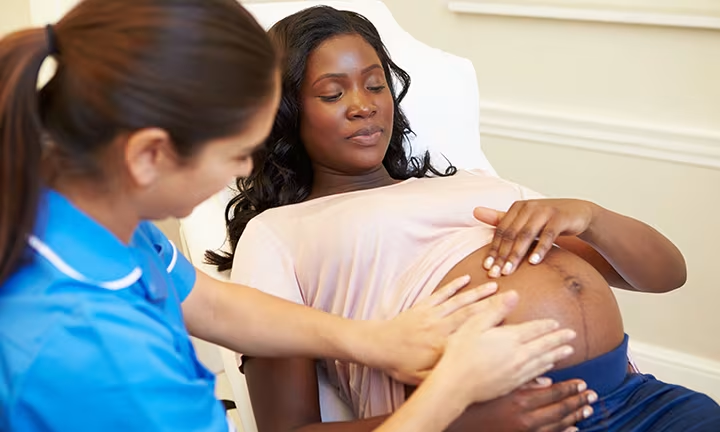
Breech Presentation: What It Is and How It Can Affect Your Baby's Delivery
A breech baby is a baby that has not yet turned head down in your uterus before being born. Read about the causes and what can be done to encourage your baby to turn.
Read more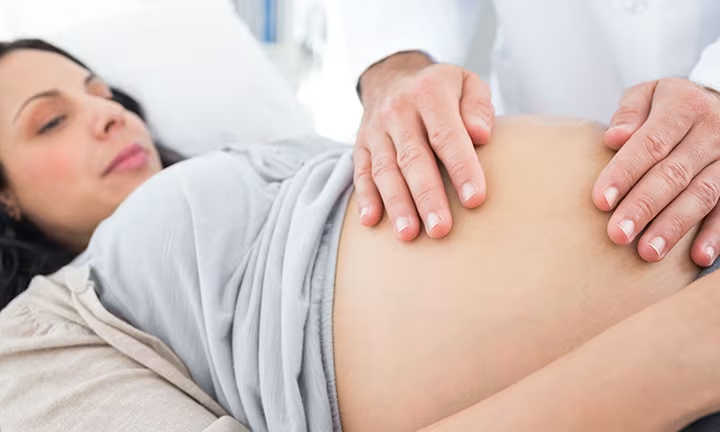
Diastasis Recti: Abdominal Separation in Pregnancy
What is diastasis recti (abdominal separation) during pregnancy or after childbirth? Learn the causes, signs, and treatment options.
Read more
What is Cervical Effacement?
You might have heard of the term effacement before, but you may be unsure of its meaning. Learn all you need to know about cervical effacement and dilation.
Read more
Mucus Plug During Pregnancy: What It Is and When Do You Lose It?
Discover the mucus plug’s role in pregnancy, when it typically discharges, and how long after losing it labor generally begins. Understand this key milestone.
Read more
Signs of Labour: Early Signs Labour Is Approaching
Early signs of labour might include frequent contractions, noticing the mucus plug, or experiencing backaches. Read on for more signs that it’s baby time!
Read more
What are Braxton Hicks Contractions?
Understand Braxton Hicks contractions, their causes, and how to differentiate them from true labour contractions during your pregnancy journey.
Read more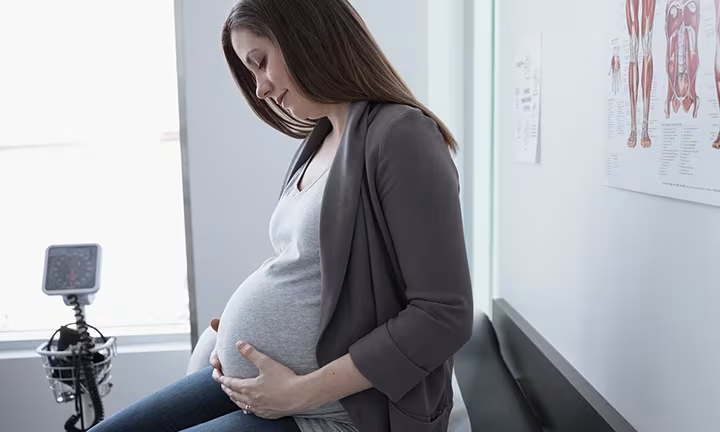
What Is an Epidural?
Find out what an epidural is, how it functions, and when to consider getting one during labour. Understand the benefits and possible side effects.
Read more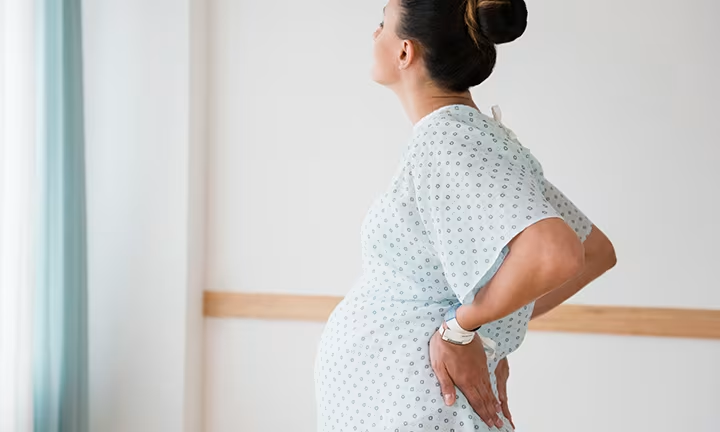
All About Inducing Labour
Learn about the methods of labor induction, why they’re done, and what to expect during the process. Get prepared with insights for your birthing journey.
Read more
FAQ: Postpartum Hair Loss
Many new moms suffer from hair loss after giving birth. Learn how long postpartum hair loss usually lasts and how you can try to prevent the shedding.
Read moreEverything You Need to Know About the Apgar Score
Learn about the Apgar Score, its purpose in assessing newborn health immediately after birth, and what each part of the score means for you and your baby.
Read moreBreech Presentation: What It Is and How It Can Affect Your Baby's Delivery
A breech baby is a baby that has not yet turned head down in your uterus before being born. Read about the causes and what can be done to encourage your baby to turn.
Read moreDiastasis Recti: Abdominal Separation in Pregnancy
What is diastasis recti (abdominal separation) during pregnancy or after childbirth? Learn the causes, signs, and treatment options.
Read moreWhat is Cervical Effacement?
You might have heard of the term effacement before, but you may be unsure of its meaning. Learn all you need to know about cervical effacement and dilation.
Read moreMucus Plug During Pregnancy: What It Is and When Do You Lose It?
Discover the mucus plug’s role in pregnancy, when it typically discharges, and how long after losing it labor generally begins. Understand this key milestone.
Read moreSigns of Labour: Early Signs Labour Is Approaching
Early signs of labour might include frequent contractions, noticing the mucus plug, or experiencing backaches. Read on for more signs that it’s baby time!
Read moreWhat are Braxton Hicks Contractions?
Understand Braxton Hicks contractions, their causes, and how to differentiate them from true labour contractions during your pregnancy journey.
Read moreWhat Is an Epidural?
Find out what an epidural is, how it functions, and when to consider getting one during labour. Understand the benefits and possible side effects.
Read moreJoin Pampers Club and get:
- PAMPERS COUPONS
- TOOLS & QUIZZES
- PARENTING TIPS
 PAMPERS COUPONS
 TOOLS & QUIZZES
 PARENTING TIPS