Placenta Previa: What It Is and Symptoms


Placenta previa is a condition that affects a small percentage of pregnant individuals. It occurs when the placenta grows in an abnormal position, covering the cervix, which can lead to complications during pregnancy and delivery. The placenta plays a crucial role in supplying nutrients and oxygen to the fetus while removing waste. Continue reading to learn more about placenta previa, its causes, symptoms, and the best methods for treatment and management.
What Is a Placenta and What’s Its Role in Pregnancy?
The placenta is a vital organ that develops during pregnancy, acting as a lifeline between you and your baby. So, where’s the placenta located? It attaches to the wall of the uterus, usually at the top or side, and connects to the baby via the umbilical cord.
The primary role of the placenta is to provide your growing baby with oxygen and nutrients. Additionally, it

helps remove waste products from the baby’s bloodstream. The placenta also produces important hormones to support the pregnancy and protects the baby by acting as a barrier against some harmful substances. After birth, the placenta is expelled from the body in a process called the afterbirth.
What Is Placenta Previa and How Does it Affect Pregnancy?
In most pregnancies, the placenta attaches itself to the side or top part of the uterus. Placenta previa is a rare condition in which the placenta is low-lying in the uterus and partially or completely covers the cervix. This can block the exit when the baby is leaving the uterus and cause severe bleeding upon delivery or even during pregnancy.
Many pregnant people who are diagnosed with placenta previa early in their pregnancy find that the condition resolves itself, especially in the case of marginal placenta previa, when the cervix is only partially covered by the placenta. But in the case of complete placenta previa, which is when the placenta completely covers the cervix, it’s unlikely to resolve itself before birth.

Placenta Previa Symptoms
With placenta previa, you may experience no signs or symptoms. The main sign might be painless bleeding from the vagina that commonly occurs in the second half of the pregnancy. Call your healthcare provider if you experience any vaginal bleeding in your second or third trimester or if you experience contractions. Seek emergency medical care if bleeding is severe.
What Causes Placenta Previa?
The causes of placenta previa are not known, but some possible risk factors include if
Risks and Complications Associated with Placenta Previa
Your healthcare provider must monitor both you and your baby to reduce the risk of complications. The possible placenta previa risks are:
How Can I Find Out if I Have Placenta Previa?
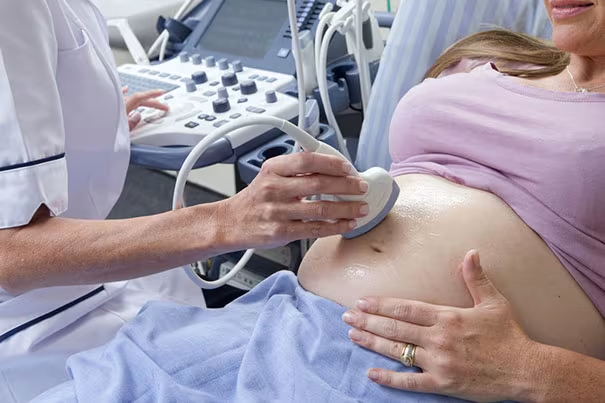
Should you have placenta previa, it will show up during your usual prenatal checkups or a second-trimester ultrasound. To be certain or to get a more thorough diagnosis, your provider may also need to do a transvaginal ultrasound, using a wand-like device placed inside the vagina.
Should your provider suspect or notice any signs of placenta previa, they may do additional ultrasounds to determine the precise location of the placenta, whether it is low-lying, and assess whether it can resolve itself during your pregnancy.
However, if you experience any heavy bleeding during your pregnancy, see your healthcare provider or go to the hospital immediately.
How Common Is Placenta Previa and Who Is at Risk?
Placenta previa is relatively rare, affecting around 1 in 200 pregnancies. As we mentioned above, some risk factors may include a history of placenta previa in a previous pregnancy, having had a baby before, prior surgeries or procedures that may have left a scar on your uterus (cesarean section or uterine fibroid removal), being pregnancy with multiple babies, and smoking or drug use.
Treatment Options for Placenta Previa?
If you do have placenta previa, the severity of the condition may depend on factors such as your and your baby’s health; how far along your pregnancy is; the position of the placenta; and to what extent it actually covers the cervix. Your healthcare provider will monitor whether the placenta previa resolves itself, which is common by weeks 32 to 35 of pregnancy. But if it doesn’t, they will aim to get you as close to full term as possible.
If you’re late into your pregnancy and you still have placenta previa, a c-section may be required. If your placenta previa is low-lying but doesn’t cover the cervix, you may be able to have a vaginal birth, but talk this through with your healthcare provider.
In any case, the most important thing you need to do is take care of yourself, rest as much as possible, and avoid any activities that may trigger bleeding, like exercise.
There is no need to worry about placenta previa. It’s a rare condition, and even if your healthcare provider diagnoses you with it or you have symptoms of placenta previa, there is a good chance it will go away by itself. And if it doesn’t resolve itself, your provider can manage the condition so both you and your baby are safe and healthy.
Can I Naturally Move the Placenta Up? Understanding the Options
It is not possible to naturally move the placenta up during pregnancy. However, if your placenta is low-lying in the early stages of pregnancy, such as in cases of placenta previa, it may move upward on its own as the uterus expands and no treatment will be needed. This happens in most cases by the third trimester, as the uterus grows and pulls the placenta away from the cervix.
There are no exercises or lifestyle changes that can manually move the placenta. Regular monitoring through ultrasounds is typically recommended to check the placenta's position as the pregnancy progresses.
FAQS AT A GLANCE
Placenta previa may cause severe bleeding that puts you and your baby at risk, which is why you may need an immediate C-section. If your baby is born early due to placenta previa, there are additional problems and risks associated with preterm birth. Your healthcare team will provide the proper support and care you need along the way.
The Bottom Line
Placenta previa is a condition that requires careful monitoring during pregnancy but often resolves on its own as the uterus expands. Regular prenatal care, including ultrasounds, is essential to track the position of the placenta and ensure the safety of both you and your baby. In cases where the placenta remains low-lying later in pregnancy, your healthcare provider will recommend the best course of action, which may include a planned cesarean delivery to avoid complications. Staying informed and working closely with your healthcare team can help manage placenta previa and support a healthy pregnancy outcome.
How We Wrote This Article The information in this article is based on expert advice found in trusted medical and government sources, such as the American Academy of Pediatrics and the American College of Obstetricians and Gynecologists. You can find a full list of sources used for this article below. The content on this page should not replace professional medical advice. Always consult medical professionals for full diagnosis and treatment.

Leaking Amniotic Fluid: Signs, Causes, and What to Do
Wondering if you're leaking amniotic fluid? Learn how to identify it, what causes it, and when to call your provider.
Read more
All About Pregnancy Hormones
Explore key pregnancy hormones, their effects on your body, and effective methods to manage these hormonal changes for a healthier pregnancy journey and days.
Read more
What Is an Ectopic Pregnancy? Signs, Causes, and Medical Care
Learn about ectopic pregnancy, including early signs, symptoms, and treatment options. Understand the risks and what to expect during diagnosis.
Read more
Preeclampsia: Symptoms, Causes, and How It Affects Your Pregnancy
Learn about preeclampsia, its symptoms, and how it can affect your pregnancy. Find out how early diagnosis and treatment can protect both mother and baby.
Read more
All About Glucose Screening and Tolerance Tests in Pregnancy
Is a glucose test during pregnancy mandatory? What should you do before the test? Find out everything you need to know in order to stay healthy during pregnancy
Read more
Toxoplasmosis In Pregnancy
Learn about toxoplasmosis and its impact during pregnancy. Discover prevention tips, symptoms, and when to seek medical advice for your baby's health.
Read more
FAQ: Is it OK to Have Sex During Pregnancy? Here’s Everything You Need to Know!
It is a common misconception that sex during pregnancy is something you should avoid. Find out how you can have fun while keeping the baby safe.
Read more
Pregnancy Tests Explained: Timing, Accuracy, and Types
Learn how pregnancy tests work, the best time to take one, and how to interpret results. Get tips for accurate testing and confirming early pregnancy signs.
Read more
An Overview of the Pregnancy Trimesters
Curious to understand the pregnancy trimesters better? Not sure how many trimesters in a pregnancy? Visit this page to have a good grasp of all the basics!
Read more
Amniocentesis Prenatal Test
What is an amniocentesis? Learn about the procedure, risks and benefits during pregnancy.
Read moreLeaking Amniotic Fluid: Signs, Causes, and What to Do
Wondering if you're leaking amniotic fluid? Learn how to identify it, what causes it, and when to call your provider.
Read moreAll About Pregnancy Hormones
Explore key pregnancy hormones, their effects on your body, and effective methods to manage these hormonal changes for a healthier pregnancy journey and days.
Read moreWhat Is an Ectopic Pregnancy? Signs, Causes, and Medical Care
Learn about ectopic pregnancy, including early signs, symptoms, and treatment options. Understand the risks and what to expect during diagnosis.
Read morePreeclampsia: Symptoms, Causes, and How It Affects Your Pregnancy
Learn about preeclampsia, its symptoms, and how it can affect your pregnancy. Find out how early diagnosis and treatment can protect both mother and baby.
Read moreAll About Glucose Screening and Tolerance Tests in Pregnancy
Is a glucose test during pregnancy mandatory? What should you do before the test? Find out everything you need to know in order to stay healthy during pregnancy
Read moreToxoplasmosis In Pregnancy
Learn about toxoplasmosis and its impact during pregnancy. Discover prevention tips, symptoms, and when to seek medical advice for your baby's health.
Read moreFAQ: Is it OK to Have Sex During Pregnancy? Here’s Everything You Need to Know!
It is a common misconception that sex during pregnancy is something you should avoid. Find out how you can have fun while keeping the baby safe.
Read morePregnancy Tests Explained: Timing, Accuracy, and Types
Learn how pregnancy tests work, the best time to take one, and how to interpret results. Get tips for accurate testing and confirming early pregnancy signs.
Read moreJoin Pampers Club and get:
- PAMPERS COUPONS
- TOOLS & QUIZZES
- PARENTING TIPS
 PAMPERS COUPONS
 TOOLS & QUIZZES
 PARENTING TIPS