14-Month-Old: Entering Toddlerhood
Your 14-month-old baby is not so little anymore! In fact, at 14 months old, you’ve got a toddler on your hands, and one who is revealing more personality by making decisions, showing preferences, and gaining independence. Life is full with a toddler in the house, and this month is no exception. Keep reading to discover what 14-month-old milestones to anticipate, plus advice on sleep regression, nap schedules, eating habits, sibling dynamics, and more.
Toddler Development: 14-Month Milestones
Children develop at different rates, which you’ll probably notice more if you have an older child or are connecting with other parents of young children. For example, your 14-month-old’s weight percentile and height may differ from others, which is normal and expected, as each child is special and unique. Therefore, the 14-month milestones listed below vary from child to child. Speak to your toddler’s healthcare provider if you’re ever concerned about their development.
These are some general areas of development and achievement you may observe in your 14-month-old toddler:
The 14-month-old milestones you’ll celebrate will bring big and small changes from one month to the next, but there’s one thing that will remain constant for a while—diapers! You deserve a reward for all those diaper changes you’re doing. Download the Pampers Club App and get rewards for all your Pampers purchases.

Pampers® Cruisers™
How to Support Your 14-Month-Old’s Milestones
These are just some of the activities for supporting your 14-month-old’s development:
Tip It helps for both parents to be on the same page about what behaviour boundaries to set, so have a discussion with your partner (or your child’s other parent or guardian) to clarify your approach. Setting boundaries consistently together helps your little one learn the limits more easily. |
14-Month-Old Eating: Mealtimes and Menus Ideas
Your 14-month-old might not be eating as much as you expect—they’ll only need about 1,000 calories per day, which they can get with three small meals and two hearty snacks. The key is to offer nutritious selections from the main food groups: protein foods like meat and eggs, dairy products like cow’s milk and cheese, fruits and vegetables, and wholegrain cereals, pasta, or bread. If your little one is a fussy eater, you’re not alone! It’s common for babies and toddlers to be picky eaters, so check out some suggestions for feeding a picky toddler.
Tip Although a varied diet of healthy foods usually provides enough vitamins and minerals for most children, some children may need supplements. Talk to your child’s healthcare provider about supplements like vitamins B2, B12, and calcium, especially if your family follows a strict vegetarian or vegan diet. And if your hungry 14-month-old mostly prefers lots of cow’s milk (much more than about 24 to 32 ounces a day), their provider may recommend an iron supplement. |

14-Month-Old Sleep Regression and Sleep Schedule
Your 14-month-old probably needs about 12 to 14 hours of sleep a day. At this stage children may be down to a single daily nap, as about half of all toddlers are by 15 months. If your toddler has recently started walking, you might find that they have a hard time winding down at naptime or bedtime, given the excitement of exploring the world on two feet. Exciting developmental milestones could cause a little bout of sleep regression in your 14-month-old, which is normal. You may even find your little one walking back and forth in their crib as they practice this new skill repeatedly!
Because a 14-month-old’s sleep schedule can vary for the aforementioned reasons, experts recommend simply watching for signs of crabbiness and adjust the schedule as needed. In time, the novelty of walking will wear off and your child will be easier to settle, fall asleep, and stay asleep. And, eventually, your 14-month-old’s schedule will get back to “normal”.

Baby Growth Chart Calculator
Keep an eye on your baby’s height, weight, and head circumference to average growth with our simple tool.
This is a mandatory field.
This is a mandatory field.
This is a mandatory field.
This is a mandatory field.
*Input details of your baby’s last measurements **Source: World Health Organization
A Day in the Life of Your Toddler
Life with a 14-month-old is never dull. Here’s what a typical day might include at your house:

Your Toddler’s Health: Keeping Safe Outside
As your toddler becomes more mobile, it’s important to hold their hand and keep an eye on them, particularly when you’re out and about together. Some helpful tips on keeping your 14-month-old safe while exploring the outside world include the following:
Your Life as a 14-Month-Old’s Parent: Sibling Dynamics
If you have older children, one thing to anticipate as your 14-month-old baby enters toddlerhood is a slight change in sibling dynamics. At this age, toddlers tend to be the center of their own universe, and this can make them behave in ways that your older children may find annoying. For example, your 14-month-old might infringe on their siblings' privacy, take things as their own, and cry when not being able to play with others’ toys. On the other hand, your older children may be jealous that your 14-month-old naturally gets more of your attention. This natural sibling rivalry should diminish in the years to come as your children need less of your focused attention. In the meantime, try to make an effort to spend some quality time with each of your children. Perhaps have your partner, family member, or babysitter mind one while you enjoy some one-on-one time or a fun outing with the other, and vice versa. If you’re planning to move your 14-month-old to a shared room in the future, read our tips on creating a room for your toddler and older child to share.
FAQS AT A GLANCE
Every child develops at a different pace, but some typical 14-month milestones include:
- Saying a few basic words like “mama”
- Understanding simple words and following simple requests like “wave at daddy”
- Pointing to a body part or favourite toy when asked to
- Walking and climbing up on furniture
- Imitating simple household activities like sweeping.
Checklist for This Month
With so many exciting 14-month milestones to anticipate, we created a short checklist to help you prepare for your little one’s development:
The information in this article is based on the expert advice found in trusted medical and government sources, such as the American Academy of Pediatrics and the American College of Obstetricians and Gynecologists. You can find a full list of sources used for this article below. The content on this page should not replace professional medical advice. Always consult medical professionals for full diagnosis and treatment.
14 month old baby - checklist
- Book: Caring for your baby and young child, birth to age 5, Sixth Edition Paperback – November 2, 2014 by American Academy of Pediatrics (Author)
- Kids Health

About Newborn, Infant, Baby, and Toddler Age Ranges and Stages
Exploring developmental stages: Discover differences between newborn, infant, baby, and toddler, with age ranges and more.
Read more
Your 2-Year-Old’s Milestones and Development
Discover the incredible milestones of your 2-year-old! From sleep and nutrition to emotional development, get all the essential insights for this exciting stage.
Read more
2.5-Year-Old: Development Milestones
Foster your 2.5-year-old's milestones in language, imagination, and fine motor skills. Support their growth and development.
Read more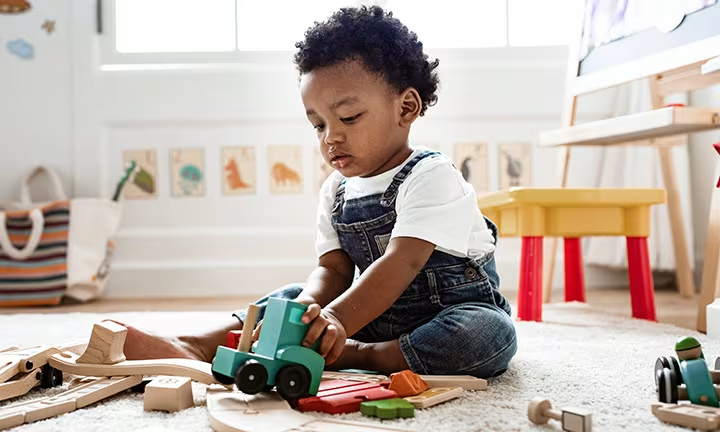
Your 3-Year-Old's Development: What Milestones to Anticipate
Learn what to anticipate from your growing 3-year-old toddler, including physical, language, social, and emotional development milestones.
Read more
16-Month-Old: Developing Social Skills
At this age, your 16-month-old may pick up a ball, say a few words, and follow simple instructions. Learn more about your toddler's development at 16 months.
Read more
17-Month-Old Baby: Developing Vocabulary
Your 17-month-old is reaching new and exciting milestones, such as saying short sentences or eating new foods. Learn more about what's happening at 17 months!
Read more
13-Month-Old Baby: Entering Toddlerhood
Your baby is officially a toddler! Learn what you can expect from your 13-month-old at this stage: developmental skills, mealtimes, sleep schedule, and more.
Read more
15-Month-Old: Your Independent Toddler
Your 15-month-old may be reaching different milestones this month: walking better and climbing up stairs. But no rush, each toddler develops at a different pace!
Read more
18-Month-Old: Confident and Independent
At 18 months, your toddler is more independent and assertive and may say "no" more often. Learn all about these common 18-month-old development milestones
Read moreAbout Newborn, Infant, Baby, and Toddler Age Ranges and Stages
Exploring developmental stages: Discover differences between newborn, infant, baby, and toddler, with age ranges and more.
Read moreYour 2-Year-Old’s Milestones and Development
Discover the incredible milestones of your 2-year-old! From sleep and nutrition to emotional development, get all the essential insights for this exciting stage.
Read more2.5-Year-Old: Development Milestones
Foster your 2.5-year-old's milestones in language, imagination, and fine motor skills. Support their growth and development.
Read moreYour 3-Year-Old's Development: What Milestones to Anticipate
Learn what to anticipate from your growing 3-year-old toddler, including physical, language, social, and emotional development milestones.
Read more16-Month-Old: Developing Social Skills
At this age, your 16-month-old may pick up a ball, say a few words, and follow simple instructions. Learn more about your toddler's development at 16 months.
Read more17-Month-Old Baby: Developing Vocabulary
Your 17-month-old is reaching new and exciting milestones, such as saying short sentences or eating new foods. Learn more about what's happening at 17 months!
Read more13-Month-Old Baby: Entering Toddlerhood
Your baby is officially a toddler! Learn what you can expect from your 13-month-old at this stage: developmental skills, mealtimes, sleep schedule, and more.
Read more15-Month-Old: Your Independent Toddler
Your 15-month-old may be reaching different milestones this month: walking better and climbing up stairs. But no rush, each toddler develops at a different pace!
Read more