Terrible Twos and Your Toddler


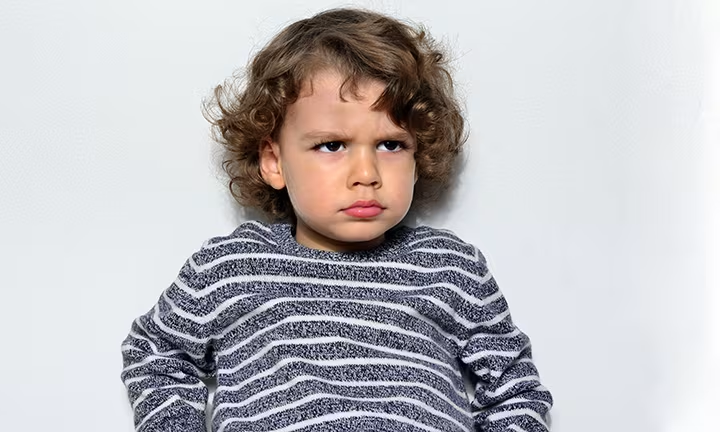
You’ve probably been expecting it to happen sooner or later: Your sweet and adorable toddler suddenly morphing into a defiant, tantrum-prone tornado that seems to subside just as quickly as it sweeps through. Believe it or not, this challenging and sometimes frustrating phase is a normal part of toddler development as your little one becomes more independent and assertive. Find out what’s behind those “terrible twos,” how long this phase lasts, and how to deal with the tantrums and defiant behavior.
What’s the Cause of Terrible Twos?
At around 2 years old, your child is becoming more and more independent and may want to push back against what you tell him to do or the boundaries you have set. The resulting battles can lead to tantrums, defiant behavior, and frequent use of the word "no.” The outbursts and demands can seem to happen out of nowhere: One minute your toddler may be clinging to you like a barnacle or happily doing his thing, while the next he could be disobeying you, stomping his feet, or screaming at the top of his lungs. Your toddler doesn't know how to express his emotions in acceptable ways yet, which can result in outbursts that can grow into full-blown temper tantrums. Welcome to the terrible twos! For your 2-year-old, the terrible twos may feel like the terrific twos. He’s realizing he can try to assert more control over situations, that he can fight for what he wants, and that he can try to flex his muscles a bit. Even for your little one, though, this can be a tricky time. He may not want to compromise, which can lead to battles with you, and he doesn’t yet know how to handle feelings of disappointment when he doesn't get something he wants. This new behavior mode in your child comes from a host of changes in his intellectual, social, and emotional development. This means that the so-called terrible behavior may actually be a good sign that your child's development is on track.

How Long Do the Terrible Twos Last?
The terrible twos can last for a short time, or can continue for a longer period. You may have to tolerate this phase for a while as the terrible twos typically start around your child's second birthday and stretch into his third year, or even longer, when you may see it come to an end. A wise approach is to accept that this is a normal part of your child’s development while doing your best to lead your child through this phase. How you respond to your child in certain situations will be key, because it’s important to balance supporting your child’s growing independence while also enforcing the boundaries you’ve set for his safety and well-being.
What are the Signs of Terrible Twos
When your child starts exhibiting some of these behaviors, you can assume that he has entered the terrible twos phase:
Causes of the Terrible Twos
To help you better understand why your toddler is behaving this way, it might help to know more about the developmental changes that your 2-year-old is going through:
10 Tips to Get Through the Terrible Twos
During the terrible twos, don't take your little one’s behavior personally, and try not see the tantrums as reflective of your child being "bad." Your child is just frustrated and overwhelmed by the changes he’s going through. Here are some additional guidelines and techniques for dealing with the terrible twos phase:
How to Deal With Tantrums
The occasional tantrum is not only characteristic but also inevitable during the terrible twos phase. It's easy to see one coming: Your child may be upset or more irritable than usual, and he may be tired, lonely, or hungry.
To help prevent some of these outbursts, pay extra attention to your child's moods and try to avoid situations that may lead to a tantrum. For example, taking your toddler on several errands without stops for play and snacks could be fertile ground for a tantrum. If you do see a tantrum on the horizon, here are some ways you can channel your child's energies away from this aggressive behavior or stop him in his tracks:
Temper tantrums typically fade away between the ages of 3 and 4. But if you're still experiencing them regularly beyond that, or are having trouble knowing how to manage this behavior, speak to his healthcare provider.
FAQs at a Glance
One secret to getting through the terrible twos is not taking anything personally. Your child is not being terrible on purpose: He doesn't hate you and isn’t inherently naughty. Your child is going through changes that make it difficult for him to control his actions and emotions. The best thing to do is to set clear boundaries, curb bad behavior, and praise good behavior regularly.
The Bottom Line
Yes, the terrible twos may be terrible, especially for you, but just know that this phase will eventually end. Teaching your child how to manage his emotions and behave in acceptable ways, as well as praising him for all the great things he does along the way, will help you both get through this developmental phase a little more easily. Once you've gotten through this phase, you'll finally have some time to relax—that is, until you get to the next challenging phase, such as the teenage years. By then you may be reminiscing fondly about what an angel your little one was as a toddler, and this period won’t seem so terrible after all! Did you know that you can learn more interesting facts about your child's development in the Pampers Club app? You can also use the app to earn points for every Pampers purchase you make. Collect rewards points and redeem them for a gift for your child or for yourself—you deserve it!
The information in this article is based on the expert advice found in trusted medical and government sources, such as the American Academy of Pediatrics and the American College of Obstetricians and Gynecologists. You can find a full list of sources used for this article below. The content on this page should not replace professional medical advice. Always consult medical professionals for full diagnosis and treatment.
Handling Aggressive Behavior in Toddlers
Does your child fight a lot? Some toddlers and preschoolers get into repeated and escalating tussles. Get some tips and insight on helping kids cope with aggressive behavior.
Read more
How To Help a Child Who is Shy
What causes shyness? How can we help a young child overcome these feelings?
Read more
Crybabies: why do some babies cry more than others?
You might ask yourself why your baby cries so much. Here’s what you can do to soothe your baby and relieve your own stress.
Read more
Mom and toddler separation anxiety
Address and manage separation anxiety in both toddlers and mothers with practical tips and emotional support strategies. Understand the causes and learn methods.
Read more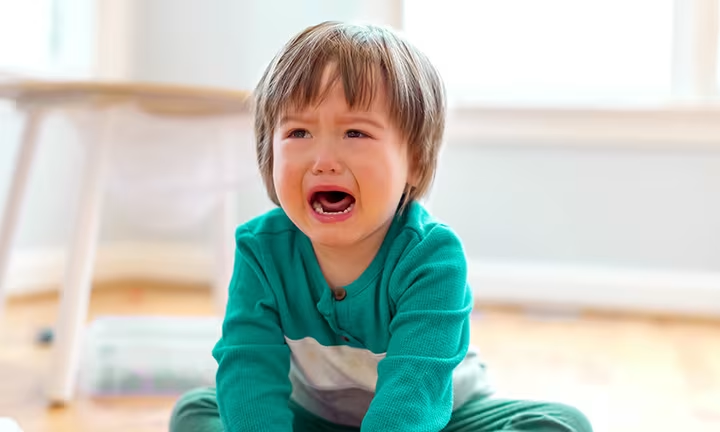
Why Does Your Toddler Have Tantrums?
Toddler tantrums are very common. They usually occur when your child is frustrated or angry. Learn more about why your toddler may throw a tantrum.
Read more
Baby Finger and Thumb-Sucking
Does your toddler suck her thumb? Read about why this usually happens and when she should stop.
Read more
How to Handle Toddlers Hitting Stage
Learn why toddlers hit, discover practical strategies to address hitting, and support their emotional growth with these expert parenting tips and facts.
Read more
Toddler biting: how to stop children from biting
Discover effective and practical strategies to stop toddler biting. Understand the causes and learn positive parenting techniques to guide better behavior.
Read moreHandling Aggressive Behavior in Toddlers
Does your child fight a lot? Some toddlers and preschoolers get into repeated and escalating tussles. Get some tips and insight on helping kids cope with aggressive behavior.
Read moreHow To Help a Child Who is Shy
What causes shyness? How can we help a young child overcome these feelings?
Read moreCrybabies: why do some babies cry more than others?
You might ask yourself why your baby cries so much. Here’s what you can do to soothe your baby and relieve your own stress.
Read moreMom and toddler separation anxiety
Address and manage separation anxiety in both toddlers and mothers with practical tips and emotional support strategies. Understand the causes and learn methods.
Read moreWhy Does Your Toddler Have Tantrums?
Toddler tantrums are very common. They usually occur when your child is frustrated or angry. Learn more about why your toddler may throw a tantrum.
Read moreBaby Finger and Thumb-Sucking
Does your toddler suck her thumb? Read about why this usually happens and when she should stop.
Read moreHow to Handle Toddlers Hitting Stage
Learn why toddlers hit, discover practical strategies to address hitting, and support their emotional growth with these expert parenting tips and facts.
Read moreToddler biting: how to stop children from biting
Discover effective and practical strategies to stop toddler biting. Understand the causes and learn positive parenting techniques to guide better behavior.
Read moreJoin Pampers Club and get:
- PAMPERS COUPONS
- TOOLS & QUIZZES
- PARENTING TIPS
 PAMPERS COUPONS
 TOOLS & QUIZZES
 PARENTING TIPS