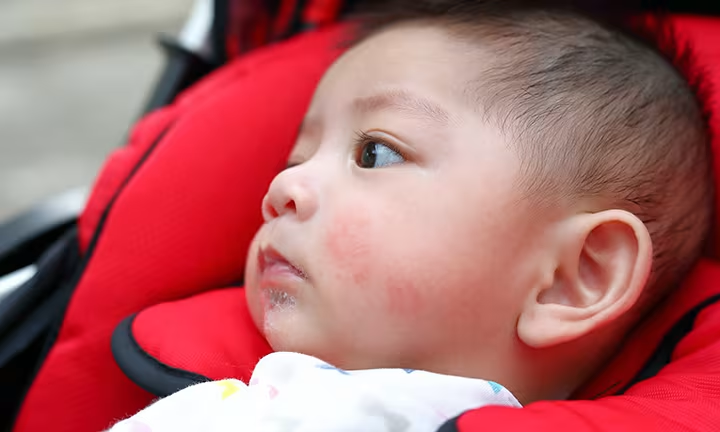
Does Your Baby Have Drool Rash?
Babies often drool, especially when teething, and sometimes the saliva can cause a harmless rash around the mouth or on the chin that’s referred to as drool rash. Find out what drool rash is, what treatment is recommended for drool rash, and how you can help prevent it.
What Is Drool or Teething Rash?
Drool rash is a type of contact dermatitis caused by saliva. The skin around your baby’s mouth and/or chin may become inflamed and irritated when her own saliva dribbles down and stays on the skin for prolonged periods. Sometimes the rash is referred to as a teething rash, a lip licker’s dermatitis, or a spit-up rash.
Can Drooling Cause a Rash?
Yes, drooling may irritate your baby’s skin, leading to a rash.
What Does Drool Rash Look Like?
A drool rash may appear as a red, inflamed, bumpy rash. It can be itchy and sore.
At What Age Does Drool Rash Typically Develop?
Drool rash typically develops from the time your baby’s a newborn into toddlerhood. Excess drooling is common between the ages of 3 and 6 months, which is around the time when teething may start for some babies. You may even see your baby start blowing bubbles with her saliva during this time.
As teething continues, excess saliva may cause a drool rash if it stays on your baby’s skin for prolonged periods and irritates your baby’s skin.
How Can You Prevent Drool Rash?
You can help prevent drool rash by using an absorbent bib to soak up any drool so that saliva doesn’t stay on your baby’s skin for long.
How Do You Get Rid of a Drool Rash?
You can help your baby’s drool rash clear up by applying a barrier cream like petroleum jelly to the affected areas of skin. Continue to wipe off saliva with a bib or a clean tissue.
What Is the Treatment for Drool Rash?
Keeping the skin free of saliva as much as possible is the most effective home treatment strategy for drool rash. You can do this by using an absorbent bib and changing it often, and by coating the skin with a barrier cream such as petroleum jelly. If your baby’s drool rash doesn’t respond to at-home treatment, your little one’s healthcare provider may prescribe some form of medication, such as a prescription strength cream or ointment.
Does a Drool Rash Hurt?
A drool rash can be uncomfortable for your baby, causing itching, but it’s not contagious or life-threatening.
What’s the Difference Between Drool Rash and Eczema?
Eczema is a catchall term used for both atopic dermatitis and contact dermatitis. Contact dermatitis is caused by an allergic reaction to an irritant when it comes into contact with your baby’s skin. In the case of drool rash, the irritant is drool—your baby's saliva. Atopic dermatitis is due to a genetic predisposition to something like a food allergy, asthma, hay fever, and other conditions that are not necessarily related to skin contact. In essence, drool rash is a form of eczema.
When Should You See Your Baby’s Healthcare Provider?
Contact your baby’s healthcare provider if the drool rash is
The Bottom Line
Drool rash is a harmless rash that can happen from time to time. If your baby’s rash is red and itchy, you may want to see his healthcare provider, who recommend the right treatment. To prevent drool rash from developing or worsening, use a bib to absorb any saliva around your baby’s mouth, and apply a barrier cream, such as petroleum jelly, to protect the skin. Drool rash may be uncomfortable for your baby but it’s usually not anything to be worried about. Before long, your baby’s drool rash will clear up.
How we wrote this article
The information in this article is based on the expert advice found in trusted medical and government sources, such as the American Academy of Pediatrics and the American College of Obstetricians and Gynecologists. You can find a full list of sources used for this article below. The content on this page should not replace professional medical advice. Always consult medical professionals for full diagnosis and treatment.

Everything You Need to Know About Your Baby's Soft Spot
What is a fontanelle? Why does your baby have a soft spot on her head? Read all about your baby's soft spot and when it closes.
Read more
Chicken Pox Symptoms and Treatment
Chicken pox is a contagious, yet common infection caused by the varicella-zoster virus. Read more about prevention, symptoms, and treatment of the rash.
Read more
What Is Tongue Tie?
Tongue-tie in newborns is a condition where the tongue movement is restricted and may cause difficulty in breastfeeding. Read more about the symptoms.
Read more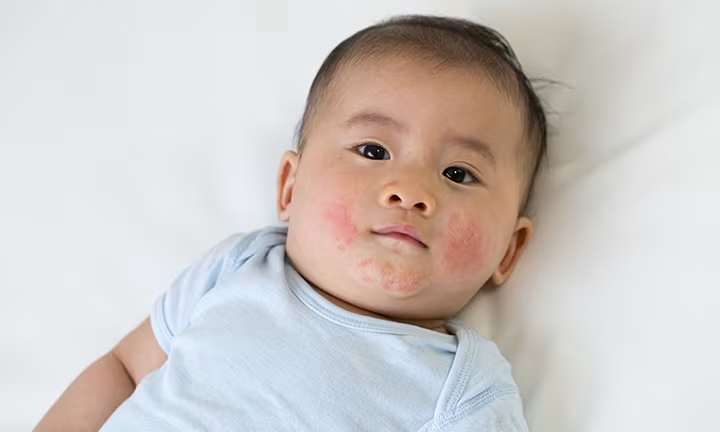
All About Fifth Disease (Slapped Cheek)
Fifth disease, a.k.a. Slapped Cheek syndrome, is a mild viral infection that can affect babies. Learn more about Parvovirus B19 symptoms and treatment here.
Read more
How to Relieve Baby Constipation: Signs, Causes, & Solutions
Learn the signs, causes, and gentle infant constipation solutions to help your baby poop more comfortably.
Read more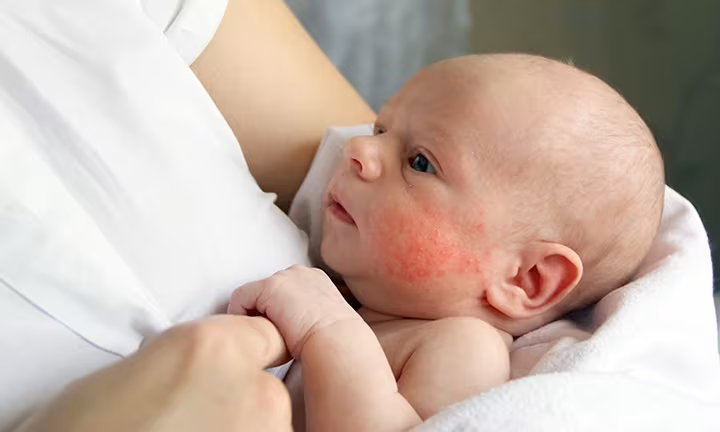
What to Do When Your Baby Has Eczema
Eczema looks like a red, scaly rash and it can cause your baby discomfort and itching. Learn about the causes, symptoms, and treatment.
Read more
The Recommended Immunization Schedule For Your Child
Stay informed about your child's immunization schedule for family. Learn about the importance of vaccines and the recommended timeline for vaccinations.
Read more
Ear Infections in Infants
Ear infections in babies are very common. Otitis Media, also known as middle ear infection, is the most common kind. Read more about the symptoms and treatment.
Read more
What Is Stork Bite?
What is a stork bite? It's a common type of birthmark—also known as a salmon patch or angel kiss—that appears on newborns. Learn more about it.
Read more
HFMD: Hand, Foot, and Mouth Disease
What is HFMD? Hand, foot, and mouth disease is a contagious viral infection that may cause fever and blisters. Read more about it here.
Read moreEverything You Need to Know About Your Baby's Soft Spot
What is a fontanelle? Why does your baby have a soft spot on her head? Read all about your baby's soft spot and when it closes.
Read moreChicken Pox Symptoms and Treatment
Chicken pox is a contagious, yet common infection caused by the varicella-zoster virus. Read more about prevention, symptoms, and treatment of the rash.
Read moreWhat Is Tongue Tie?
Tongue-tie in newborns is a condition where the tongue movement is restricted and may cause difficulty in breastfeeding. Read more about the symptoms.
Read moreAll About Fifth Disease (Slapped Cheek)
Fifth disease, a.k.a. Slapped Cheek syndrome, is a mild viral infection that can affect babies. Learn more about Parvovirus B19 symptoms and treatment here.
Read moreHow to Relieve Baby Constipation: Signs, Causes, & Solutions
Learn the signs, causes, and gentle infant constipation solutions to help your baby poop more comfortably.
Read moreWhat to Do When Your Baby Has Eczema
Eczema looks like a red, scaly rash and it can cause your baby discomfort and itching. Learn about the causes, symptoms, and treatment.
Read moreThe Recommended Immunization Schedule For Your Child
Stay informed about your child's immunization schedule for family. Learn about the importance of vaccines and the recommended timeline for vaccinations.
Read moreEar Infections in Infants
Ear infections in babies are very common. Otitis Media, also known as middle ear infection, is the most common kind. Read more about the symptoms and treatment.
Read moreJoin Pampers Club and get:
- PAMPERS COUPONS
- TOOLS & QUIZZES
- PARENTING TIPS
 PAMPERS COUPONS
 TOOLS & QUIZZES
 PARENTING TIPS