
What Is Stork Bite?


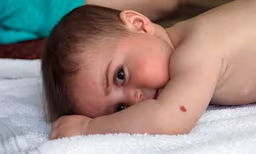
Stork bites are some of the more common birthmarks found on newborn babies. The scientific term for stork bites is nevus simplex, and they are also known as angel kisses or salmon patches. Find out more about this type of birthmark, including how to identify it and how long it lasts.
What Is a Stork Bite on Babies?
A stork bite, also called a salmon patch or angel kiss, appears as a flat, pale pink to dark pink or red patch on your baby's skin. It's a common type of birthmark known scientifically as nevus simplex. Stork bites are present at birth but usually disappear with the first year or two. A stork bite can be located on the bridge of your baby’s nose, her lower forehead, upper eyelids, upper lip, the back of her head or neck, or even her lower back. A stork bite is not contagious or dangerous for your little one. The birthmark is sometimes called an angel kiss if it’s located between your baby’s eyes.
How Common Are Stork Bites?
Stork bites are the most common birthmark among light-skinned babies, occurring in more than 80 percent of newborns.

Baby Growth Chart Calculator
Keep an eye on your baby’s height, weight, and head circumference to average growth with our simple tool.
This is a mandatory field.
This is a mandatory field.
This is a mandatory field.
This is a mandatory field.
*Input details of your baby’s last measurements **Source: World Health Organization
Why Is It Called a Stork Bite?
It’s called a stork bite because it’s often located on the back of the head or neck, an area where, according to folklore, a stork might carry a baby in its beak when delivering the baby to the parents. Of course, storks don’t actually deliver babies—mothers do all the hard work!
What Causes Stork Bites and Angel Kisses in Babies?
Stork bites are caused by capillary (blood vessel) malformations, which create flat, reddish patches of skin that may fade over time.
Do Stork Bites Go Away?
Stork bites tend to fade during your baby’s first year; however, they may still be noticeable later on if your child gets overheated or has a temper tantrum. In some cases, a stork bite located at the nape of your baby’s neck just below the hairline may become a permanent birthmark. You may have seen this birthmark in adults. Speak to your child’s healthcare provider if the stork bite is located in an atypical area and/or if it doesn’t fade within the first year. It may not actually be a stork bite, but another type of birthmark.
Are Stork Bites Dangerous?
No, stork bites are not associated with a serious medical condition and they don’t require treatment.
How Do You Know If Your Baby Has a Stork Bite?
If your baby has a pinkish patch on his eyelid, forehead, nose, upper lip, lower back, or back of the head or neck, it may be a stork bite or angel kiss. Your baby’s healthcare provider will be able to tell you for sure if the pinkish patch is a stork bite, or possibly another type of baby rash.
How Do You Treat a Stork Bite?
Stork bites don’t require treatment, and most fade in your baby’s first year.
The Bottom Line
Stork bites are nothing to be concerned about. Though these salmon-colored patches may look prominent at first, they most often fade in time. This is just one more way your child will develop and change over the course of the first few years, and beyond.
How we wrote this article
The information in this article is based on the expert advice found in trusted medical and government sources, such as the American Academy of Pediatrics and the American College of Obstetricians and Gynecologists. You can find a full list of sources used for this article below. The content on this page should not replace professional medical advice. Always consult medical professionals for full diagnosis and treatment.
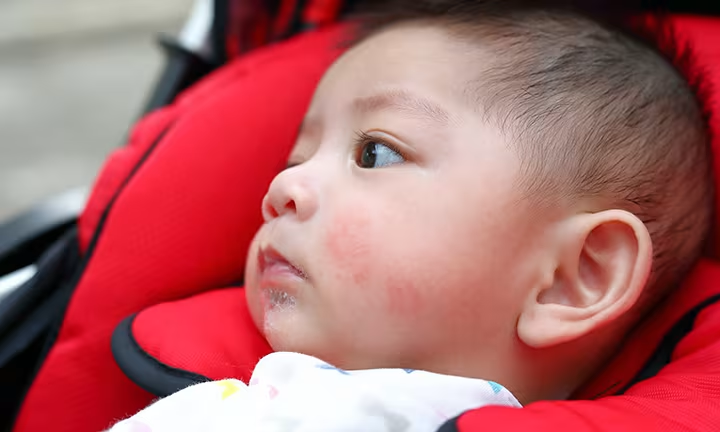
Does Your Baby Have Drool Rash?
Drool rash in babies is often caused by saliva, which causes irritation around the mouth. Read more about how it happens and how you may prevent it.
Read more
Chicken Pox Symptoms and Treatment
Chicken pox is a contagious, yet common infection caused by the varicella-zoster virus. Read more about prevention, symptoms, and treatment of the rash.
Read more
What Is Tongue Tie?
Tongue-tie in newborns is a condition where the tongue movement is restricted and may cause difficulty in breastfeeding. Read more about the symptoms.
Read more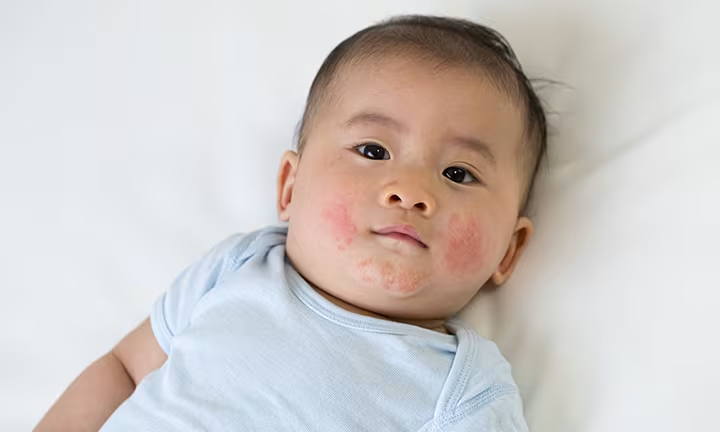
All About Fifth Disease (Slapped Cheek)
Fifth disease, a.k.a. Slapped Cheek syndrome, is a mild viral infection that can affect babies. Learn more about Parvovirus B19 symptoms and treatment here.
Read more
How to Relieve Baby Constipation: Signs, Causes, & Solutions
Learn the signs, causes, and gentle infant constipation solutions to help your baby poop more comfortably.
Read more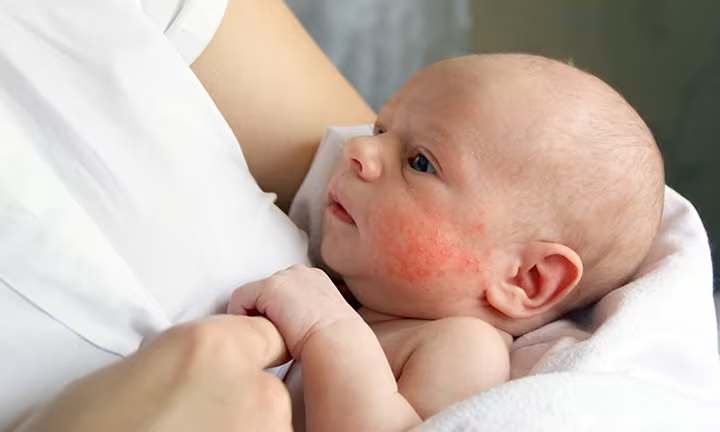
What to Do When Your Baby Has Eczema
Eczema looks like a red, scaly rash and it can cause your baby discomfort and itching. Learn about the causes, symptoms, and treatment.
Read more
The Recommended Immunization Schedule For Your Child
Stay informed about your child's immunization schedule for family. Learn about the importance of vaccines and the recommended timeline for vaccinations.
Read more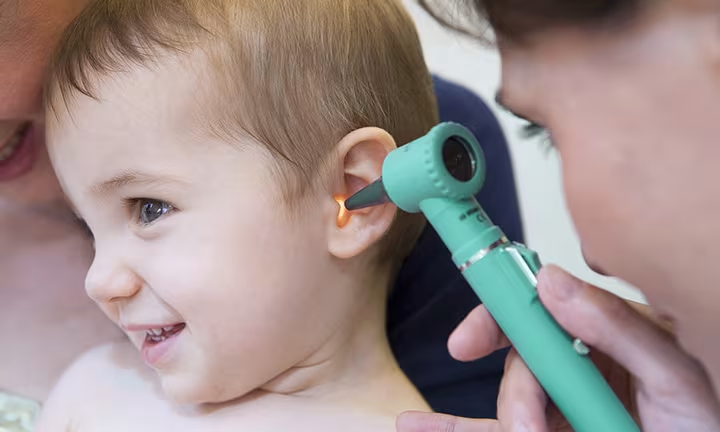
Ear Infections in Infants
Ear infections in babies are very common. Otitis Media, also known as middle ear infection, is the most common kind. Read more about the symptoms and treatment.
Read more
HFMD: Hand, Foot, and Mouth Disease
What is HFMD? Hand, foot, and mouth disease is a contagious viral infection that may cause fever and blisters. Read more about it here.
Read more
Everything You Need to Know About Your Baby's Soft Spot
What is a fontanelle? Why does your baby have a soft spot on her head? Read all about your baby's soft spot and when it closes.
Read moreDoes Your Baby Have Drool Rash?
Drool rash in babies is often caused by saliva, which causes irritation around the mouth. Read more about how it happens and how you may prevent it.
Read moreChicken Pox Symptoms and Treatment
Chicken pox is a contagious, yet common infection caused by the varicella-zoster virus. Read more about prevention, symptoms, and treatment of the rash.
Read moreWhat Is Tongue Tie?
Tongue-tie in newborns is a condition where the tongue movement is restricted and may cause difficulty in breastfeeding. Read more about the symptoms.
Read moreAll About Fifth Disease (Slapped Cheek)
Fifth disease, a.k.a. Slapped Cheek syndrome, is a mild viral infection that can affect babies. Learn more about Parvovirus B19 symptoms and treatment here.
Read moreHow to Relieve Baby Constipation: Signs, Causes, & Solutions
Learn the signs, causes, and gentle infant constipation solutions to help your baby poop more comfortably.
Read moreWhat to Do When Your Baby Has Eczema
Eczema looks like a red, scaly rash and it can cause your baby discomfort and itching. Learn about the causes, symptoms, and treatment.
Read moreThe Recommended Immunization Schedule For Your Child
Stay informed about your child's immunization schedule for family. Learn about the importance of vaccines and the recommended timeline for vaccinations.
Read moreEar Infections in Infants
Ear infections in babies are very common. Otitis Media, also known as middle ear infection, is the most common kind. Read more about the symptoms and treatment.
Read moreJoin Pampers Club and get:
- PAMPERS COUPONS
- TOOLS & QUIZZES
- PARENTING TIPS
 PAMPERS COUPONS
 TOOLS & QUIZZES
 PARENTING TIPS