
Your Newborn's Sleep Schedule



Newborns sleep a lot throughout the day and night, but only for short blocks of time. For you as a parent, waking through the night to soothe or feed your baby is what can be so exhausting about this period.
It’s natural to wonder how long your newborn should sleep for, what kind of sleep patterns may start to emerge, and how to establish a sleep routine so that your baby’s sleep becomes a little more predictable. We’ve got you covered in this comprehensive guide to newborn sleep.
How Much Sleep Do Newborns Need?
Every baby and child is different, and the amount of sleep each little one needs may vary. In general, though, newborns sleep for up to 16 or 17 hours in 24-hour period, but the sleep doesn’t happen all at once. Instead, very young babies will snooze in one- to three-hour blocks during both the day and night.
All of this sleep is essential for your baby’s healthy and happy development. Over time, this haphazard round-the-clock dozing will become more organized, with more of your little one's sleep hours taking place at night.
What Are the Sleep Patterns of a Newborn?

Unlike adults, who typically sleep for at least seven hours at night and are awake for the rest of the day, newborns sleep in shorter blocks throughout both the day and night.
To give you a rough idea, in the first several weeks your newborn may sleep for about one to three hours followed by a short period of wakefulness before sleeping again. As the months go by, these sleep blocks may lengthen to become about four or five hours long.
By about 6 months of age, your baby’s sleep patterns may begin to look more like those of an adult, meaning your little one may sleep for longer stretches at night and be more wakeful during the day. Keep in mind that these extended bouts of nighttime sleep may be only about five or six hours long.
Although your 6-month-old may also be more active during the day, she will still need two or three daytime naps.
It’s important to remember that every baby is unique, and that your baby’s sleep patterns may differ from what we’ve described here.
The way sleep evolves from the round-the-clock blocks of a newborn to the longer nighttime sleep of an older child or adult is not a linear process.
You may find that your older baby sleeps for longer periods for a few months, but then reverts to waking up more frequently in the middle of the night. This is commonly referred to as sleep regression and is a normal part of development.
Sleep regression may occur when your child is feeling sick or unsettled, or when he’s going through a growth spurt or a developmental jump that affects his sleep patterns for a time.
That’s not all: Even once your child is sleeping through the night, at least one daytime nap may still be needed for many years to come.
In Summary Newborns sleep for up to 17 hours per day. This is broken into short chunks of about one to three hours, which are spread throughout the day and night. In time, these sleep blocks become longer—about four or five hours each. |
Stages of Sleep in Newborns
The sleep of newborns occurs in four stages:
Stage 1: Drowsiness. Your baby becomes drowsy after a period of wakefulness and is ready to fall asleep. It’s a good idea to put your baby to sleep in her crib when she is drowsy and not yet asleep.
Stage 2: REM (Rapid Eye Movement) or active sleep. Your baby may start to twitch or jerk his arms and legs, and his eyes may move under his eyelids. His breathing may be irregular and stop for 5 to 10 seconds. This is referred to as “normal periodic breathing of infancy.” His breathing speeds up to a rate of between 50 and 60 breaths per minute, and this rapid pace lasts between 10 and 15 seconds. Then his breathing will return to a regular pace, with the cycle repeating. This type of breathing is completely normal for young babies, and your little one will eventually grow out of it by around 6 months old.
Stage 3: Light sleep. In this stage, your baby’s breathing is regular and sleep is not as active as in the previous stage.
Stage 4 and 5: Deep or non-REM sleep. Also known as quiet sleep, this is the stage your baby falls into a deep sleep. There is no twitching or any other movements. It may be difficult to wake your baby in this stage should you need to for any reason.
When to Set Up a Sleep Routine
It’s never too early to think about adding structure around your baby’s sleep, but keep in mind that it may be several months before your baby has a predictable sleep pattern.
Newborns don’t yet know the difference between day and night and their circadian rhythms are still developing. And because their stomachs are so small, newborns can only go for a few hours before they need to be fed again, even during the night.
At this early stage, it’s more important to cater to your baby’s feeding and sleep needs (and biological clock), rather than pushing a strict sleep schedule onto your little one. Look out for your baby’s drowsy periods and encourage (and allow) sleep then.
If you want, you can start keeping track of when your baby sleeps and feeds, and begin to put together a bedtime routine that you could follow consistently. Later on, when you may wish to start sleep training, having some basic sleep routines already in place may make things easier.
In Summary During the newborn phase your little one’s sleep will likely be unpredictable. Follow your newborn's lead on when sleep will be: Pay attention to when she seems drowsy and let her sleep then. You can start to track feeding and sleep times, and create a soothing bedtime routine to start forming those positive sleep associations, but it’s too early to expect your newborn to have predictable sleep patterns. |
How to Set Up a Bedtime Routine
The idea behind a bedtime routine is to settle and relax your baby before putting her down in her crib for sleep, including for naps.
Because babies tend to love routine, having a simple ritual that you always follow helps your baby anticipate and learn that the time for sleep is coming, and helps her wind down.
A bedtime routine can include a bath, a song or story, or a baby massage. Avoid any stimulating activities in the period just before sleep.
Make sure your baby is still awake (but sleepy) when you place him in his crib. This helps create a positive sleep association with the crib.
In Summary Creating a bedtime routine for your little one can help your baby wind down before sleep. The routine can include a bath, singing, reading, or some other calming activity. Eventually your baby will come to anticipate sleep through the routine. |
Will Your Newborn Be Able to Sleep Through the Night?
No, newborns can’t yet sleep through the night. They need to be fed every few hours, and typically sleep for short blocks of time.
Generally speaking, a newborn may be considered to be a “good sleeper” if she is able to go back to sleep by herself, without soothing from a parent, when she wakes in the night; if she settles down quickly after being fed or changed; or if a quick moment of comfort from a parent is all it takes for her to fall back asleep.
Some babies can self-soothe instinctively while others will need a little help to learn how. Remember, for a newborn, being a “good sleeper” doesn't mean not waking up; rather it means being able to return to sleep after a period of wakefulness.
Know that it may take some time for your baby to learn how to self-soothe, and even once he does there may be some ups and downs throughout babyhood, toddlerhood, and beyond.
In Summary Your newborn won’t yet be able to sleep through the night. The need for nighttime feedings and your baby naturally awaking after a couple of hours of sleep will prevent long stretches of sleep at this stage. |
How to Get Your Newborn to Sleep at Night
All babies cry, and all parents experience a crying baby at night from time to time. There are many reasons your newborn may cry at night, rather than falling or staying asleep. For example, she may be uncomfortable or overstimulated, or may need a diaper change.
Here are some of the things you can try to help your baby settle and fall asleep:
Above all, try not to become stressed if your newborn is not sleeping; never act on any frustration you may be feeling by shaking or hitting your baby. Instead, leave your baby safely in his crib for a few minutes while you regroup in another room, and go back in when you feel calm and ready.
In Summary It’s normal for babies to cry and not be able to fall asleep sometimes. Checking that your baby is comfortable and letting him suck on a clean finger or a pacifier can help soothe him. If nothing seems to be working, leave him safely in his crib to cry for a few minutes. Sometimes letting your baby cry it out helps him fall asleep on his own. Never shake or hit your baby no matter how frustrated you are. If you’re feeling stressed, take a few minutes to regroup in another room and go back in when you’re feeling calm again. |
How Long Do Newborns Sleep at Night?
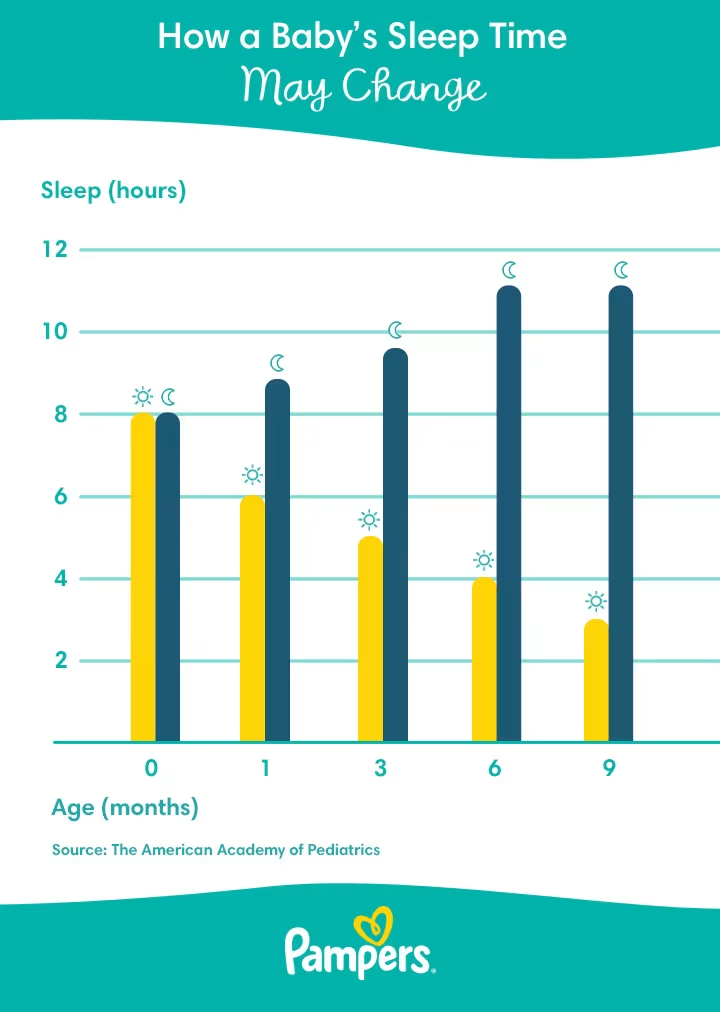
On average, newborns will sleep for around 16 or 17 hours in a 24-hour period, but in one- to three-hour stretches. This means your baby will sleep for several short blocks at night, totaling about eight hours altogether.
Remember, since every baby is different, your baby may sleep more or less at night than this.
As a general guide, here’s how much of your newborn’s total sleep time occurs during daytime and nighttime, and how those hours shift month by month:
Can Newborns Sleep Too Much?
Many parents wonder whether their baby is sleeping too little or too much. This is an understandable concern, as you want your baby to be sleeping just the right amount.
In your newborn’s first weeks, she’ll need to be fed about every three to four hours. If your newborn sleeps longer than four hours, you may need to wake her up for a feeding. Check in with your baby's healthcare provider on this matter. Depending on your baby's weight, age, and general state of health, your provider may recommend waking her up or letting her sleep.
If your baby's afternoon naps are longer than three or four hours, it’s a good idea to wake her up for a feeding and some playtime. Naps that are too long or too close to bedtime can make falling asleep in the evening harder.
Can Newborns Sleep for Six Hours Straight?
A newborn most likely will not be able to sleep for six hours straight. Newborns typically sleep in one- to three-hour chunks of time and also need feedings every three to four hours. Either your newborn will wake up on his own when he’s hungry, or you’ll need to wake him, depending on the advice of your healthcare provider.
A Note on Newborn Baby Sleep Safety
A safe sleep environment is very important. Here are some important sleep safety recommendations to follow:
In Summary Creating a safe sleep environment for your baby is very important. Always put your baby on her back in her crib for sleep. Have a firm mattress in the crib but nothing else (so no toys, pillows, or blankets, for example). Experts recommend keeping the crib in your room for the first six months. |
The Bottom Line
Newborns sleep a lot, and the fact that they doze only in shorts bursts around the clock can make this period so tiring for you as a parent.
Hang in there and try to get some rest whenever you can. Consider sharing middle-of-the-night feedings and diaper changes with your partner, and accept help from close friends and family so that you can have some down time.
Try to remember that this exhausting newborn period will pass; eventually your baby will sleep for longer stretches and have more predictable sleep patterns. In time, the sleep-deprived fog of this newborn phase will clear, and you may even come to look back fondly on this bleary-eyed period.
How We Wrote This Article
The information in this article is based on the expert advice found in trusted medical and government sources, such as the American Academy of Pediatrics and the American College of Obstetricians and Gynecologists. You can find a full list of sources used for this article below. The content on this page should not replace professional medical advice. Always consult medical professionals for full diagnosis and treatment.
Soothing Lullaby Songs for Babies: Gentle Melodies for Sleep
Find soothing lullaby songs for babies and toddlers. Create a calming bedtime routine with gentle melodies to help your little one relax, bond, and fall asleep.
Read more
Safe Sleep Tips for Your Newborn Baby's Comfort
Discover essential sleep safety guidelines to protect your baby during bedtime. Learn best practices and tips for creating a safe sleeping environment.
Read moreSoothing Lullaby Songs for Babies: Gentle Melodies for Sleep
Find soothing lullaby songs for babies and toddlers. Create a calming bedtime routine with gentle melodies to help your little one relax, bond, and fall asleep.
Read moreSafe Sleep Tips for Your Newborn Baby's Comfort
Discover essential sleep safety guidelines to protect your baby during bedtime. Learn best practices and tips for creating a safe sleeping environment.
Read moreSoothing Lullaby Songs for Babies: Gentle Melodies for Sleep
Find soothing lullaby songs for babies and toddlers. Create a calming bedtime routine with gentle melodies to help your little one relax, bond, and fall asleep.
Read moreSafe Sleep Tips for Your Newborn Baby's Comfort
Discover essential sleep safety guidelines to protect your baby during bedtime. Learn best practices and tips for creating a safe sleeping environment.
Read more