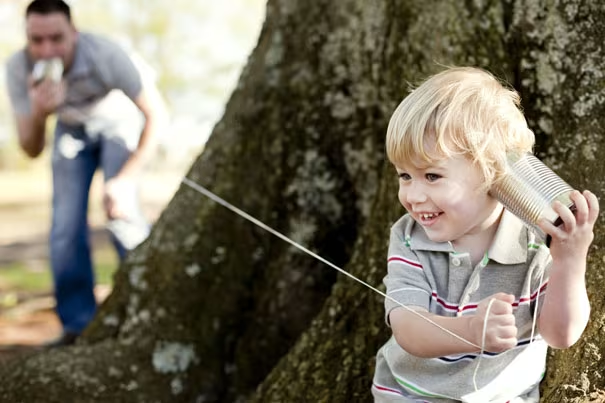
Toddler Activities and Types of Play


Play is the work of childhood. It's the laboratory in which children figure out how the world works, who they are, who they might be, and what they can and cannot do.
Not all play is the same, either in its style or its effect. Watch closely some of the different types of play your child engages in and you'll see how she is taking on the world.
Symbolic Play
To an infant or a young toddler, a block is a block. If she has more than one, she might stack them or pull them apart. But once she's about 2 years old, she can start using blocks for much more. In her eyes they can become a house, a car, or anything else she wants.
Toys become symbols for other objects. Your child may try to feed her doll as if it were another baby. If you look carefully, you may see that she sometimes holds her doll or teddy bear the same way you hold her.
This type of symbolic representation shows you how sophisticated her brain is becoming. It also allows her to prepare for or work through potentially frightening events. For example, a savvy pediatrician who needs to check your child's ears for infection may begin by looking in the ears of the doll she brought with her to the exam. That allows the toddler to anticipate what will happen to her and helps remove her anxieties.
Parallel Play
Toddlers need playmates, yet they play with them quite differently from the way older children play together. Place two 18-month-olds with similar toys near each other in the same room, and you'll note that they don't seem to pay much attention to each other.
But look more closely, and you'll notice that if one picks up a truck, the other is likely to do the same. If the first child looks at that truck and says, "No" (a toddler's favorite word), the second is likely to imitate him and yell, "No!" as well. If the toddlers are old enough to have more advanced verbal skills, you might overhear them having what sounds like a conversation that doesn't make sense. "Puppy ride car." "That's a big truck!" "Is puppy hungry?" "My truck. Vroom, vroom!"
This is an example of parallel play. Unlike older children, who interact and communicate directly, toddlers play in parallel. While they may appear to be playing independently, kids this age are keeping an eye on each other's behavior. Parallel play is often a first step in forming strong social relationships outside of the family. Parallel playmates are your child's first friends.
Imaginary Play
Among young children, the line between fantasy and reality is delightfully fuzzy. An older toddler or a preschooler can fight dragons or fly to the moon, all without leaving his bedroom. If you want to build a child this age a fort, all you need are two chairs and a blanket to drape over them. Pretend play serves many purposes and pushes the boundaries of play. It allows your child to explore new ideas and experience life from a different perspective.
Starting at around age 3, pretend play often expands to include the creation of imaginary companions. These pretend friends often do things that the child cannot or dares not. A pretend buddy may be highly demanding or speak rudely to adults and older children. He may have magical powers or tremendous strength or wisdom. This is a way for a child to experience life from a different perspective and to toy with the notion of power. It's also a way to fix the blame on someone else when the child spills juice on the Persian carpet.
While the appearance of an imaginary companion sometimes worries parents, it should not. In fact, it should be celebrated. Research by Dr. Jerome Singer at Yale University found that preschoolers who had imaginary companions also tended to have greater imaginations and bigger vocabularies than their peers who did not. In addition, they were generally happier and got along better with classmates. Interestingly, quite a few of those children didn't tell their parents about their imaginary companions.
Collaborative Play
Preschoolers progress from solitary and parallel play to collaborative play. It's at this stage that your child learns to master important new social skills, such as sharing, taking turns, obeying rules, and negotiating. These are all very difficult behaviors for a young child to learn. After all, at this age, your child believes she is the center of the universe!
Sharing.
Taking turns.
Obeying rules.
Negotiating.
Once your child can negotiate, share, take turns, and follow rules, he will be well on his way to navigating the school playground, the high school dance, the college dormitory, and the corporate boardroom.
So watch your child when he plays. You'll gain tremendous insights into not only his social development but his thinking abilities as well. Besides, it's a lot of fun.

Grocery Shopping with Kids or Babies
Make grocery shopping with kids easier with practical tips and advice. Discover fun and great ways to keep toddlers engaged and stress-free while shopping.
Read more
Toddler activities: making your own greeting cards
Encourage creativity with greeting card activities designed for toddlers. Discover simple, enjoyable projects that enhance motor skills and inspire expression.
Read more
Toddler activities: Leaf rubbing
Learn what essentials to include in a baby-friendly medicine cabinet and what items to avoid for kids. Keep your baby safe with this comprehensive checklist.
Read more
Toddler activities: finger-painting fun
Explore fun toddler activities like finger painting to spark creativity. Get tips for setting up mess-free sessions your toddler will love!
Read more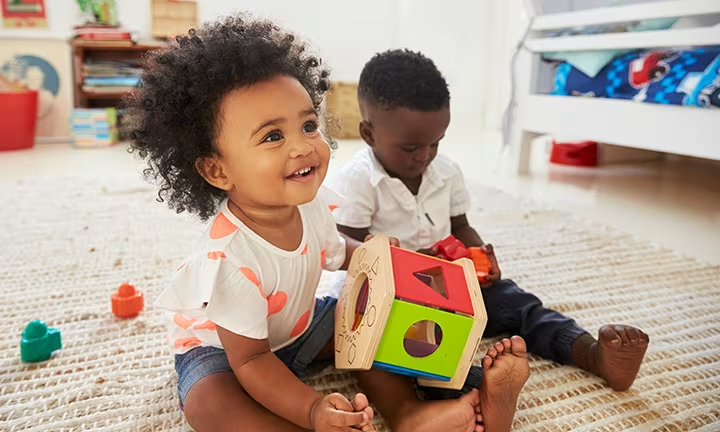
What Is Parallel Play?
Parallel play is one of the five stages of child play. It refers to when children play alongside each other, but not together.
Read more
Screen Time for Kids
Wondering how much screen time is recommended for your child? Learn more about what's considered ok and how you can limit and supervise.
Read more
Crafts for toddlers: Ideas and Tips
Art and craft ideas can be fun and educational for toddlers, and will keep your tot happy and busy.
Read more
First haircut: your child’s first trip to the hairdresser
Prepare for your child's first haircut with tips and advice on choosing a salon, making the experience enjoyable, and preserving this milestone memory.
Read moreGrocery Shopping with Kids or Babies
Make grocery shopping with kids easier with practical tips and advice. Discover fun and great ways to keep toddlers engaged and stress-free while shopping.
Read moreToddler activities: making your own greeting cards
Encourage creativity with greeting card activities designed for toddlers. Discover simple, enjoyable projects that enhance motor skills and inspire expression.
Read moreToddler activities: Leaf rubbing
Learn what essentials to include in a baby-friendly medicine cabinet and what items to avoid for kids. Keep your baby safe with this comprehensive checklist.
Read moreToddler activities: finger-painting fun
Explore fun toddler activities like finger painting to spark creativity. Get tips for setting up mess-free sessions your toddler will love!
Read moreWhat Is Parallel Play?
Parallel play is one of the five stages of child play. It refers to when children play alongside each other, but not together.
Read moreScreen Time for Kids
Wondering how much screen time is recommended for your child? Learn more about what's considered ok and how you can limit and supervise.
Read moreCrafts for toddlers: Ideas and Tips
Art and craft ideas can be fun and educational for toddlers, and will keep your tot happy and busy.
Read moreFirst haircut: your child’s first trip to the hairdresser
Prepare for your child's first haircut with tips and advice on choosing a salon, making the experience enjoyable, and preserving this milestone memory.
Read moreJoin Pampers Club and get:
- PAMPERS COUPONS
- TOOLS & QUIZZES
- PARENTING TIPS
 PAMPERS COUPONS
 TOOLS & QUIZZES
 PARENTING TIPS