What Is Parallel Play?


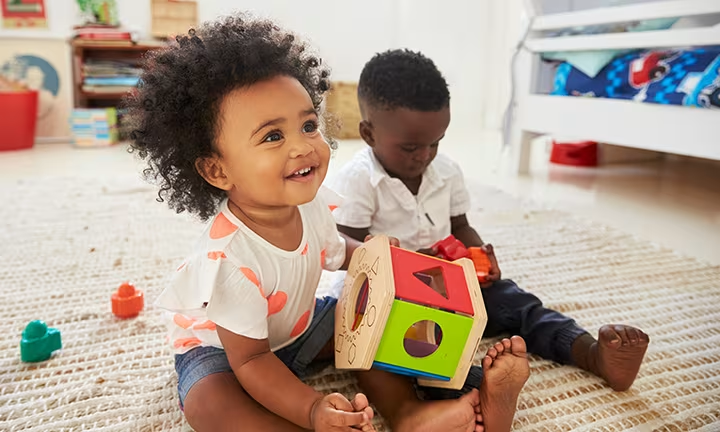
To adults, play and learning might appear separate, but it’s the same thing to children. Play is one of your toddler's main tools for development, and parallel play shows this learning in action. What is parallel play? It’s when your toddler imitates or mimics another child playing without interacting directly. Although it might seem like a curious behaviour to you, it’s actually a very important stage of development! Learn more about what makes it unique and the benefits of parallel play.
What Is the Parallel Stage of Play?
We have the sociologist Mildred Parten Newall to thank for her classification of the official stages of play. Parallel play is the third stage of play, and when two or more toddlers play near one another or next to one another, but without interacting directly. At the beginning of this stage, they tend to observe other children before playing in parallel. After observing, they may even mimic the other child. Newall included this behaviour as its own stage before parallel play, but others lump the two together. But parallel play is just one stage of play, and they all work together to support your little one’s development. So, what are the five types of play? Below you’ll find five different stages of play, when they tend to occur, and what to look out for:
| The Five Stages of Play | ||
|---|---|---|
| Stage of Play | Age Range | Behaviour |
| Unoccupied | Birth to 3 months | Your newborn is discovering how their body moves, so you can anticipate lots of little movements that feel like play to your baby. |
| Solitary | Birth to 2 years | Up until 2 years, most children aren’t interested in playing with others. They have yet to develop those skills, so they prefer to play alone. |
| Parallel | 2+ years | At about 2 years, parallel play typically starts with an “onlooker” or “observer” behavior. Still, kids aren’t developmentally ready to play together, so they will do the same or similar thing next to each other. |
| Associate | 3 to 4 years | This stage is when kids tend to take baby steps toward playing with other children. They still might not be playing together but may share the same toys and play next to each other. |
| Cooperative | 4+ years | Cooperative play is the final stage, as it’s when children begin to play together. |
Examples of Parallel Play
During toddlerhood, imitation and pretend games are common. An example of parallel play might be your child imitating what a playmate is doing while not seeming to interact with the other child directly. If the playmate is playing with blocks, your toddler may also decide to play with blocks. Keep in mind that sharing isn’t a concept your child can understood at this age. For example, if there is only one truck and your toddler sees another child playing with it, they may decide to try to take it for themself. This could lead to conflict, which you’ll need to help resolve, perhaps by offering your child another toy to play with instead.
The Importance and Benefits of Parallel Play
Even though it may seem odd to see your child playing independently next to a child instead of together with that child, it doesn’t mean that something is wrong. Parallel play is an important part of your child’s development because it helps them learn about relationships and how to behave around others. As your child matures, you’ll notice them playing more collaboratively and using their imagination in more active ways. All these types of play are important for development. A child can’t reach the associate and cooperative stages of play until they move through parallel play on their own time.
How Parallel Play Relates to the Next Stages of Play
Associative play vs. parallel play, what’s the difference? Many parents ask this question, as the two seem similar. It’s best to think of parallel play, associate play, and cooperative play as stepping-stones:
How Can You Help Your Toddler With Parallel Play?
Here’s how you can help your toddler with parallel play:
In time, parallel play will boost your little one’s social skills and lead them to interact more directly with other children. Parallel playmates are your child's first friends!
At What Age Does Parallel Play Start and Stop?
Parallel play could begin at about 18 months or 2 years of age and continue for another year or two. Each child is unique, and your little one may engage in this type of play for a slightly longer or shorter period. Around the time your child is ready for preschool, you’ll notice them interacting more with other children.
FAQS AT A GLANCE
Parallel play is the third of the stages of play, preceded by unoccupied and solitary play and followed by associate play and cooperative play.
The Bottom Line
Parallel play is just another step in your child’s healthy development. Even though it may look odd to you that your child is not interacting with fellow playmates, playing alongside them is normal and a way for your toddler to learn the basics of social interaction. During this time, it’s a good idea to set up playdates for your child with children of similar age. Although they may not play together, playdates are good opportunities for social and emotional growth, as they help your toddler start to learn how to form relationships. Before you know it, you’ll notice your toddler interacting more directly with the children around them, whether it’s on a playdate, at preschool, or at the playground with the neighborhood kids. You’ll love seeing how their world expands with each new adventure and watching your little one make new friends.
The information in this article is based on the expert advice found in trusted medical and government sources, such as the American Academy of Pediatrics and the American College of Obstetricians and Gynecologists. You can find a full list of sources used for this article below. The content on this page should not replace professional medical advice. Always consult medical professionals for full diagnosis and treatment.
- Book: Caring for your baby and young child, birth to age 5, Sixth Edition Paperback – November 2, 2014 by American Academy of Pediatrics (Author)
- Book: Guide to Your Baby’s First Years, Second Edition Paperback – 2020 by Mayo Clinic, Walter J. Cook, M.D. Kelsey M. Klaas, M.D. (Authors)
- Parten MB Social Participation among Preschool Children. Journal of Abnormal and Social Psychology. 1932; 27 (3): 243–269.
- Healthy Children: Children Play
- Healthy Children: Social Development in 1-Year-Olds
- KidsHealth: Fit Preschooler
- Mayo Clinic: Child Development
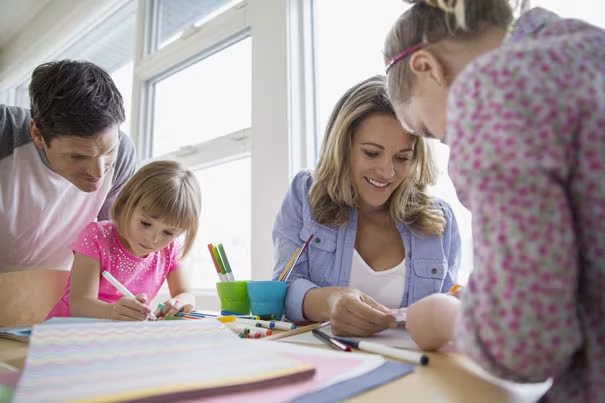
Toddler activities: making your own greeting cards
Encourage creativity with greeting card activities designed for toddlers. Discover simple, enjoyable projects that enhance motor skills and inspire expression.
Read more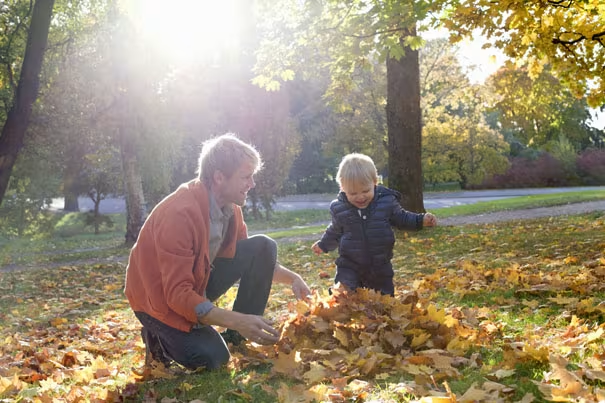
Toddler activities: Leaf rubbing
Learn what essentials to include in a baby-friendly medicine cabinet and what items to avoid for kids. Keep your baby safe with this comprehensive checklist.
Read more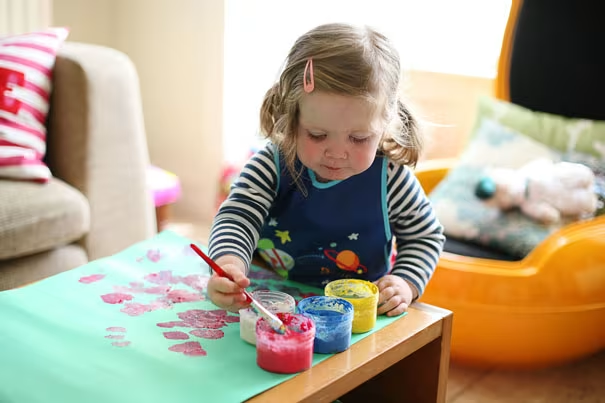
Toddler activities: finger-painting fun
Explore fun toddler activities like finger painting to spark creativity. Get tips for setting up mess-free sessions your toddler will love!
Read more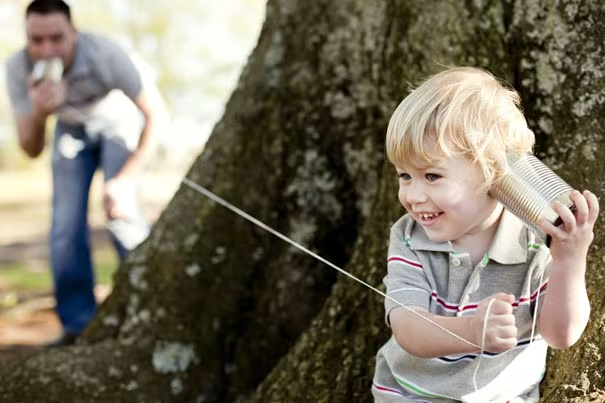
Toddler Activities and Types of Play
When toddlers play they learn to understand how the world works, who they are, and what they can and cannot do. How do they do this in their different stages of development?
Read more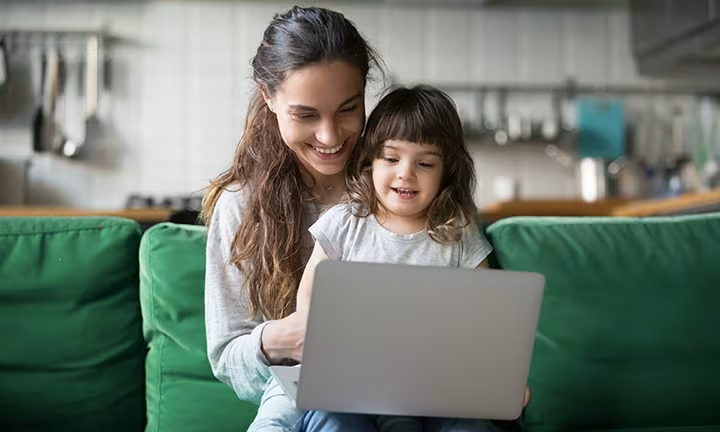
Screen Time for Kids
Wondering how much screen time is recommended for your child? Learn more about what's considered ok and how you can limit and supervise.
Read more
Crafts for toddlers: Ideas and Tips
Art and craft ideas can be fun and educational for toddlers, and will keep your tot happy and busy.
Read more
First haircut: your child’s first trip to the hairdresser
Prepare for your child's first haircut with tips and advice on choosing a salon, making the experience enjoyable, and preserving this milestone memory.
Read more
Grocery Shopping with Kids or Babies
Make grocery shopping with kids easier with practical tips and advice. Discover fun and great ways to keep toddlers engaged and stress-free while shopping.
Read moreToddler activities: making your own greeting cards
Encourage creativity with greeting card activities designed for toddlers. Discover simple, enjoyable projects that enhance motor skills and inspire expression.
Read moreToddler activities: Leaf rubbing
Learn what essentials to include in a baby-friendly medicine cabinet and what items to avoid for kids. Keep your baby safe with this comprehensive checklist.
Read moreToddler activities: finger-painting fun
Explore fun toddler activities like finger painting to spark creativity. Get tips for setting up mess-free sessions your toddler will love!
Read moreToddler Activities and Types of Play
When toddlers play they learn to understand how the world works, who they are, and what they can and cannot do. How do they do this in their different stages of development?
Read moreScreen Time for Kids
Wondering how much screen time is recommended for your child? Learn more about what's considered ok and how you can limit and supervise.
Read moreCrafts for toddlers: Ideas and Tips
Art and craft ideas can be fun and educational for toddlers, and will keep your tot happy and busy.
Read moreFirst haircut: your child’s first trip to the hairdresser
Prepare for your child's first haircut with tips and advice on choosing a salon, making the experience enjoyable, and preserving this milestone memory.
Read moreGrocery Shopping with Kids or Babies
Make grocery shopping with kids easier with practical tips and advice. Discover fun and great ways to keep toddlers engaged and stress-free while shopping.
Read moreJoin Pampers Club and get:
- PAMPERS COUPONS
- TOOLS & QUIZZES
- PARENTING TIPS
 PAMPERS COUPONS
 TOOLS & QUIZZES
 PARENTING TIPS