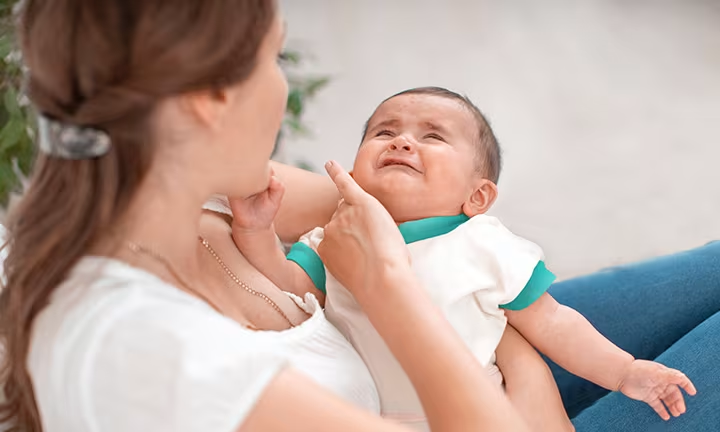
Moro Reflex Explained


The Moro reflex is one of the reflexes babies are born with, and you're likely to spot this involuntary response soon after birth. Find out what the medical definition is, what triggers this startle reflex, and what you can do to help calm your baby if needed.
What Is the Moro Reflex?
The Moro or “startle” reflex is an automatic or involuntary reflex in newborns and infants in which a baby suddenly flings their arms sideways with their hands flexed, throws out their legs, extends their neck, and, just as suddenly, brings their arms together and may begin crying. The Moro reflex usually occurs in the following instances:
Keep in mind that in premature babies, the Moro reflex may be weak initially.
In Summary The Moro reflex, or the “startle” reflex, is an involuntary and instinctive movement that babies are simply born with. Your newborn may “startle” when something happens suddenly, such as they hear a loud noise, their body shifts balance, or their head falls backward. |
Is There a Way to Calm Your Baby’s Moro Reflex?
In some instances, your baby may startle themself awake during sleep because of the Moro reflex. To help prevent this, you could swaddle your baby at bedtime. This involves wrapping your newborn in a swaddle blanket much like a burrito. See the image below for a step-by-step, how-to swaddle guide:

When Do Babies Lose the Moro Reflex?
The Moro reflex usually appears in your baby's first few weeks, peaking in their first month before disappearing after 2 months of age. Eventually, as this reflex disappears, your newborn's movements will become more intentional.

How Do You Test for the Moro Reflex?
Your child’s healthcare provider will test your baby for the Moro reflex with a simple exercise, soon after birth and during well-child visits. To do the Moro reflex exercise, your child’s healthcare provider will place your baby face-up on a soft, padded surface. The provider will gently lift your baby’s head and then quickly release it, supporting the head again as it falls backward just for a moment. Because your little one is fully supported, there’s no risk for injury. Your baby may then look startled, throw out their arms, and cry for a short while. They may also draw their arms in and, eventually, calm down and relax. This simple exercise shows the provider that your baby has the instinctive Moro reflex, which is healthy. If your baby has a different response, such as an absence of Moro reflex or one that’s overly exaggerated or asymmetric, meaning that they don’t respond equally with both arms, the provider may perform an examination and/or order further tests to determine what’s causing the atypical response.
In Summary The Moro reflex typically last until 2 months old, but your child’s healthcare provider will track it using simple tests and exercises at well-child visits. If your little one has an absence of the Moro reflex or one that’s asymmetric or exaggerated, the provider will help you determine the cause. |
What Does It Mean if Your Baby Still Has the Moro Reflex?
Every child develops at their own pace, so it’s OK if your little one’s Moro reflex continues past 2 months. However, if you notice your baby still has the Moro reflex after 4 months, consult their healthcare provider. It may be a sign of a developmental delay. The provider will evaluate your baby’s individual case and come to a determination based on various other assessments and tests.
In Summary If your little one still experiences the Moro reflex after 2 months, contact their healthcare provider. It could be a sign of a developmental delay, but the provider will determine this with an assessment. However, remember that every child develops at their own pace, and some babies do lose the Moro reflex when they’re younger or older than 2 months. |
FAQS AT A GLANCE
The Moro reflex test shows your baby’s healthcare provider that your little one has the instinctive “startle” reflex. When your baby is startled, it’s natural for them to have a reaction that typically includes
- a startled facial expression
- flexed hands
- arms flinging sideways
- legs and neck extending
- crying.
The Bottom Line
The Moro reflex is an involuntary “startle” reflex that your baby has as early as their first few weeks, lasting until about 2 months old. It will eventually disappear, and your child’s healthcare provider will track the Moro reflex by doing simple tests and exercises. Sometimes, babies may have the Moro reflex at night during sleep. To help prevent your baby from startling themself awake, consider swaddling. If your baby’s Moro reflex continues past 4 months of age, speak to your healthcare provider. It may be a sign of developmental delay. However, since every baby develops at an individual pace, your little one may stop having the Moro reflex earlier or even later.
The information in this article is based on the expert advice found in trusted medical and government sources, such as the American Academy of Pediatrics and the American College of Obstetricians and Gynecologists. You can find a full list of sources used for this article below. The content on this page should not replace professional medical advice. Always consult medical professionals for full diagnosis and treatment.
- Book: Caring for your baby and young child, birth to age 5, Sixth Edition Paperback – November 2, 2014 by American Academy of Pediatrics (Author)
- MedlinePlus: Moro reflex
- MedlinePlus: Moro reflex – image
- NCBI: The Grasp Reflex and Moro Reflex in Infants: Hierarchy of Primitive Reflex Responses
- NCBI: Moro Reflex
- Healthy Children: Good Night Sleep Tight
- Healthy Children: Newborn Reflexes
Object Permanence in Babies
What is object permanence? It's a development milestone when your baby understands something exists even though it's unseen. Learn how to spot and encourage it!
Read more
What Are Gross Motor Skills?
Gross motor skills are a huge milestone in your little one’s development. Read on to learn more about what they are and when to expect them.
Read more
What Are Fine Motor Skills?
What are fine motor skills? Learn how toddlers develop fine motor skills and get better at performing intricate tasks with their hands.
Read more
Understanding and Managing Separation Anxiety in Babies
Learn to recognize and address separation anxiety in babies, including symptoms, causes, and soothing techniques.
Read more
When Do Babies Start Crawling?
Many babies start crawling between 7 and 10 months. Find out if your child is showing early signs of crawling and learn more about this developmental milestone.
Read more
When Do Babies Sit Up?
Find out at what age your baby might sit up on their own, signs they’re about to reach this milestone, and how to help your baby learn to sit up.
Read more
Baby Growth Spurts: When Do They Typically Occur?
When do babies have growth spurts? Discover baby growth spurts, including signs, timing, and tips for supporting your little one during these growth phases.
Read moreObject Permanence in Babies
What is object permanence? It's a development milestone when your baby understands something exists even though it's unseen. Learn how to spot and encourage it!
Read moreWhat Are Gross Motor Skills?
Gross motor skills are a huge milestone in your little one’s development. Read on to learn more about what they are and when to expect them.
Read moreWhat Are Fine Motor Skills?
What are fine motor skills? Learn how toddlers develop fine motor skills and get better at performing intricate tasks with their hands.
Read moreUnderstanding and Managing Separation Anxiety in Babies
Learn to recognize and address separation anxiety in babies, including symptoms, causes, and soothing techniques.
Read moreWhen Do Babies Start Crawling?
Many babies start crawling between 7 and 10 months. Find out if your child is showing early signs of crawling and learn more about this developmental milestone.
Read moreWhen Do Babies Sit Up?
Find out at what age your baby might sit up on their own, signs they’re about to reach this milestone, and how to help your baby learn to sit up.
Read moreBaby Growth Spurts: When Do They Typically Occur?
When do babies have growth spurts? Discover baby growth spurts, including signs, timing, and tips for supporting your little one during these growth phases.
Read moreObject Permanence in Babies
What is object permanence? It's a development milestone when your baby understands something exists even though it's unseen. Learn how to spot and encourage it!
Read moreJoin Pampers Club and get:
- PAMPERS COUPONS
- TOOLS & QUIZZES
- PARENTING TIPS
 PAMPERS COUPONS
 TOOLS & QUIZZES
 PARENTING TIPS