
Sore Nipples from Breastfeeding: Causes and Solutions


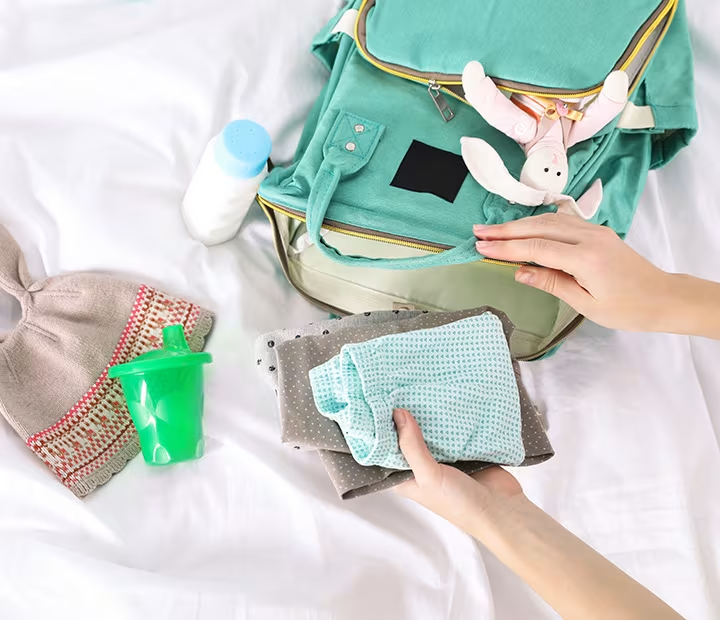
What’s in Your Diaper Bag? Take our Poll!
What are your diaper bag must-haves? From essentials to just-in-case extras, every parent packs a little differently. Take our fun quiz to see how your diaper bag stacks up against other Pampers Parents.
Instant Results
Enjoyment Guaranteed
Personal Insights
How to Relieve and Treat Sore Nipples When Breastfeeding
The best way to keep your nipples from cracking, chapping, and bleeding while breastfeeding is to help your baby properly latch. Once your little one gets the hang of it, your nipples will likely feel less painful, tender, and sore. An asymmetrical latch, in particular, can help protect the nipple. If you need any help or guidance on how to latch properly, you can contact your healthcare provider or a lactation consultant.
But it might take a little time to get to a good latch, so in the meantime, you can consider some other remedies. Below are a few treatment and care options for cracked nipples (nipple fissures) plus nipples that are sore, tender, painful, and chapped from breastfeeding.
If sore nipples are due to an infection, such as thrush or mastitis, or if you develop an infection from cracked nipples while breastfeeding, your healthcare provider may prescribe antibiotics. Always consult your healthcare provider before starting any treatment.

When to Contact Your Healthcare Provider
You should contact your healthcare provider regarding sore or cracked nipples when breastfeeding if:
Can You Still Breastfeed With Cracked Nipples (Nipple Fissures)?
If you’re able to solve the issue of pain or soreness by repositioning your baby and getting a proper latch, then you can still breastfeed, even with cracked nipples and even if they’re bleeding or have fissures. With that being said, if the cracks or soreness are causing too much pain, you might want to give your nipples a break. You can do so by simply expressing or pumping for a few days instead of breastfeeding.
FAQS AT A GLANCE
The healing time of cracked nipples depends on the extent of the wound. But generally speaking, it could take anywhere from a few days to a few weeks to fully heal cracked nipples.
The Bottom Line
Cracked, sore, scabbed, bleeding, and painful nipples are common when breastfeeding, but they’re not necessarily “normal.” That simply means there are ways to help reduce the chance of experiencing these symptoms, mainly ensuring your baby has a good latch when breastfeeding. Still, many breastfeeding parents will experience this soreness with cracked nipples. So, when it does occur, use the strategies in this article to find some relief, and ask your healthcare provider or lactation consultant for some tips.
In the meantime, enjoy those tender, breastfeeding moments with your little one, and be sure to reward yourself for all your hard work through the Pampers Club app, where you can get discounts on what every parent needs: diapers and wipes.
How We Wrote This Article The information in this article is based on expert advice found in trusted medical and government sources, such as the American Academy of Pediatrics and the American College of Obstetricians and Gynecologists. You can find a full list of sources used for this article below. The content on this page should not replace professional medical advice. Always consult medical professionals for full diagnosis and treatment.
- American College of Obstetricians and Gynecologists. Your Pregnancy and Childbirth: Month to Month, 6th ed. (Washington, DC: American College of Obstetricians and Gynecologists, 2015).
- Cambridge Dictionary. “CHAPPED | English Meaning.”
- Cleveland Clinic. “Breast Lumps: Types, Benign, Moveable, Causes & Diagnosis.”
- Cleveland Clinic. “Chaffing: Causes and Prevention.”
- Cleveland Clinic. “Folliculitis: Appearance, Causes, Symptoms & Treatment.”
- Cleveland Clinic. “Nipple Fissures.”
- Cleveland Clinic. “Sore Nipples.”
- Cleveland Clinic. “Thrush: Symptoms, Causes & Treatment.”
- John Hopkins Medicine. “Breast Feeding: Getting Started.”
- Mayo Clinic. “Nipple Discharge.”
- The Breastfeeding Network. “Cracked Nipples and Moist Wound Healing.”

Sore Nipples During Breastfeeding
What causes sore nipples during breastfeeding? Read about why this happens and what you can do to prevent and treat sore nipples.
Read more
18 Breastfeeding Tips for New Moms
Breastfeeding may be challenging at first. Read our tips on how to ease into breastfeeding, such as latching, positions, and nipple care.
Read more
Expressing milk at work: going back to work while breastfeeding
Learn helpful tips for expressing milk at work and managing breastfeeding as a working mom. Find practical advice and tips for balancing work and baby care.
Read more
Five Breastfeeding Positions and Tips
If you’re having trouble finding a comfortable breastfeeding position, these useful tips and graphics will help make it an enjoyable experience.
Read more
Your Guide to Mastitis Symptoms and Treatment
Learn about the symptoms of mastitis, its causes, and explore treatment options for breastfeeding mothers to alleviate pain and discomfort.
Read more
Breastfeeding Benefits & Tips
Get all the essential tips and facts for successful breastfeeding. Learn the basics, benefits, and techniques every new mom needs to know for nursing.
Read more
Colostrum: The First Milk and Its Benefits for Your Newborn
Learn about colostrum, the first milk, including its health benefits, when it starts, how much your newborn needs, and why it’s crucial for your baby.
Read more
Cluster Feeding: Meaning and Advice
Cluster feeding is a normal phenomenon that usually occurs with newborns. Nevertheless, this can be quite challenging. Read on for tips and advice.
Read more
How To Cope With Breast Engorgement
If your breasts are swollen and painful during or after breastfeeding, you might be suffering from engorgement. Read on to learn the causes and how to cope.
Read more
How to Clear a Clogged Milk Duct
What’s a clogged milk duct? It may happen while you’re breastfeeding. Read more about why it happens and how to treat it.
Read moreSore Nipples During Breastfeeding
What causes sore nipples during breastfeeding? Read about why this happens and what you can do to prevent and treat sore nipples.
Read more18 Breastfeeding Tips for New Moms
Breastfeeding may be challenging at first. Read our tips on how to ease into breastfeeding, such as latching, positions, and nipple care.
Read moreExpressing milk at work: going back to work while breastfeeding
Learn helpful tips for expressing milk at work and managing breastfeeding as a working mom. Find practical advice and tips for balancing work and baby care.
Read moreFive Breastfeeding Positions and Tips
If you’re having trouble finding a comfortable breastfeeding position, these useful tips and graphics will help make it an enjoyable experience.
Read moreYour Guide to Mastitis Symptoms and Treatment
Learn about the symptoms of mastitis, its causes, and explore treatment options for breastfeeding mothers to alleviate pain and discomfort.
Read moreBreastfeeding Benefits & Tips
Get all the essential tips and facts for successful breastfeeding. Learn the basics, benefits, and techniques every new mom needs to know for nursing.
Read moreColostrum: The First Milk and Its Benefits for Your Newborn
Learn about colostrum, the first milk, including its health benefits, when it starts, how much your newborn needs, and why it’s crucial for your baby.
Read moreCluster Feeding: Meaning and Advice
Cluster feeding is a normal phenomenon that usually occurs with newborns. Nevertheless, this can be quite challenging. Read on for tips and advice.
Read moreJoin a World of Support
- TRACK WITH TOOLS
- LEARN WITH EXPERTS
- GET REWARDED
 TRACK WITH TOOLS
 LEARN WITH EXPERTS
 GET REWARDED