
18 Breastfeeding Tips for New Moms
Breastfeeding has many benefits for you and your baby: Breast milk is packed with nutrients and antibodies that help boost your baby’s immune system, and breastfeeding can help you form a strong bond with your little one. Because of these great benefits, it’s worth trying some of these breastfeeding tips and tricks a try, and speaking to a lactation consultant or your healthcare provider for personalized advice to help you have breastfeeding success. Some mothers find breastfeeding harder to get started with than others. Above all, remember that whether breastfeeding comes easily or takes a little more effort for you, you’re doing great and things will get easier in time. Here are 18 tips and tricks to help make breastfeeding go more smoothly for you.
1. Attend Breastfeeding Classes
If you’re a first-time mother (or it’s been a while since you’ve breastfed), it’s a good idea to get some information on how to breastfeed while you’re still pregnant.
Breastfeeding classes taught by a lactation consultant may be available at a community centre or medical centre near you. Your midwife or healthcare provider will be able to point you in the direction of classes or a one-on-one session with a lactation consultant.
2. Let Your Healthcare Provider Know You Plan to Breastfeed
It’s a great idea to tell your healthcare provider while you’re still pregnant that you’d like to breastfeed your baby. This is important because it’s beneficial to breastfeed your little one soon after he is born. Newborns are typically ready to nurse within the first hour. If you’re writing a birth plan you may like to add your wishes about breastfeeding to your plan as well.
Another reason to mention it to your healthcare provider is that if you’re taking medications, in some cases, your provider may recommend an alternative medication for the period while you breastfeed your little one. It might be encouraging for you to know that beyond nourishing your baby, the benefits of those first feeds include:
3. Arm Yourself With the Right Nursing Supplies
Anything that can help make your life simpler and more comfortable while you breastfeed your baby is a welcome addition. Here are some things to consider buying:
4. Embrace the Different Ways to Latch
To breastfeed, your baby needs to “latch on.” This is when your baby is properly attached to your breast with his mouth wide open over your nipple, covering most of your areola, and his nose, lips, and chin close to your breast.
There are two ways to get your baby to latch on when breastfeeding:
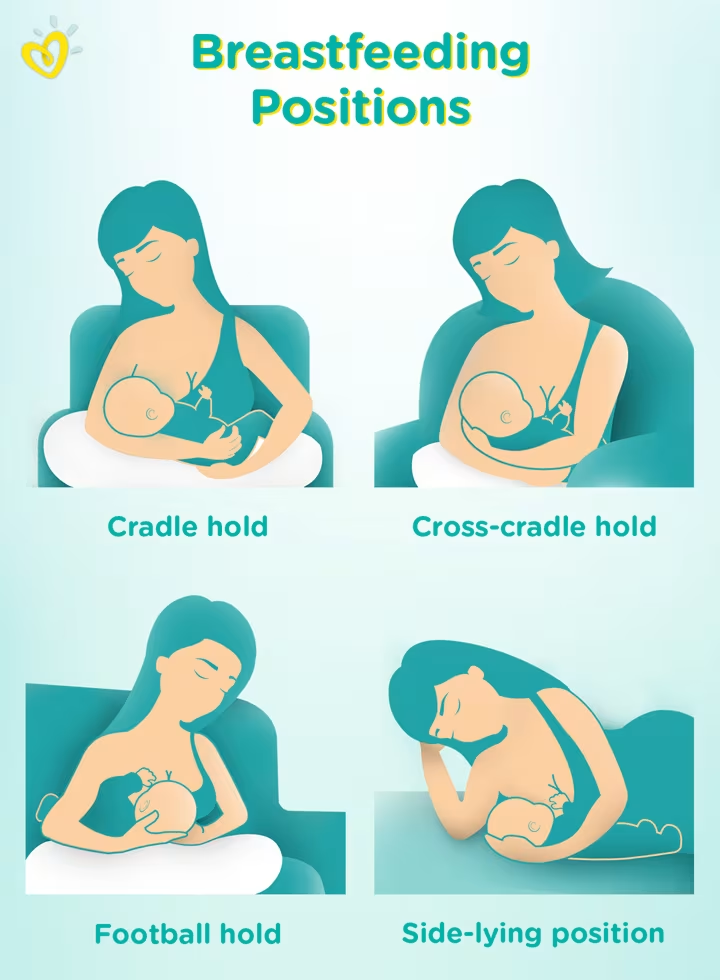
5. Try Different Breastfeeding Positions
Varying your breastfeeding positions can help your baby latch on better and help empty your breasts more effectively.
Here are four breastfeeding positions to try:
To help visualize these positions, check out the infographic below:
6. Breastfeed From Both Breasts Equally
If your baby has a preference for one breast, it’s a good idea to offer him the other at the next feeding to make sure that both your breasts get emptied equally.
Here’s a handy tip: If you tend to forget which breast your baby last nursed from, attach a safety pin to the bra strap of the other side after a feeding to remind you which side is next. If your baby still only wants to nurse from one breast, you could pump from the other to relieve pressure and ensure that your breast milk supply doesn’t dwindle.
7. Ease the Pain of Engorgement
Engorgement is when the blood vessels in your breasts are swollen and your milk ducts are overfilled with milk, causing discomfort and even pain. It can happen if your baby doesn’t nurse often or efficiently.
The best prevention is to feed your baby whenever she’s hungry, and to make sure she feeds from both of your breasts. The idea is to drain your breasts regularly in order to keep them from becoming painfully hard and swollen. You don’t want to run into the issue where your breasts are so engorged that your baby can’t latch on properly. Here are a few more tips for dealing with engorgement:
If these tips don’t work, contact your lactation consultant or your healthcare provider for help. You don’t have to suffer with breast discomfort or pain—there is help available.
8. Don’t Give Up Breastfeeding If You Have Mastitis
Occasionally a clogged milk duct can get infected. This is a condition called mastitis, and the symptoms include fever- and cold-like symptoms; swollen, painful breasts; breasts that feel hot when touched; a hard lump on your breast; and red streaks on the skin of the breasts.
If you think you may mastitis, call your healthcare provider. Your provider may prescribe an antibiotic that is safe for you to take while breastfeeding your baby. Remember to finish the entire course of antibiotics—even if your symptoms have improved. In the meantime, there are a few home remedies you can try:
9. Care for Your Nipples
Tender nipples are not unusual during the first few weeks of breastfeeding. Eventually this tenderness will likely go away. To help reduce or prevent nipple pain, here are some tips to follow while breastfeeding:
After your baby breastfeeds, try these aftercare tips for your nipples:
10. Follow Your Baby’s Cues When It Comes to Breastfeeding
Every baby is different, and yours may want to feed more or less often than other babies, so don’t worry if your baby doesn’t follow the schedule you had expected beforehand.
There is no feeding schedule that you must follow to the letter. Instead follow your baby’s hunger signals. Keep in mind, how often your baby wants to feed will also change over time, and may go up and down periodically as a result of things like growth spurts. Signs your baby is hungry can include when she
Crying can be a late sign of hunger, so try not to wait until your baby starts to cry to feed her. In your baby’s first weeks, your newborn will likely want to feed very often, every 2 to 3 hours, 8 to 12 times per day. She may spend 10 to 15 minutes nursing on each breast, or she may even breastfeed for longer stretches of between 60 and 120 minutes. Long sessions like these, as well as feeding more often for a period of time, may be a sign of cluster feedings, which typically happen in the evenings during growth spurts, for example.
11. Check That Your Baby Is Getting Enough Breast Milk
You’re probably wondering if there’s an easy way to check that your baby is getting enough nourishment. Here are five tips for checking that your newborn is getting a sufficient amount of breast milk:
If you’re ever concerned that your baby isn’t eating enough, call your healthcare provider—don’t wait for the next scheduled checkup.
12. Increase Your Milk Supply
To help increase your milk supply, here are four things you can do:
Here are some reasons why you may have a low milk supply:
Contact your lactation consultant or healthcare provider for more personalized advice on increasing your breast milk supply.
13. Consider Using a Breast Pump
You may need to pump if
There are many different breast pumps available, or you can choose hand-expression. If you’re having trouble deciding, speak with your lactation consultant or healthcare provider for advice. Your lactation consultant can also help you learn how to master hand expression or how to use your new breast pump. At first, your baby may be a little leery of feeding from a bottle, especially since it will be new to him, but eventually he will get used to it. In some cases, your baby may refuse to take a bottle from you, but he’ll happily take it from your partner or a babysitter. So it’s worth trying different approaches.
14. Wait With Introducing a Pacifier
Giving your baby a pacifier can help soothe her between feeds, but, offering it in those first few weeks can have a negative effect on your milk supply, and discourage your baby from wanting to nurse.
Experts recommend waiting until your baby has the hang of breastfeeding before offering a pacifier. Of course, you may sparingly use a pacifier to comfort your baby earlier than that, like when she’s getting a vaccination, but you could also offer her your clean pinky finger to suckle on for comfort during these short periods.
15. Get Prepared for Breastfeeding in Public (If You Choose To!)
At some point, you may like to breastfeed your baby while you’re in a public place. Here are some tips for breastfeeding in public:
Remember: The law protects a mother’s right to breastfeed in public. If someone criticizes you, it’s best not to engage with them. If you do feel threatened, leave the area and find others who can support you. Of course, it’s entirely your decision whether you would like to breastfeed in public places or not so do what you feel comfortable with.
16. Take Care of Your Nutrition and Well-Being
Keeping a healthy lifestyle is just as important now that you’re breastfeeding as it was when you were pregnant and at other times in your life.
Here are some tips to help you stay on track:
17. Avoid Alcohol and Smoking, and Limit Certain Foods
The following tips are reminders that as long as you’re breastfeeding, you’re passing on what you eat and drink to your baby, which means certain things need to be avoided or limited to ensure your baby isn’t affected in a negative way:
18. Don’t Lose Heart If You’re Struggling With Breastfeeding
Even if you’d hoped to breastfeed, sometimes things just don’t work out as planned. After trying all these tips and speaking to a professional for personalized advice, you might find that formula feeding is best for you and your little one.
Rest assured there are plenty of different formulas on the market to choose from. Some mothers simply have difficulty breastfeeding—and that’s OK. You can still nurture, nourish, and bond with your baby in so many ways.
Breastfeeding can be daunting, especially if you’re a new mom, and it’s OK to be a bit anxious about it, especially if it’s not going as easily as you hoped it would. By following these tips and getting some professional help, you’ll soon get the hang of it. Plus, the more you breastfeed, the more milk you’ll produce, and the more practice you’ll get. In time, it will become a routine part of your day and you’ll even start to enjoy the special bonding time it gives you and your baby.
- AAP
- ACOG
- Mayo Clinic: Breast-feeding tips: What new moms need to know
- Mayo Clinic: Breast-feeding nutrition: Tips for moms
- Kids Health: Nursing Positions
- OASH: Breastfeeding in public
- Kids Health: Breastfeeding FAQs: Supply and Demand
- LLLI: Positions
- Mayo Clinic: Breast-feeding and medications: What's safe?
- LLLI: Mastitis

How to Clear a Clogged Milk Duct
What’s a clogged milk duct? It may happen while you’re breastfeeding. Read more about why it happens and how to treat it.
Read more
Sore Nipples During Breastfeeding
What causes sore nipples during breastfeeding? Read about why this happens and what you can do to prevent and treat sore nipples.
Read more
Expressing milk at work: going back to work while breastfeeding
Learn helpful tips for expressing milk at work and managing breastfeeding as a working mom. Find practical advice and tips for balancing work and baby care.
Read more
Five Breastfeeding Positions and Tips
If you’re having trouble finding a comfortable breastfeeding position, these useful tips and graphics will help make it an enjoyable experience.
Read more
Your Guide to Mastitis Symptoms and Treatment
Learn about the symptoms of mastitis, its causes, and explore treatment options for breastfeeding mothers to alleviate pain and discomfort.
Read more
Breastfeeding Benefits & Tips
Get all the essential tips and facts for successful breastfeeding. Learn the basics, benefits, and techniques every new mom needs to know for nursing.
Read more
Sore Nipples from Breastfeeding: Causes and Solutions
Learn about the causes of sore nipples from breastfeeding. Learn how to avoid pain, maintain comfort, and discover solutions and tips for relief and prevention.
Read more
Colostrum: The First Milk and Its Benefits for Your Newborn
Learn about colostrum, the first milk, including its health benefits, when it starts, how much your newborn needs, and why it’s crucial for your baby.
Read more
Cluster Feeding: Meaning and Advice
Cluster feeding is a normal phenomenon that usually occurs with newborns. Nevertheless, this can be quite challenging. Read on for tips and advice.
Read more
How To Cope With Breast Engorgement
If your breasts are swollen and painful during or after breastfeeding, you might be suffering from engorgement. Read on to learn the causes and how to cope.
Read moreHow to Clear a Clogged Milk Duct
What’s a clogged milk duct? It may happen while you’re breastfeeding. Read more about why it happens and how to treat it.
Read moreSore Nipples During Breastfeeding
What causes sore nipples during breastfeeding? Read about why this happens and what you can do to prevent and treat sore nipples.
Read moreExpressing milk at work: going back to work while breastfeeding
Learn helpful tips for expressing milk at work and managing breastfeeding as a working mom. Find practical advice and tips for balancing work and baby care.
Read moreFive Breastfeeding Positions and Tips
If you’re having trouble finding a comfortable breastfeeding position, these useful tips and graphics will help make it an enjoyable experience.
Read moreYour Guide to Mastitis Symptoms and Treatment
Learn about the symptoms of mastitis, its causes, and explore treatment options for breastfeeding mothers to alleviate pain and discomfort.
Read moreBreastfeeding Benefits & Tips
Get all the essential tips and facts for successful breastfeeding. Learn the basics, benefits, and techniques every new mom needs to know for nursing.
Read moreSore Nipples from Breastfeeding: Causes and Solutions
Learn about the causes of sore nipples from breastfeeding. Learn how to avoid pain, maintain comfort, and discover solutions and tips for relief and prevention.
Read moreColostrum: The First Milk and Its Benefits for Your Newborn
Learn about colostrum, the first milk, including its health benefits, when it starts, how much your newborn needs, and why it’s crucial for your baby.
Read moreJoin Pampers Club and get:
- PAMPERS COUPONS
- TOOLS & QUIZZES
- PARENTING TIPS
 PAMPERS COUPONS
 TOOLS & QUIZZES
 PARENTING TIPS