
What to Do if Your Baby Has Reflux or GERD


All babies spit up from time to time, especially after they've been fed. But if spitting up—also known as reflux—happens increasingly often to your little one, it can be an indication of a problem called Gastroesophageal Reflux Disease or GERD for short. Although you may have thought only adults have acid reflux, babies can have it, too, and in this article we’ll explain why this happens. Read on to find out how to recognize the signs and symptoms of reflux and GERD in babies, and what you can do about it, as well as when it’s important to see your baby’s healthcare provider.
What Is Acid Reflux and Gastroesophageal Reflux Disease (GERD) in Babies?
Reflux happens when the content of your baby’s stomach backs up into her esophagus (the tube that transports foods and liquids from the throat to the stomach). This is because the sphincter (the muscle that locks off the esophagus from the stomach) is either too relaxed or is too weak to hold the liquid or food in your little one’s tummy and can't stop it from travelling back up toward her throat. Almost all babies have reflux from time to time, since the sphincter is still maturing. Spitting or vomiting is quite common in about half of all infants under 6 months old, and happens in about 5 percent of babies once they reach 12 months of age. Your baby will most likely grow out of reflux once she’s between about 1 and 2 years old. If the reflux doesn’t go away within this time or gets worse, it could indicate there’s a problem that may need medical attention. When reflux becomes chronic, that is, it starts happening all the time, it’s referred to as GERD. This condition is something your baby’s healthcare provider can diagnose.
What Are the Symptoms of Reflux and GERD?
If you’re seeing any of the following symptoms in your baby before or after she’s eaten, she may have reflux (or GERD if the symptoms are happening very frequently):
These symptoms may get worse if, after eating, your baby is placed lying down or seated in a car seat.
How to Prevent Reflux
Here are seven ideas you can try to prevent reflux in your baby, and that may also help prevent it from turning into GERD:

When to See Your Healthcare Provider
If your baby is still experiencing reflux even after you've implemented the prevention strategies listed above, have her checked by her healthcare provider. In some cases, your provider may refer you to a pediatric gastroenterologist. If your baby is diagnosed with GERD, your provider may prescribe medicine or may suggest some dietary changes, such as switching formulas, to see if your baby’s condition is due to an allergy. Besides thickening your breast milk or formula as mentioned above, your baby’s healthcare provider may suggest switching to a protein hydrolysate formula (a type of formula that is hypoallergenic) to see if symptoms improve in one to two weeks. If it turns out your baby has an allergy to the proteins found in a milk- or soy-based formula, switching formulas may be the best resolution in preventing and keeping the reflux from returning.
Testing for Reflux and GERD
If your baby is struggling to gain weight properly or is in extreme discomfort because of the reflux, the healthcare provider may prescribe medicine. Or your baby’s provider may decide to run tests to rule out other problems. Tests to diagnose the reflux as GERD may include a barium swallow, which is when your baby or young child would need to swallow a solution, and then get X-rays; or an upper endoscopy, which is when a physician uses a tiny fiber optic camera to look inside your baby’s esophagus and/or stomach.
FAQS AT A GLANCE
If you see any of the following symptoms in your baby before or after he’s eaten, he may have reflux or GERD:
- Vomiting or regurgitating
- Periods of coughing, choking, or wheezing, especially if the reflux gets into the windpipe
- Wet burps or hiccups
- Irritability or crying after eating
- Difficulty swallowing
- Refusing to eat or taking in only small amounts
- Arched back
- Underweight or cannot gain weight
- Spitting up that continues after his first birthday.
Know that most bouts of reflux will clear on their own in time, but if this condition does develop into GERD, it can be treated successfully by your healthcare provider. If you think your baby’s reflux is getting worse, reach out to his healthcare provider for guidance. It’s a good idea to be proactive so that you can help prevent the reflux from getting worse and turning into GERD. All your baby’s feeds are no doubt leading to lots of wet and dirty diapers. Did you know that all those diapers could be getting you lots of deals and discounts? Download the Pampers Club app and get started now.
How We Wrote this Article
The information in this article is based on the expert advice found in trusted medical and government sources, such as the American Academy of Pediatrics and the American College of Obstetricians and Gynecologists. You can find a full list of sources used for this article below. The content on this page should not replace professional medical advice. Always consult medical professionals for full diagnosis and treatment.


Everything You Need to Know About Your Baby's Soft Spot
What is a fontanelle? Why does your baby have a soft spot on her head? Read all about your baby's soft spot and when it closes.
Read more
Does Your Baby Have Drool Rash?
Drool rash in babies is often caused by saliva, which causes irritation around the mouth. Read more about how it happens and how you may prevent it.
Read more
Chicken Pox Symptoms and Treatment
Chicken pox is a contagious, yet common infection caused by the varicella-zoster virus. Read more about prevention, symptoms, and treatment of the rash.
Read more
What Is Tongue Tie?
Tongue-tie in newborns is a condition where the tongue movement is restricted and may cause difficulty in breastfeeding. Read more about the symptoms.
Read more
How to Relieve Baby Constipation: Signs, Causes, & Solutions
Learn the signs, causes, and gentle infant constipation solutions to help your baby poop more comfortably.
Read more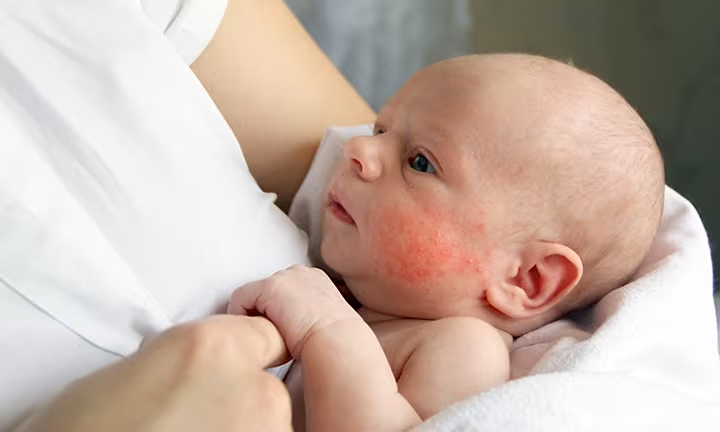
What to Do When Your Baby Has Eczema
Eczema looks like a red, scaly rash and it can cause your baby discomfort and itching. Learn about the causes, symptoms, and treatment.
Read more
The Recommended Immunization Schedule For Your Child
Stay informed about your child's immunization schedule for family. Learn about the importance of vaccines and the recommended timeline for vaccinations.
Read more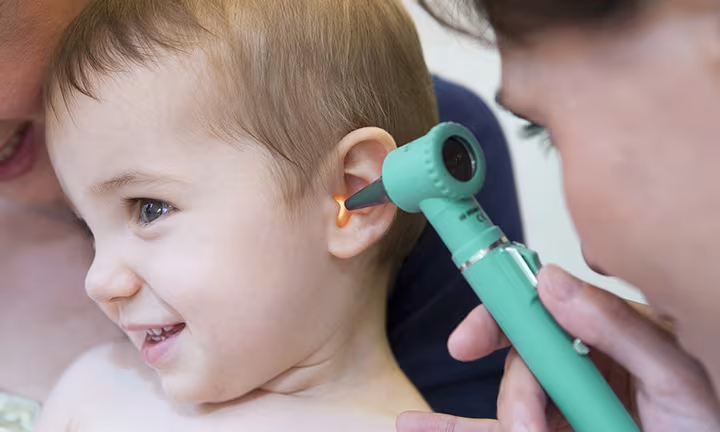
Ear Infections in Infants
Ear infections in babies are very common. Otitis Media, also known as middle ear infection, is the most common kind. Read more about the symptoms and treatment.
Read more
What Is Stork Bite?
What is a stork bite? It's a common type of birthmark—also known as a salmon patch or angel kiss—that appears on newborns. Learn more about it.
Read more
HFMD: Hand, Foot, and Mouth Disease
What is HFMD? Hand, foot, and mouth disease is a contagious viral infection that may cause fever and blisters. Read more about it here.
Read moreEverything You Need to Know About Your Baby's Soft Spot
What is a fontanelle? Why does your baby have a soft spot on her head? Read all about your baby's soft spot and when it closes.
Read moreDoes Your Baby Have Drool Rash?
Drool rash in babies is often caused by saliva, which causes irritation around the mouth. Read more about how it happens and how you may prevent it.
Read moreChicken Pox Symptoms and Treatment
Chicken pox is a contagious, yet common infection caused by the varicella-zoster virus. Read more about prevention, symptoms, and treatment of the rash.
Read moreWhat Is Tongue Tie?
Tongue-tie in newborns is a condition where the tongue movement is restricted and may cause difficulty in breastfeeding. Read more about the symptoms.
Read moreHow to Relieve Baby Constipation: Signs, Causes, & Solutions
Learn the signs, causes, and gentle infant constipation solutions to help your baby poop more comfortably.
Read moreWhat to Do When Your Baby Has Eczema
Eczema looks like a red, scaly rash and it can cause your baby discomfort and itching. Learn about the causes, symptoms, and treatment.
Read moreThe Recommended Immunization Schedule For Your Child
Stay informed about your child's immunization schedule for family. Learn about the importance of vaccines and the recommended timeline for vaccinations.
Read moreEar Infections in Infants
Ear infections in babies are very common. Otitis Media, also known as middle ear infection, is the most common kind. Read more about the symptoms and treatment.
Read moreJoin Pampers Club and get:
- PAMPERS COUPONS
- TOOLS & QUIZZES
- PARENTING TIPS
 PAMPERS COUPONS
 TOOLS & QUIZZES
 PARENTING TIPS