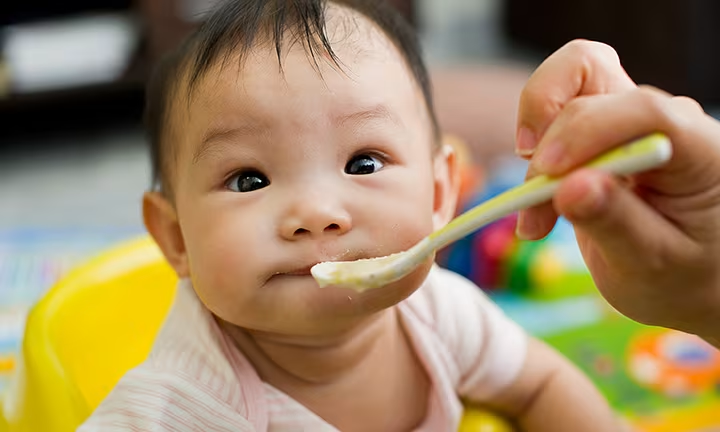
Baby’s First Foods Guide: What to Feed Them at 4-6 Months


Your little one starts out only needing breast milk or formula to grow and thrive, but after a few months, you may start to wonder when and how to introduce solids to your baby. Typically, a baby’s first foods are given no earlier then 4 to 6 months. Our detailed guide offers all the information you need when introducing solids to your baby, including the best foods to introduce to your baby first, and tips on navigating this new, exciting (and messy) period in their development.
Signs Your Baby Is Ready for Solid Foods
When do babies start eating pureed food, or other solid foods? Breast milk or formula is the most important and consistent component of your baby's diet in the first year. But, typically, around the time your little one reaches 4 months to 6 months old, they will be ready to start on solid foods alongside breast milk or formula.
You’ll want these first solid foods for your baby to be soft and cut into small pieces or pureed to make them easier for your little one to safely eat. Infant cereals or pureed fruit and vegetables are good choices, as they are just slightly thicker than breast milk or formula.
To ease the transition from breast milk or formula to solid foods, start by giving your baby small spoonful’s of food, followed by breast milk or formula. In time, your little one will discover that this new solid food is just as pleasurable as the liquid diet they had been getting, and you can gradually increase the amount of solid food you feed them.
So, when do babies start eating table foods? After your baby is accustomed to infant cereals and pureed foods, you can begin offering foods with a chunkier texture. Eventually, when your baby can sit independently, you can give them small pieces of food that they can easily pick up and eat, also known as table food or finger food. On average, babies learn to self-feed around 8 months of age.
If you’re unsure about when to start your baby on solid foods, the 4-month checkup is a great opportunity to consult their healthcare provider. The provider may suggest you watch out for the following signs that your baby may be ready to start on solid foods:
Best First Foods for Your Baby
What foods are best to introduce to a baby first? Traditionally, single-grain infant cereals have been the first foods introduced to babies, followed by single-ingredient purees of vegetables, fruits, and then meats. However, there is no medical evidence suggesting that there’s any advantage to keeping to a certain order when introducing new solid foods to your baby, or that any particular food has to be first. You can even start with multiple foods at once. So, it’s really up to you.
While it was previously recommended to delay introducing allergenic foods like peanuts, eggs, and fish, current guidelines suggest that introducing these foods (in a soft form) early on is safe and may actually prevent a child from developing allergies. Always consult with your healthcare provider regarding your baby's specific situation, especially if they have eczema or an allergy to egg proteins.
So, what can a baby eat at 6 months, 8 months, or even 12 months old? Here’s a list of some of the best first solid foods you could introduce to your baby from 4 to 6 months of age. and guidelines on when they can be introduced. Remember, each baby develops differently, so the age-based recommendations below may vary slightly from child to child.
Your Baby’s First Foods: 4 to 6 Months
Feeding your 4- to 6-month-old baby typically involves introducing their first solid foods. Remember, many babies will be exclusively fed breast milk or formula until 6 months, but if your little one is showing signs of readiness after 4 months, you can start to introduce some solids alongside their regular feedings.
At this stage, it's important to focus on foods that are soft and easy for your baby to eat and digest. It’s also good to note that from 4 months of age your little one’s motor skills may be developing and they’re beginning to pick up objects and bring them toward their mouth. So, although it’s going to be messy, you might allow your baby to explore their food with their hands; of course, you can still spoon-feed them.
Here’s a list of some of the best first foods for a baby from 4 to 6 months when starting solids:
6 to 8 Months of Age
Between around 6 to 8 months, babies who have begun to eat solids are typically ready to expand their palate and explore a wider variety of foods. At this stage, you can introduce more textures and flavours to your baby's diet while continuing to prioritize foods that are easy to digest and appropriate for their developmental stage. Continue to prioritize breast milk or formula as the main source of nutrition.
Here's a list of some first foods suitable for babies in the 6- to 8-month age range:
8 to 12 Months of Age
Between 8 to 12 months of age, babies tend to become more proficient at eating solid foods and are ready for a wider variety of textures. This is also the age when many babies are learning to self-feed and need less assistance from parents. By 9 months, many babies have developed the pincer grasp, using the forefinger or middle finger and thumb together to “pinch” or grasp an object. This makes finger foods a perfect option for this period and onwards.
Along with the foods mentioned in the previous sections, here are some foods that are suitable for babies in the 8- to 10-month age range:
Continue to offer breast milk or formula as the primary source of nutrition throughout your child’s first year.

Tips for Introducing Solids to Your Baby
If you’ve discovered that your baby is ready for their first solid foods and you have an idea of what to feed them, you might be wondering how to introduce solids to your baby. Here are some tips and insights to help you successfully introduce solid foods to your baby:
How to Prevent Choking When Introducing Solids
When introducing solids to your baby, it’s important to ensure that the foods you offer them are soft and easy to swallow. Avoid foods that require chewing. Here’s a list of some foods that are potential choking hazards for babies:
Be sure to stay with your baby at all times when they’re eating and make sure they’re sitting upright on your lap or in a highchair. You and your family members might even consider taking a first-aid course to learn what to do when a baby or child is choking. It’s always good to be prepared!
Food Allergies When Introducing Solids
After introducing a new food to your baby, you can keep an eye out for signs that your baby has an allergy. If you notice diarrhea, a rash, or vomiting, stop giving that food and consult your baby’s healthcare provider. If there’s a history of food allergies in your family, consult your provider before trying out that particular food.
While it was previously recommended to delay introducing allergenic foods like peanuts, eggs, dairy, soy, and fish, current guidelines now suggest that the introduction of these foods when your baby is starting on solids may reduce the risk of allergies. However, it’s a good idea to consult your healthcare provider regarding your baby's specific situation, especially if your little one has severe eczema or an egg protein allergy.
New recommendations suggest introducing multiple foods to your baby at once, if you like, rather than introducing only one new food every few days.
Here are a couple of things to avoid feeding your little one:
Starting Solid Foods: Your Baby’s Schedule
When you first introduce solid foods to your baby, you may wonder how much baby food is appropriate for a 6-month-old. Give them one or two tablespoons of food in addition to their regular feedings of breast milk or formula. Remember, their bellies are small. Over time, you can introduce more solid foods to your little one, watching for signs that they’re full, such as turning their head away. Eventually, from around 9 months, your little one may eat three to four small meals per day, plus one or two snacks. At this stage, your baby may eat or drink about every two to three hours. For more information about feeding your baby in their first year, check out our article on feeding schedules.
Baby Food Chart
Take a look at our fun baby food chart and schedule for little ones from 4 months to 12 months of age, and get a general idea of when to introduce solids to your baby and what first foods they can try first.

FAQS AT A GLANCE
When it comes to introducing solids to your baby, there’s no specific order. But many parents begin with an infant cereal or a pureed vegetable or fruit. If you start with cereal, go with an iron-fortified, single-grain infant cereal like oat, rice, or barley. You can choose a dry cereal that you mix with breast milk or formula to get a consistency that appeals to your baby—very smooth to begin with then a little chunkier as your baby gets used to it.
The Bottom Line
Beginning to eat solids is a big milestone for your little one. A whole new world of flavours, textures, and smells is opening up for them. Before long, your baby will get the hang of taking small bites, chewing, resting between bites, and even self-feeding with a spoon or their hands. Whenever it’s possible, have family meals together, as it can have a positive effect on your baby’s development, and mealtimes can be a special bonding time for the whole family. And if your baby’s first birthday is coming up, consider some fun and age-appropriate party food ideas. If you have any questions about your baby’s diet or healthy development, including how to handle a picky eater, consult your baby’s healthcare provider.
With all the eating your baby is doing, you’re bound to be changing lots of diapers. Did you know that for every Pampers product you purchase, you could be earning rewards points? Download the Pampers Club app, and get access to Pampers rewards, parenting tips, and more.
How We Wrote This Article The information in this article is based on the expert advice found in trusted medical and government sources, such as the American Academy of Pediatrics and the American College of Obstetricians and Gynecologists. You can find a full list of sources used for this article below. The content on this page should not replace professional medical advice. Always consult medical professionals for full diagnosis and treatment.
- American Academy of Pediatrics, Caring for Your Baby and Young Child: Birth to Age 5, 7th ed. (New York: Bantam Books, 2019).
- CDC. “When to Introduce Solid Foods.”
- CDC. “Choking Hazards.”
- CDC. “How Much and How Often to Feed.”
- Healthy Children. “Starting Solid Foods.”
- Kids Health. “Feeding Your 4-to 7-Month-Old.”
- Kids Health. “Honey Botulism.”
- La Leche League International. “Starting Solids.”
- Mayo Clinic. “Solid Foods: How to get your baby started.”
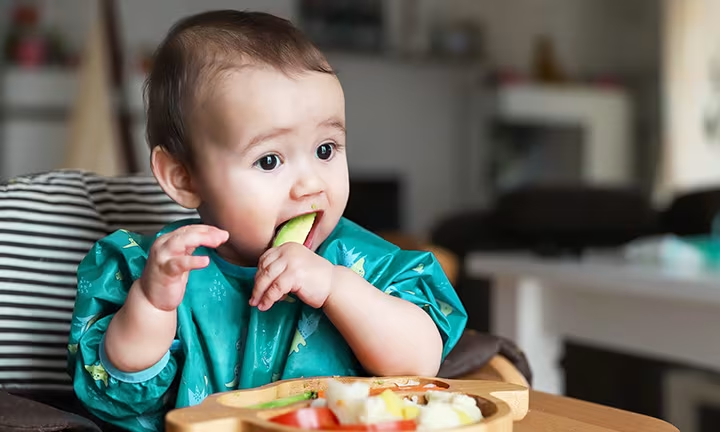
Baby-Led Weaning: How and When to Start First Foods
Baby-led weaning is a method of introducing your baby to solid foods rather than pureed food. Learn more about how and when to start baby-led weaning.
Read moreBaby-Led Weaning: How and When to Start First Foods
Baby-led weaning is a method of introducing your baby to solid foods rather than pureed food. Learn more about how and when to start baby-led weaning.
Read moreBaby-Led Weaning: How and When to Start First Foods
Baby-led weaning is a method of introducing your baby to solid foods rather than pureed food. Learn more about how and when to start baby-led weaning.
Read moreJoin Pampers Club and get:
- PAMPERS COUPONS
- TOOLS & QUIZZES
- PARENTING TIPS
 PAMPERS COUPONS
 TOOLS & QUIZZES
 PARENTING TIPS