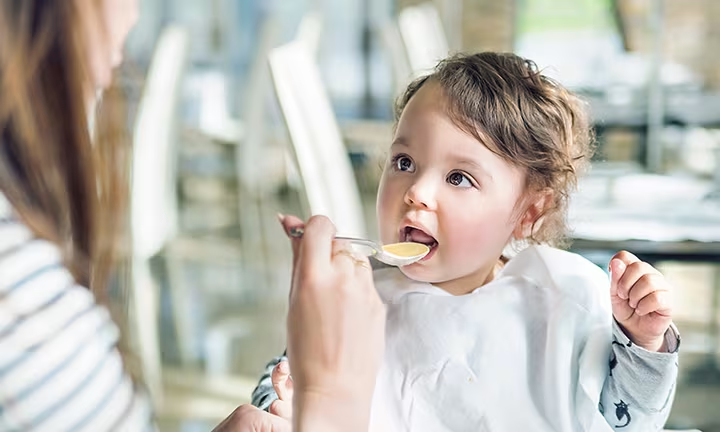
When Babies Can Have Honey: What You Should Know


Perhaps you’ve heard about honey’s antioxidant and antibacterial properties, which may lead you to wonder when babies can have delicious honey. If you’re eager to introduce your little one to the world of honey, it’s important to know that honey and babies isn’t actually a safe combination—at least not until after the first year. Read on to learn why babies can’t have honey, how it can lead to infant botulism, and when you can safely introduce your baby to the sweet stuff.
Why Can’t Babies Have Honey?
As a general rule, babies under 12 months can’t have honey—but why not? Honey contains bacteria that an infant’s developing digestive system can’t handle, so eating the sweet nectar can cause your baby to become ill with a condition called infant botulism. It’s also important to know when babies can have honey in food, which follows the same rule. You should avoid giving your baby honey or any processed foods made with honey, such as honey graham crackers, for example. And, avoid giving your baby a pacifier that’s been dipped in honey—even a little drop can hurt their digestive system. Nearly every jar of honey carries a warning for why babies under 12 months of age can’t have honey, so you can always check the label for a friendly reminder.
In Summary The digestive system of babies under 12 months old can’t process honey, which can lead to a serious illness called infant botulism. |
When Can Babies Have Honey?
Babies can eat honey when they are at least 1 year old. By that point, your baby’s digestive system will be mature enough to pass the bacteria in the honey without causing illness.
Why is Honey Bad For Babies?
Giving honey to your baby can lead to infant botulism, which is caused by the bacteria in honey. Why honey is bad for babies is due to how infants digest the food. After an infant has ingested honey, the bacteria will germinate, multiply, and produce a toxin that causes the illness.
What Is Infant Botulism?
Infant botulism is an illness caused by toxins produced by Clostridium botulinum, a type of bacteria found in honey. These same bacteria may also be found in other foods, such as home canned foods that become contaminated. So although anyone can suffer from botulism, infant botulism specifically refers to the illness when babies younger than 12 months old contract it. Symptoms of infant botulism can include
If you suspect your baby has eaten honey, or if he has any of the above symptoms, contact your healthcare provider as soon as you can. If your baby is diagnosed as having botulism, her breathing and swallowing may be affected. For this reason, she may need special care and monitoring at the hospital, which can include intravenous fluids and/or feedings and being placed on a ventilator. Your baby may also be given an antitoxin to speed up the recovery period.
In Summary Infant botulism is a serious illness linked to the toxins from common bacteria found in honey, which a baby younger than 12 months can’t process. Call your healthcare provider ASAP if you suspect your baby has eaten honey or displays the symptoms listed above. |
FAQS AT A GLANCE
Yes, when your baby is at least 1 year old, she can eat honey. By that time, her digestive system can process toxins from a bacterium (Clostridium botulinum) found in honey. If not processed correctly, this bacterium can lead to infant botulism, a serious illness.
So if your baby is less than 1 year, it’s important to avoid giving him honey or any food products that contain honey (for example, honey graham crackers or cereal with honey). He will happily enjoy the sweet flavor and health benefits when he’s older!
The Bottom Line
So, when can babies have honey? The answer is fairly simple, albeit a little disappointing if you love honey! To keep your little one healthy and safe, wait until his first birthday has passed to introduce honey. But don’t worry—there will be plenty of time for him to sample the flavor and enjoy the health benefits of honey when he’s older. In the meantime, he'll thrive on a diet of breast milk or formula, as well as the wide new world of solid foods he's starting to explore. If you’re stocking up on supplies to field all that eating, don’t forget that you can get well-deserved rewards for all those diaper changes! By downloading the Pampers Club app, you’ll get points for every Pampers product you scan, which you can redeem for rewards.
The information in this article is based on the expert advice found in trusted medical and government sources, such as the American Academy of Pediatrics and the American College of Obstetricians and Gynecologists. You can find a full list of sources used for this article below. The content on this page should not replace professional medical advice. Always consult medical professionals for full diagnosis and treatment.
- Kids Health: Honey botulism
- Mayo Clinic: Infant botulism
- Mayo Clinic: Honey
- Book: Caring for your baby and young child birth to age 5, Sixth Edition Paperback – November 2, 2014 by American Academy of Pediatrics (Author)
When Can Babies Have Water?
Find out at what age your baby can start drinking water, and why it’s not a good idea to give your little one water before starting on solids.
Read more
Baby Feeding Chart: What to Feed and When, From Newborn to 12 Months
Learn about newborn feeding schedules and how much milk your baby needs with our helpful feeding charts from birth to 12 months.
Read more
How to Start Weaning Your Baby From Breastfeeding
Find expert advice on when to start weaning your baby off breastmilk. Explore tips for a smooth transition while ensuring your baby gets essential nutrients.
Read more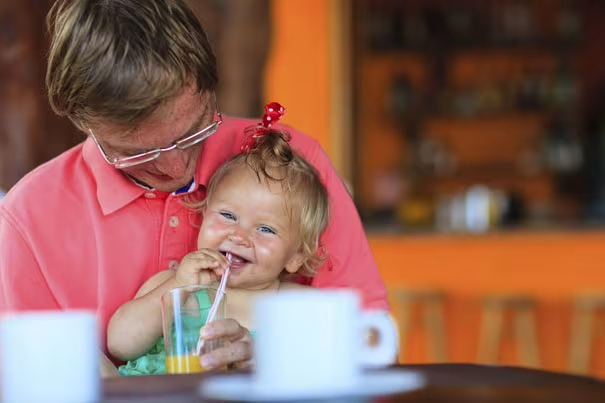
Eating out: dining at a restaurant with your baby
Thinking of taking your baby out to a restaurant? This article provides useful tips every new parent should know when taking their baby out for dinner.
Read more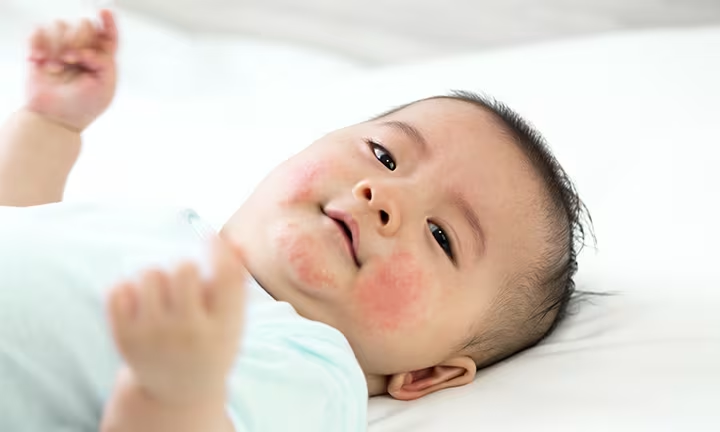
Food Allergies and Intolerances in Babies
Discover the common signs of baby food allergies, how to identify potential allergens, and ways to manage and prevent allergic reactions in infants and kids.
Read moreWhen Can Babies Have Water?
Find out at what age your baby can start drinking water, and why it’s not a good idea to give your little one water before starting on solids.
Read moreBaby Feeding Chart: What to Feed and When, From Newborn to 12 Months
Learn about newborn feeding schedules and how much milk your baby needs with our helpful feeding charts from birth to 12 months.
Read moreHow to Start Weaning Your Baby From Breastfeeding
Find expert advice on when to start weaning your baby off breastmilk. Explore tips for a smooth transition while ensuring your baby gets essential nutrients.
Read moreEating out: dining at a restaurant with your baby
Thinking of taking your baby out to a restaurant? This article provides useful tips every new parent should know when taking their baby out for dinner.
Read moreFood Allergies and Intolerances in Babies
Discover the common signs of baby food allergies, how to identify potential allergens, and ways to manage and prevent allergic reactions in infants and kids.
Read moreWhen Can Babies Have Water?
Find out at what age your baby can start drinking water, and why it’s not a good idea to give your little one water before starting on solids.
Read moreBaby Feeding Chart: What to Feed and When, From Newborn to 12 Months
Learn about newborn feeding schedules and how much milk your baby needs with our helpful feeding charts from birth to 12 months.
Read moreHow to Start Weaning Your Baby From Breastfeeding
Find expert advice on when to start weaning your baby off breastmilk. Explore tips for a smooth transition while ensuring your baby gets essential nutrients.
Read moreJoin Pampers Club and get:
- PAMPERS COUPONS
- TOOLS & QUIZZES
- PARENTING TIPS
 PAMPERS COUPONS
 TOOLS & QUIZZES
 PARENTING TIPS