
6 Weeks Pregnant
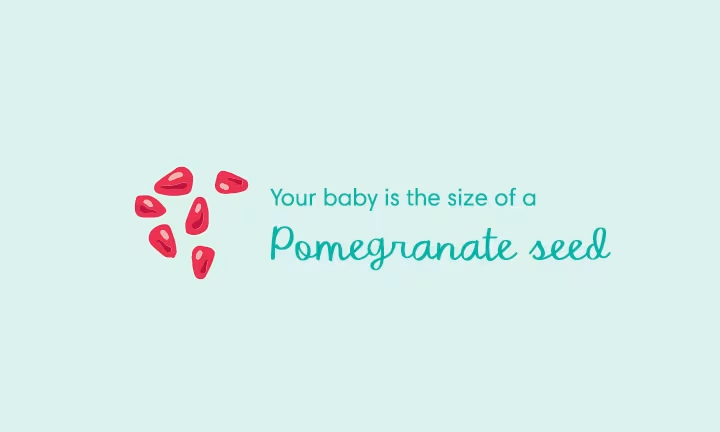
Your baby is the size of a
At 6 weeks pregnant, you’re already in your second month of pregnancy and some important developments are under way. Among other milestones, your little one’s brain and nervous system are quickly developing, as are small bumps and buds that will become their eyes, ears, arms, and legs. Read on to learn more about what happens at 6 weeks pregnant and what symptoms you might feel.
Highlights at 6 Weeks Pregnant
These are some of the key things to anticipate during your sixth week of pregnancy:

6 Weeks Pregnant: Your Baby's Development
At 6 weeks pregnant, your baby is making rapid progress in terms of growth and development. This week’s most important milestones include the following:
Wondering when you might be able to meet your baby? Try our Due Date Calculator.
How Many Months Is 6 Weeks Pregnant?
Pregnancy is most often measured in weeks, and sometimes in months, too. Given that the 40 weeks of pregnancy don't fit evenly into months, it gets a little tricky, but at 6 weeks, you’re thought to be in your second month of pregnancy, which typically includes weeks 5 through 8.
How Big Is Your Baby at 6 Weeks Pregnant?
At six weeks, your baby’s size is about 3/16 of an inch—about the size of a pomegranate seed!
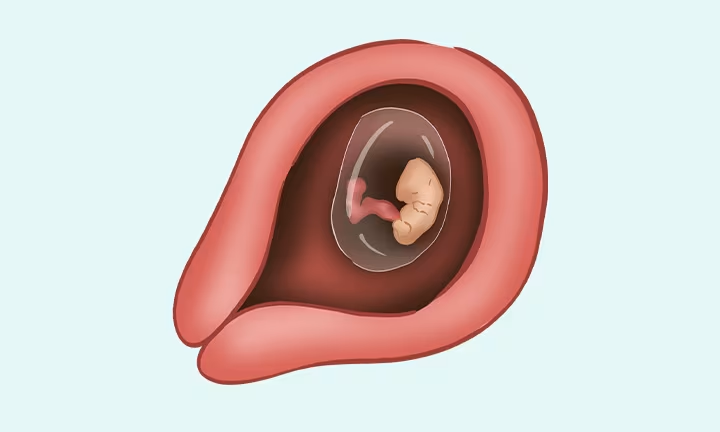
Your Baby: What Does 6 Weeks Pregnant Look Like?
Look at the visual below to get an idea of how things are progressing inside your belly. At 6 weeks pregnant, things are starting to take shape!
6 Weeks Pregnant: Your Symptoms
You may be asking yourself, “What “should” I be feeling at 6 weeks pregnant?” At 6 weeks pregnant, you might experience various symptoms of pregnancy, though not everyone does. Here are some common symptoms you might notice during your sixth week:
Physical and Emotional Symptoms
From morning sickness to spotting to mood swings, there are quite a few symptoms of pregnancy that might occur at 6 weeks.
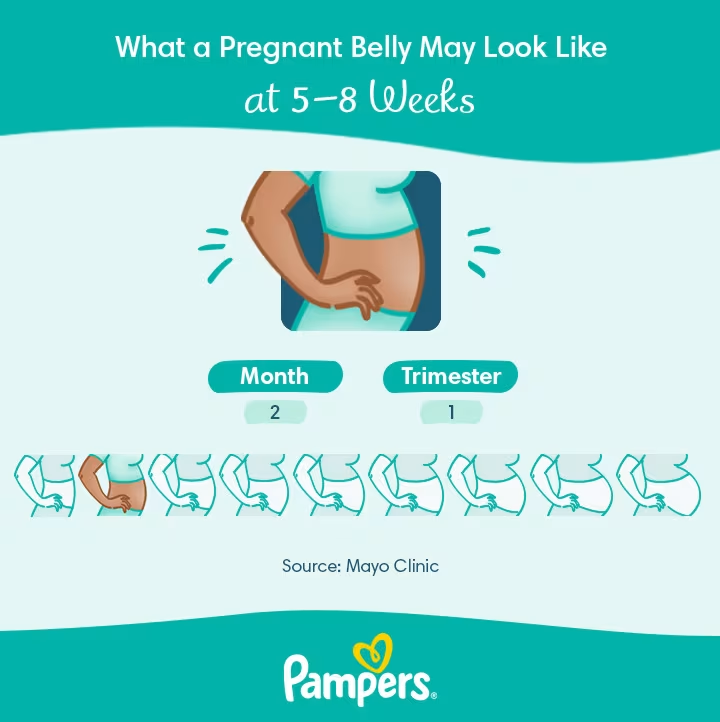
How Big Is a Pregnant Belly at 6 Weeks?
Will you be showing at6 weeks pregnant? This is a common question, as you might be anticipating a belly bump now or sometime soon. But a baby bump probably won't appear this early in your pregnancy. Everyone is different, but a pregnant belly could be visible at around 12 to 16 weeks.
What Does 6 Weeks Pregnant Look Like?
To help you get a better sense of what your belly might look like at 6 weeks pregnant, check out the visual below:
6 Weeks Pregnant: Things to Consider
Early on in your pregnancy, there’s a lot to think about, and you may have plenty of questions or concerns. To help you through this exciting week, here are a few things you may want to take into consideration.
Tip for Partners If your pregnant partner is struggling with all-day nausea, make them some healthy snacks that they can nibble on throughout the day. Avoid offering large meals or strong-smelling food that might cause nausea and consider easy-to-digest choices like crackers, toast, and smoothies, or something containing ginger, which can help with queasiness. |
6 Weeks Pregnant: Questions for Your Healthcare Provider
Now or sometime soon you'll want to book an appointment with your healthcare provider. Your prenatal visits are usually scheduled about once a month until the last two months of your pregnancy, when they will become more frequent. These regular checkups give you the perfect opportunity to ask questions and express any concerns. Here are some questions you might want to ask your healthcare provider at 6 weeks of pregnancy:
FAQS AT A GLANCE
Every person is unique, so every pregnancy will look a little different. There’s no particular way you “should” be feeling at this point in your pregnancy, but it does help to know about common symptoms at six weeks, such as morning sickness, exhaustion, and breast tenderness, among others.
6 Weeks Pregnant: Your Checklist
At this busy and exciting time in your life, use this list to stay focused and organized:
How We Wrote This Article The information in this article is based on the expert advice found in trusted medical and government sources, such as the American Academy of Pediatrics and the American College of Obstetricians and Gynecologists. You can find a full list of sources used for this article below. The content on this page should not replace professional medical advice. Always consult medical professionals for full diagnosis and treatment.
- ACOG. “Exercise During Pregnancy.”
- CDC. “Flu Vaccine Pregnancy.”
- American College of Obstetricians and Gynecologists. Your Pregnancy and Childbirth: Month to Month, 6th ed. (Washington, DC: American College of Obstetricians and Gynecologists, 2015).
- Cleveland Clinic. “Exercise During Pregnancy.”
- Cleveland Clinic. “Quickening in Pregnancy.”
- Cleveland Clinic. “Round Ligament Pain.”
- Cleveland Clinic. “Vaginal Discharge.”
- Kids Health. “Exercising in Pregnancy.”
- Kids Health. “Pain in Childbirth.”
- Kids Health. “Pregnancy.”
- Kids Health. “Pregnancy Week 4.”
- Kids Health. “Pregnancy Week 6.”
- Kids Health. “Pregnancy Diet.”
- Mayo Clinic. “Anemia During Pregnancy.”
- Mayo Clinic. “Getting Pregnant.”
- Mayo Clinic. Guide to a Healthy Pregnancy, 2nd ed. (Rochester, MN: Mayo Clinic Press, 2018).
- Mayo Clinic. “Implantation Bleeding.”
- Mayo Clinic. “Nausea During Pregnancy.”
- Mayo Clinic. “Prenatal Care.”
- Women’s Health. “Stages of Pregnancy.”
11 Weeks Pregnant
At 11 weeks pregnant, you’re nearing the end of the first trimester. Discover what pregnancy symptoms are common around this time, and when they may subside.
Read more
4 Weeks Pregnant
At 4 weeks pregnant, implantation occurs, and the embryo is about the size of a poppy seed. Learn more about being 4 weeks pregnant.
Read more
10 Weeks Pregnant
At 10 weeks pregnant, discover how your baby’s developing and learn about the symptoms you might experience this week.
Read more
19 Weeks Pregnant
At 19 weeks, your baby now has fingernails and toenails! Find out which pregnancy symptoms are common at 19 weeks pregnant.
Read more
1, 2, and 3 Weeks Pregnant
Educate yourself on the very early signs of pregnancy, spanning from 1 to 3 weeks, with detailed insights. Understanding what to expect in those crucial time.
Read more
38 Weeks Pregnant
At 38 weeks, your pregnancy is almost full term. Given most babies aren’t born on their due dates, you could meet your little one any day now. Learn more here.
Read more
5 Weeks Pregnant
At 5 weeks pregnant, the placenta and umbilical cord are forming. Discover some of the most common pregnancy symptoms at 5 weeks.
Read more
20 Weeks Pregnant
Did you know that at 20 weeks, in addition to moving and kicking, most babies get the hiccups? Read more about this and your symptoms at 20 weeks pregnant!
Read more
7 Weeks Pregnant
Find out how the embryo—now about the size of a blueberry—is developing at 7 weeks pregnant, and read up on the symptoms you may be experiencing.
Read more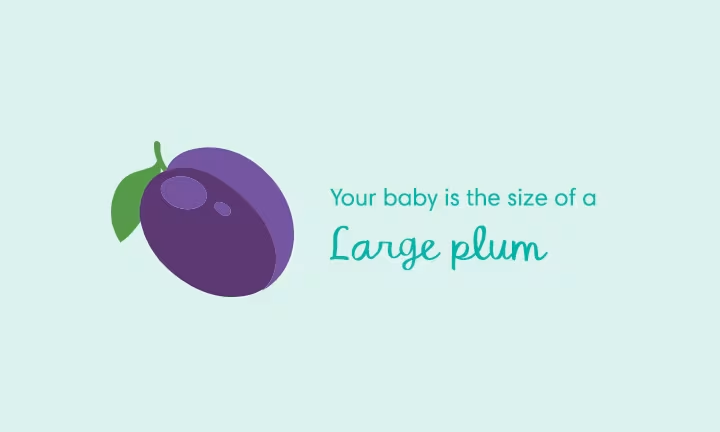
13 Weeks Pregnant
At 13 weeks, your baby's organs are fully formed and hard at work, but there’s still lots more growing to do. Find out what else is happening this week.
Read more11 Weeks Pregnant
At 11 weeks pregnant, you’re nearing the end of the first trimester. Discover what pregnancy symptoms are common around this time, and when they may subside.
Read more4 Weeks Pregnant
At 4 weeks pregnant, implantation occurs, and the embryo is about the size of a poppy seed. Learn more about being 4 weeks pregnant.
Read more10 Weeks Pregnant
At 10 weeks pregnant, discover how your baby’s developing and learn about the symptoms you might experience this week.
Read more19 Weeks Pregnant
At 19 weeks, your baby now has fingernails and toenails! Find out which pregnancy symptoms are common at 19 weeks pregnant.
Read more1, 2, and 3 Weeks Pregnant
Educate yourself on the very early signs of pregnancy, spanning from 1 to 3 weeks, with detailed insights. Understanding what to expect in those crucial time.
Read more38 Weeks Pregnant
At 38 weeks, your pregnancy is almost full term. Given most babies aren’t born on their due dates, you could meet your little one any day now. Learn more here.
Read more5 Weeks Pregnant
At 5 weeks pregnant, the placenta and umbilical cord are forming. Discover some of the most common pregnancy symptoms at 5 weeks.
Read more20 Weeks Pregnant
Did you know that at 20 weeks, in addition to moving and kicking, most babies get the hiccups? Read more about this and your symptoms at 20 weeks pregnant!
Read moreJoin Pampers Club and get:
- PAMPERS COUPONS
- TOOLS & QUIZZES
- PARENTING TIPS
 PAMPERS COUPONS
 TOOLS & QUIZZES
 PARENTING TIPS