
13 Weeks Pregnant
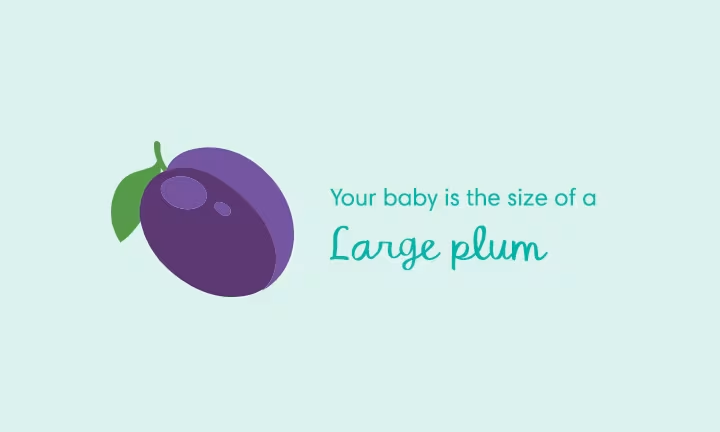
Your baby is the size of a
At 13 weeks pregnant, you’re about to begin what is sometimes called the honeymoon period of pregnancy—the second trimester. Your baby bump might start to show at 13 weeks and morning sickness may begin to ease. Keep reading to discover more about what happens at 13 weeks pregnant, including insights on your baby’s growth and development and the signs and symptoms you may experience.
Highlights at 13 Weeks Pregnant
Here are a few things to know and look forward to when you’re 13 weeks pregnant:
Pregnancy Weight Gain Calculator
Fill out your details:
13 Weeks Pregnant: Your Baby’s Development
Keep up with your baby’s progress and find out what happens at 13 weeks pregnant:
How Many Months Is 13 Weeks Pregnant?
You’re 13 weeks pregnant, but how many months is that? Speaking in months, at 13 weeks pregnant, you’re at the end of your third month of pregnancy. So, when does the second trimester start, at 13 or 14 weeks? To officially be in your second trimester, you’ll have to wait until 14 weeks!
Baby's Size at 13 Weeks Pregnant
Though you won’t have an ultrasound at 13 weeks pregnant, your baby is likely about the size of a large plum or small peach. Your little one could weigh more than 2 ounces.
Your Baby: What Does 13 Weeks Pregnant Look Like?
It can be hard to picture what’s going on with your fetus inside your belly at 13 weeks pregnant. Check out the visual below for an idea of what your little one might look like.

Your Body at 13 Weeks Pregnant
You’ve just about made it to your second trimester, which many describe as the honeymoon period of pregnancy.
The discomforts you may have experienced in the first trimester—fatigue, nausea, and frequent urination—often ease up and you may even feel a surge of energy during this trimester.
By this stage, your blood supply and flow are fully linked to the placenta, which will continue to grow as your pregnancy progresses. By the time you give birth, the placenta may weigh about one and a half pounds.
In a few weeks, your healthcare provider may begin monitoring your fundal height—the distance from your pubic bone to the top of your uterus (the fundus). Measuring the size of your growing uterus helps your provider determine how your baby is doing.
Breast tenderness may continue on and off, and other pregnancy aches and pains and issues like constipation, bloating and heartburn are normal at this stage, too, as your increased hormone levels can slow down digestion.
Learn more about prenatal health, fitness, nutrition and more in our downloadable Pregnancy Guide.
13 Weeks Pregnant: Your Symptoms
Every pregnancy is unique. It’s difficult to predict what to expect at 13 weeks pregnant, but here are some of the symptoms you may be experiencing now or in the coming weeks:
How Big Is a Pregnant Belly at 13 Weeks?
At 13 weeks pregnant, your baby is growing quickly and the changes in your body may be accelerating, meaning your pregnancy bump might start to show and become more obvious to others during this time. And, at 13 weeks pregnant, your uterus may be moving up higher and forward, as well as increasing in size. Your expanding uterus might cause some aches and pains in the muscles and ligaments surrounding it.
You may be wondering if you can feel the baby move at 13 weeks pregnant. Though your little one is moving around inside your uterus and starting to flex their arms and legs, they’re probably still too small for you to feel those movements. If you’re wondering, when can you feel your baby move, this tends to happen around 16 to 20 weeks and is called quickening.
What Does 13 Weeks Pregnant Look Like?
To get a better idea of what your pregnant belly might look like around thirteen weeks, when you’re reaching the end of your third month of pregnancy, check out the image below.

13 Weeks Pregnant: Things to Consider
At 13 weeks pregnant, you have a lot to think about, from sharing the good news to getting regular exercise. Read on for some things to consider:
Tip for Partners Although intimacy with your pregnant partner is generally safe, their desire for sex may vary at times, as can yours. Find other ways to introduce romance and intimacy into your lives, such as a cozy movie night, a stroll at sunset or a candlelit dinner at home. |
13 Weeks Pregnant: Questions for Your Healthcare Provider
FAQS AT A GLANCE
Your baby may be moving around and starting to flex their arms and legs at 13 weeks, but you probably won't be aware of these tiny movements just yet. Feeling your baby moving for the first time usually happens between 16 to 20 weeks.
13 Weeks Pregnant: Your Checklist
Check out some to-dos to help you along during your pregnancy journey:
☐ Start doing research into your childcare options. You can ask friends, neighbors or coworkers for recommendations for in-home care or childcare centers. ☐ If you work, find out about your maternity leave rights and options, including how many weeks you may have, and how much of that time might be paid. You can also ask if your employer offers any additional benefits. ☐ Plan how to share your big news with your wider circle of family and friends. ☐ Start making a shortlist of possible names for your little one with the help of our Baby Name Generator. ☐ As you enter the second trimester, read up on the trimesters of pregnancy for an overview of what’s to come.
13 weeks pregnant - checklist
How We Wrote This Article The information in this article is based on the expert advice found in trusted medical and government sources, such as the American Academy of Pediatrics and the American College of Obstetricians and Gynecologists. You can find a full list of sources used for this article below. The content on this page should not replace professional medical advice. Always consult medical professionals for full diagnosis and treatment.
- Mayo Clinic. Guide to a Healthy Pregnancy, 2nd ed. (Rochester, MN: Mayo Clinic Press, 2018).
- American College of Obstetricians and Gynecologists. Your Pregnancy and Childbirth: Month to Month, 6th ed. (Washington, DC: American College of Obstetricians and Gynecologists, 2015).
- ACOG. “Problems of the Digestive System.”
- ACOG. “Exercise During Pregnancy.”
- Cleveland Clinic. “Complete Blood Count.”
- Cleveland Clinic. “Quickening in Pregnancy.”
- Kids Health. “Week 8.”
- Kids Health. “Week 19.”
- March of Dimes. “Common Discomforts of Pregnancy.”
- Mayo Clinic. “Fetal development: The 1st trimester.”
- Mayo Clinic. “Pelvic Pain Symptoms.”
- Mayo Clinic. “Placenta: How it works, what's normal.”
- Mayo Clinic. “Pregnancy Week by Week.”
- Mayo Clinic. “Pregnancy Weight Gain: What’s Healthy?”
- NCBI. “Placental Blood Circulation.”
11 Weeks Pregnant
At 11 weeks pregnant, you’re nearing the end of the first trimester. Discover what pregnancy symptoms are common around this time, and when they may subside.
Read more
4 Weeks Pregnant
At 4 weeks pregnant, implantation occurs, and the embryo is about the size of a poppy seed. Learn more about being 4 weeks pregnant.
Read more
10 Weeks Pregnant
At 10 weeks pregnant, discover how your baby’s developing and learn about the symptoms you might experience this week.
Read more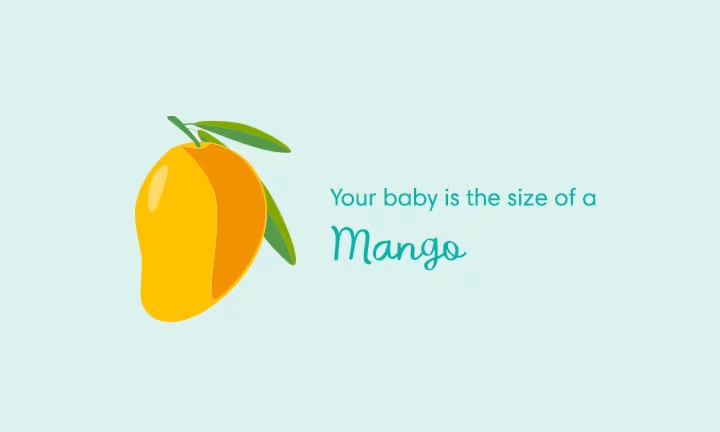
19 Weeks Pregnant
At 19 weeks, your baby now has fingernails and toenails! Find out which pregnancy symptoms are common at 19 weeks pregnant.
Read more
1, 2, and 3 Weeks Pregnant
Educate yourself on the very early signs of pregnancy, spanning from 1 to 3 weeks, with detailed insights. Understanding what to expect in those crucial time.
Read more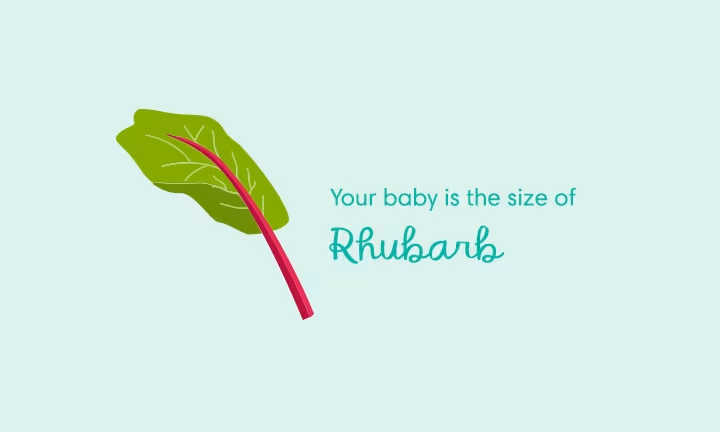
38 Weeks Pregnant
At 38 weeks, your pregnancy is almost full term. Given most babies aren’t born on their due dates, you could meet your little one any day now. Learn more here.
Read more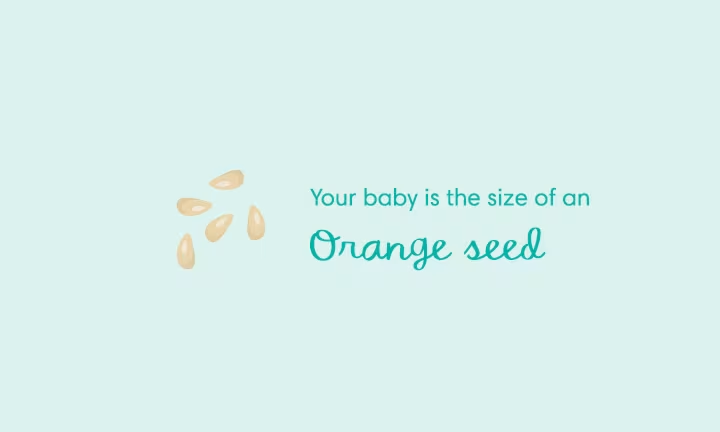
5 Weeks Pregnant
At 5 weeks pregnant, the placenta and umbilical cord are forming. Discover some of the most common pregnancy symptoms at 5 weeks.
Read more
20 Weeks Pregnant
Did you know that at 20 weeks, in addition to moving and kicking, most babies get the hiccups? Read more about this and your symptoms at 20 weeks pregnant!
Read more
6 Weeks Pregnant
At 6 weeks, lots of exciting developments are in the works! Learn about common pregnancy symptoms and get tips you can use at 6 weeks pregnant.
Read more
7 Weeks Pregnant
Find out how the embryo—now about the size of a blueberry—is developing at 7 weeks pregnant, and read up on the symptoms you may be experiencing.
Read more11 Weeks Pregnant
At 11 weeks pregnant, you’re nearing the end of the first trimester. Discover what pregnancy symptoms are common around this time, and when they may subside.
Read more4 Weeks Pregnant
At 4 weeks pregnant, implantation occurs, and the embryo is about the size of a poppy seed. Learn more about being 4 weeks pregnant.
Read more10 Weeks Pregnant
At 10 weeks pregnant, discover how your baby’s developing and learn about the symptoms you might experience this week.
Read more19 Weeks Pregnant
At 19 weeks, your baby now has fingernails and toenails! Find out which pregnancy symptoms are common at 19 weeks pregnant.
Read more1, 2, and 3 Weeks Pregnant
Educate yourself on the very early signs of pregnancy, spanning from 1 to 3 weeks, with detailed insights. Understanding what to expect in those crucial time.
Read more38 Weeks Pregnant
At 38 weeks, your pregnancy is almost full term. Given most babies aren’t born on their due dates, you could meet your little one any day now. Learn more here.
Read more5 Weeks Pregnant
At 5 weeks pregnant, the placenta and umbilical cord are forming. Discover some of the most common pregnancy symptoms at 5 weeks.
Read more20 Weeks Pregnant
Did you know that at 20 weeks, in addition to moving and kicking, most babies get the hiccups? Read more about this and your symptoms at 20 weeks pregnant!
Read more