
1, 2, and 3 Weeks Pregnant
Pregnancy is a much anticipated time in your life, and you may be eagerly watching for those very early signs in weeks 1, 2, or 3. But, did you know that you’re not actually pregnant during these first couple of weeks? We know it’s a little confusing, and it’s also why you might not notice any pregnancy symptoms early on! Keep reading to better understand what’s going on in that body of yours during the first three weeks of pregnancy.
Highlights at 1, 2, and 3 Weeks Pregnant
Before we get into all the details, here are a few highlights to look forward to during these early weeks of your pregnancy:
Your First Three Weeks of Pregnancy
Here’s the thing: Because of the way pregnancy is usually measured, you’re not actually pregnant during the first two weeks or so of your pregnancy. Healthcare providers calculate the length of an average pregnancy as 280 days, which is 40 weeks, starting from the first day of your last menstrual period—this is known as the LMP dating method.
So, when you’re 1 week pregnant, you’re having your period. At 2 weeks pregnant, you’re probably ovulating. And since ovulation happens about 14 days after the start of your period (assuming you have a 28-day cycle), with fertilization and conception following, you can’t really become pregnant until around week 3 at the earliest.
It can be mind-boggling—we get it. But, for the sake of calculation, and what you and your healthcare provider will consider as 1 and 2 weeks pregnant, you’re not actually pregnant until week 3. But although at 1, 2, or 3 weeks pregnant you may not notice any of those very early signs of pregnancy, there’s still a lot happening on the inside.
How to Determine Your Due Date
It's natural to wonder about your due date right away when you find out you’re pregnant, as you’re already looking forward to meeting your new baby!
For an estimate, try our Due Date Calculator, where you can simply enter the first day of your last menstrual period (LMP) or the date of conception.
Again, healthcare providers use the LMP method to determine your estimated due date. So once you start to notice those early pregnancy signs or have the feeling that you might be pregnant, take a pregnancy test at home or confirm your pregnancy with your healthcare provider so you can calculate your due date!
How Many Months Is 1 to 3 Weeks Pregnant?
Your healthcare provider will refer to your pregnancy in weeks, but you also might hear a reference to months. It gets a little tricky, given that nine months doesn't divide evenly into weeks, but the first month of pregnancy typically includes the first four weeks. So, at 1, 2, or 3 weeks pregnant, you’re in your first month of pregnancy, even if you haven’t noticed any belly bump or symptoms!
1 to 3 Weeks Pregnant: Symptoms and Signs
Your journey through pregnancy has officially begun, but as mentioned above, you’re not actually pregnant yet. This is a difficult concept to grasp at first, and many people wonder if there are any symptoms during the first 72 hours of pregnancy. You may be asking, “What are the symptoms of 2 or 3 weeks pregnant?” Again, because of the way pregnancy is calculated, you won’t feel any symptoms of being pregnant during those first three days—or possibly three weeks. So, what happens in the first 2 or 3 weeks of pregnancy? After two weeks, an exciting series of events starts to take place inside your body:
Tip It’s worth noting that sperm can live inside your body for up to five days, and your egg has a lifespan of up to one day. This means your window of fertility (when you should have sex if you’re trying to get pregnant) is about five days before you ovulate to one day after. |
So, how are you supposed to feel at 1, 2, or 3 weeks pregnant? What it all boils down to is that you won’t feel any of those very early signs of pregnancy in weeks 1, 2, or possibly even 3. If you have yet to conceive, then it makes sense that you wouldn’t notice anything! Therefore, things like morning sickness can’t start at 1 week pregnant and you won’t feel symptoms like pregnancy-related belly pain or discharge at 1 or 2 weeks pregnant.
Typical Early Signs of Pregnancy
OK, so now you know that during weeks one, two, or three, you may not even suspect you’re pregnant and you likely won't notice any pregnancy symptoms at all, as it’s still very early (and you might not have even conceived until 3 weeks pregnant). However, there are several signs of pregnancy that you could experience in the following weeks:
Are you ready for your baby’s arrival? Take our quiz to find out!
How Big Is a Pregnant Belly at 1, 2, and 3 Weeks?
Every person and every pregnancy is different, so you could start to show earlier or later than others. It’s safe to say that you won’t see any difference in your pregnant belly’s size at 1, 2, or 3 weeks. Remember that you’re not actually pregnant during those first two weeks and it’s still early during the third week.

How Big Is a Baby at 3 Weeks?
Even though your belly bump won’t be noticeable at 3 weeks pregnant, your baby's development is under way with cells dividing and multiplying. So, what does a fetus look like at 2 or 3 weeks? By around 3 weeks in your pregnancy, your little one is just 1/25 of an inch long—too small for a bump just yet.
When Can You Confirm Your Pregnancy?
Can you get a positive pregnancy test at 3 weeks, you may wonder?It’s possible, but it’s always best to wait until after your missed period to take a pregnancy test, as you’ll receive more credible results. That’s because a home pregnancy test responds to the levels of a hormone called human chorionic gonadotropin, or hCG, in your urine, which begin to increase shortly after conception. So, although your hCG levels may be high enough in week 3 to result in a positive test, you’ll want to confirm with your healthcare provider that you’re pregnant.
How Far Along Are You?
Knowing how far along you are in pregnancy is helpful for both you and your healthcare provider. Your provider will use this information to check on your baby’s growth and development, keep an eye on your health, and schedule tests and exams.
The weeks of pregnancy can be grouped into three trimesters:
Check out the illustration below to see how far along you are in your pregnancy:
What Precautions Should You Take During Early Pregnancy?
Even though you probably haven’t experienced any signs of pregnancy very early on in weeks 1, 2, or 3, you’ll want to do everything you can to stay healthy and safe. In fact, it’s always wise to take some precautions as soon as you start trying to conceive or learn that you’re pregnant.
Lifestyle Adjustments
Even simple adjustments can help support you as you start your pregnancy! Though you’ll want to consult your healthcare provider to determine what’s best for you, some worthwhile lifestyle changes and precautions include
Folic Acid
When you start trying for a baby or learn that you’re pregnant, folic acid is essential, as it’s a B vitamin that helps reduce the risk of certain birth defects that affect the baby’s brain and spine. Your healthcare provider can recommend a prenatal vitamin that contains at least 400 micrograms of folic acid.

Eliminating Bad Habits
Prepregnancy is also a great time to eliminate some less healthy habits, too, including
In addition, your provider may recommend limiting your daily consumption of caffeine. Consult your healthcare provider to learn the best ways to stay healthy and safe when you’re pregnant.
Tip for Partners If you and your partner have just discovered you’re going to have a baby or you’re hoping to find out the exciting news very soon, it’s a great time to start some healthy habits to help your baby’s development. You could support your partner during their pregnancy by making some lifestyle adjustments alongside them, such as cooking healthy meals, exercising with your partner, and cutting back on smoking and alcohol. |
FAQS AT A GLANCE
Your healthcare provider will calculate your pregnancy as 40 weeks long, starting with the first day of your last menstrual cycle. This means that you won’t technically be pregnant during your first or second week of pregnancy (assuming that your cycle is about 28 days).
If you think you might be pregnant, take a home pregnancy test and contact your healthcare provider to confirm.
1 to 3 Weeks Pregnant: Your Checklist
Yes, it’s early, but it’s also an exciting time! As you anticipate your new pregnancy, consider the following to-dos:
□ Even if you’ve already taken one, you might want to complete another home pregnancy test after your missed period for the best results.
□ Schedule an appointment with your healthcare provider to confirm your pregnancy with a blood test.
□ Check out our pregnancy calendar to know what to anticipate in the next few weeks.
□ Though you can’t find out your baby’s gender just yet? Have some fun trying to predict your baby’s gender!
1 3 weeks pregnant - checklist
The information in this article is based on the expert advice found in trusted medical and government sources, such as the American Academy of Pediatrics and the American College of Obstetricians and Gynecologists. The content on this page should not replace professional medical advice. Always consult medical professionals for full diagnosis and treatment.
- American College of Obstetricians and Gynecologists. Your Pregnancy and Childbirth: Month to Month, 6th ed. (Washington, DC: American College of Obstetricians and Gynecologists, 2015).
- Kids Health. “Week 1.”
- Mayo Clinic. Guide to a Healthy Pregnancy, 2nd ed. (Rochester, MN: Mayo Clinic Press, 2018).
- Mayo Clinic. “Pregnancy Week by Week.”
- Mayo Clinic. “Symptoms of Pregnancy: What Happens First.”
- National Library of Medicine. “Length of Human Pregnancy and Contributors to its Natural Variation.”
11 Weeks Pregnant
At 11 weeks pregnant, you’re nearing the end of the first trimester. Discover what pregnancy symptoms are common around this time, and when they may subside.
Read more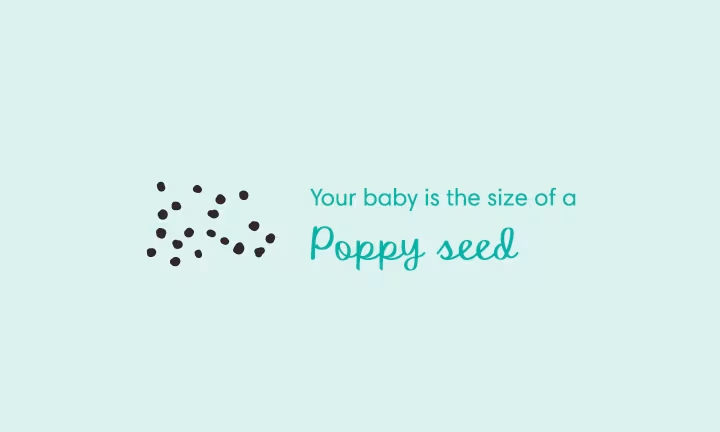
4 Weeks Pregnant
At 4 weeks pregnant, implantation occurs, and the embryo is about the size of a poppy seed. Learn more about being 4 weeks pregnant.
Read more
10 Weeks Pregnant
At 10 weeks pregnant, discover how your baby’s developing and learn about the symptoms you might experience this week.
Read more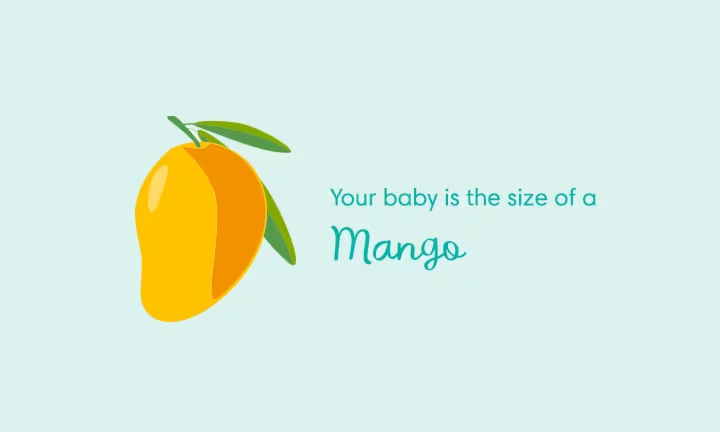
19 Weeks Pregnant
At 19 weeks, your baby now has fingernails and toenails! Find out which pregnancy symptoms are common at 19 weeks pregnant.
Read more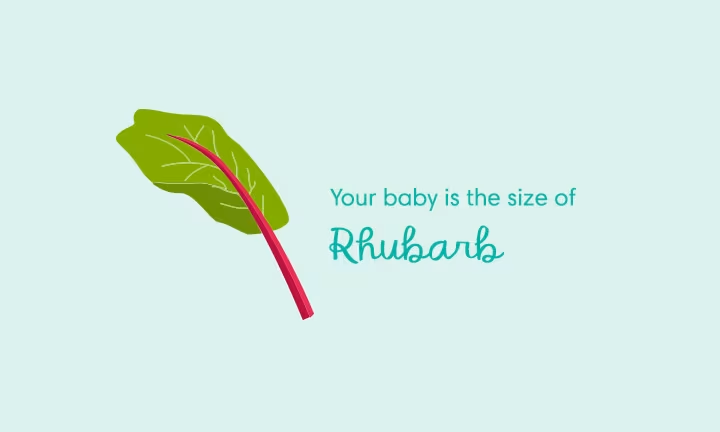
38 Weeks Pregnant
At 38 weeks, your pregnancy is almost full term. Given most babies aren’t born on their due dates, you could meet your little one any day now. Learn more here.
Read more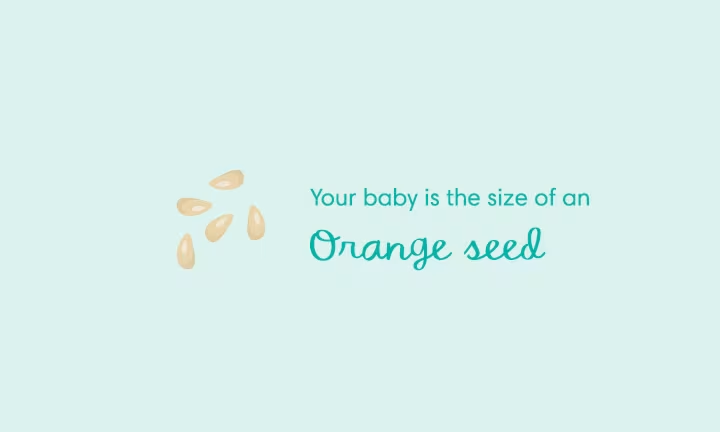
5 Weeks Pregnant
At 5 weeks pregnant, the placenta and umbilical cord are forming. Discover some of the most common pregnancy symptoms at 5 weeks.
Read more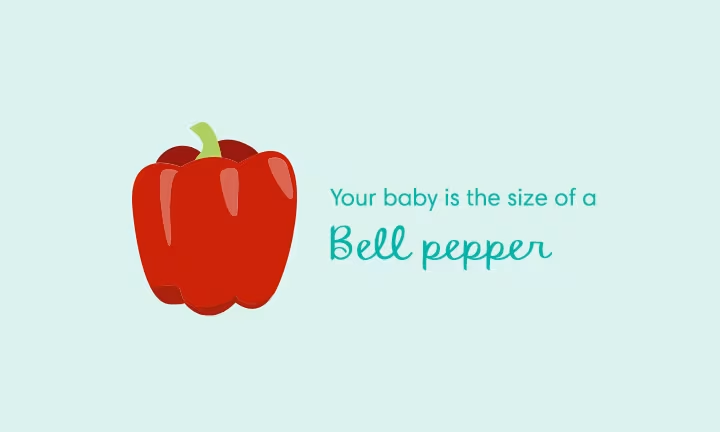
20 Weeks Pregnant
Did you know that at 20 weeks, in addition to moving and kicking, most babies get the hiccups? Read more about this and your symptoms at 20 weeks pregnant!
Read more
6 Weeks Pregnant
At 6 weeks, lots of exciting developments are in the works! Learn about common pregnancy symptoms and get tips you can use at 6 weeks pregnant.
Read more
7 Weeks Pregnant
Find out how the embryo—now about the size of a blueberry—is developing at 7 weeks pregnant, and read up on the symptoms you may be experiencing.
Read more
13 Weeks Pregnant
At 13 weeks, your baby's organs are fully formed and hard at work, but there’s still lots more growing to do. Find out what else is happening this week.
Read more11 Weeks Pregnant
At 11 weeks pregnant, you’re nearing the end of the first trimester. Discover what pregnancy symptoms are common around this time, and when they may subside.
Read more4 Weeks Pregnant
At 4 weeks pregnant, implantation occurs, and the embryo is about the size of a poppy seed. Learn more about being 4 weeks pregnant.
Read more10 Weeks Pregnant
At 10 weeks pregnant, discover how your baby’s developing and learn about the symptoms you might experience this week.
Read more19 Weeks Pregnant
At 19 weeks, your baby now has fingernails and toenails! Find out which pregnancy symptoms are common at 19 weeks pregnant.
Read more38 Weeks Pregnant
At 38 weeks, your pregnancy is almost full term. Given most babies aren’t born on their due dates, you could meet your little one any day now. Learn more here.
Read more5 Weeks Pregnant
At 5 weeks pregnant, the placenta and umbilical cord are forming. Discover some of the most common pregnancy symptoms at 5 weeks.
Read more20 Weeks Pregnant
Did you know that at 20 weeks, in addition to moving and kicking, most babies get the hiccups? Read more about this and your symptoms at 20 weeks pregnant!
Read more6 Weeks Pregnant
At 6 weeks, lots of exciting developments are in the works! Learn about common pregnancy symptoms and get tips you can use at 6 weeks pregnant.
Read more