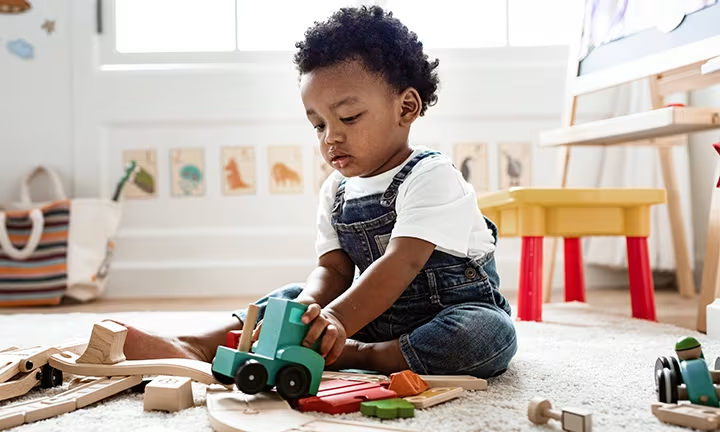
Your 3-Year-Old's Development: What Milestones to Anticipate


As you watch your 3-year-old continue to grow and explore the world around them, you’ll start to witness some exciting developmental milestones. Every child develops at their own pace, but you’ll surely enjoy watching yours reach those typical physical, emotional, social, and cognitive development milestones at this age. We’ve included lots of details regarding those common 3-year-old milestones that you might start to see in your not-so-little one!
3-Year-Old Physical Development
You’ve probably observed some changes and physical developments in your 3-year-old. Are they getting taller? Did you recently need to buy them new shoes? Are their facial features becoming more defined? A lot is going on physically regarding your 3-year-old’s milestones!

3-Year-Old Milestones: Growth and Appearance
As well as growing taller, your 3-year-old's physical development may include losing some baby fat and gaining a little muscle. Other physical changes you may notice include:
At 36 months old or a little later, children often start to grow at a slower rate than before, though this doesn’t happen for every child. Some 3-year-olds add height more quickly than weight, leading to a slim or fragile-looking frame. If your child begins to look like this, it’s perfectly OK and healthy.
Generally, children from 3 to 6 years old will
Although your child’s healthcare provider will weigh and measure your little one at each checkup, it might be fun for you to keep your own record at home. Download our fillable toddler growth chart to track your child’s physical growth! [FB1] The average height and weight of a 3-year-old boy or girl isn’t necessarily something to consider. Rather, keep the general growth above in mind and talk to the provider about growth percentiles.
As for your toddler’s facial features, you may notice that they are starting to become more mature and distinct. One important area of physical development for 3-year-olds is the length of the skull, which usually increases at this age, while the lower jaw becomes more pronounced. Simultaneously, the upper jaw typically widens as your child starts to develop permanent teeth.
3-Year-Old Milestones: Movement
High levels of energy and nearly constant motion are hallmarks of your child's physical development when they’re 3 to 4 years old. Your child can now walk, run, and jump quite well at this age, without having to concentrate on the mechanics.
Other gross motor skills and physical development milestones for 3-year-olds include
Your active 3-year-old may be more interested in structured play than they were at age 2. They may enjoy riding a tricycle, playing in a sandbox, or playing games such as tag or catch.
Tip Embrace these magical years by supporting your child’s free play. Play is how young children learn new things, practice skills, and reach physical developmental milestones. Whether they’re zooming around like an airplane or creating a make-believe world in the backyard, 3-year-olds use their bodies and imaginations in fascinating ways. |
Along with finding new ways to explore and have fun, your 3-year-old is still developing coordination, self-control, and judgment and will need adult attention and supervision at times. Minor bumps and bruises will occur along the way as your child learns about the physical limits of activity. Ensure you are nearby and watching out for them, especially if they’re playing with others or are close to traffic or machinery.
3-Year-Old Milestones: Fine Motor Skills
Fine motor skills, which involve precise hand and finger movements, are also important physical developments for your 3-year-old. Your child is learning how to move each of their fingers independently and together, creating opportunities for creativity and greater independence in their daily activities. As you observe your child's progress, keep in mind that children develop at their own pace and try not to focus on what a 3-year-old “should” be doing. However, there are some particular hand and finger skills that your 3-year-old may master, many of which help them prepare for preschool and kindergarten. They include things like
These fine motor skills typically develop in 3-year-olds as they build muscular control and improve their concentration. Once your little one can hold and control a writing utensil like an adult (positioning the thumb on one side and fingers on the other), their little world opens up! Three-year-olds can start to use and perfect their newfound skills and dexterity with activities like drawing, colouring, and painting; pouring water from a pitcher into a cup (with two hands); and using a fork to eat independently.
Tip Need an idea for a quiet moment? Some low-key activities for 3-year-olds include building with blocks, colouring, playing in a sandbox, dressing up dolls or stuffed animals, doing simple jigsaw puzzles, and stringing large beads. |
Learn more about how puzzles can help your little one develop cognitive skills in the video below:
3-Year-Old Emotional Development
The toddler and preschooler years are full of ups and downs when it comes to feelings, and it helps to know some of the emotional development milestones your 3-year-old will most likely reach. There’s no such thing as “normal” behaviour for 3-year-olds, but there are some typical emotional changes that many children experience.
3-Year-Old Milestones: Imagination and Emotions
Thanks to your little one’s very vivid imagination, their emotional range may start to expand at this age. It's common for 3-year-olds to feel and express everything from love and dependency to fear and anger. You might notice that your 3-year-old may
At the ages of 3 and 4, sometimes considered to be the “magic years,” your child will combine fantasy and real-life experiences as they grow and explore. This makes a 3-year-old’s emotional development milestones quite varied and often a little tricky to navigate. Some tips to help support your child’s emotional well-being include the following:
Tip Having too many choices can overwhelm children at this age. Rather than asking an open-ended question like “What do you want to wear today?” try to offer two or three options. It’s much easier for a young child to develop decision-making skills when limiting choices. |
3-Year-Old Social Development
What do 3-year-olds like to do, and how do they interact with others? Your child’s social development will be highly individual, as much depends on their unique personality. Still, many children reach certain social developmental milestones that you can anticipate as they near 3 to 4 years old. Plus, most parents will breathe a sigh of relief when they realize that the “terrible twos” have come to an end. Younger toddlers can sometimes appear selfish, which is normal, and this trait usually lessens over time. At age 3, as their confidence, independence, and self-awareness develop, your little one may want to actively play with others and begin to share toys. Socializing with others teaches all of us that not everyone thinks the same, and your child will gradually learn this, too, and possibly start to accept other opinions and ideas. Some key 3-year-old milestones for social development include
You’ll probably be keeping a close eye on your child’s social development as your 3-year-old gets ready for preschool education. Going to school and sharing toys and attention can present challenges for some children, but these emerging social skills may help make it easier.
In Summary A 3-year-old’s social developmental milestones can be gratifying to observe, as this is the age when kids usually start to share, build friendships, and cooperate better with others. You might also notice your child asking permission more, taking turns, being sensitive to others’ feelings, and negotiating when solving problems. |
3-Year-Old Milestones: Dealing With Conflicts
Despite their improved skills, a 3-year-old will sometimes struggle in social situations. You may need to help your child learn how to share and play well with peers as conflicts naturally arise. A few helpful tactics for coping with conflict include the following:
Tip Sharing is hard, and a child often has a beloved toy that is too special to share. Before you host a playdate, ask your child if there are any toys they don't want to share. Then put those toys away until after the playdate. |
3-Year-Old Cognitive Development
What “should” a 3-year-old know academically or educationally? It might seem odd to ask yourself this question since your little one is still so young. However, 3-year-olds tend to reach many important cognitive milestones that support their future academics. Perhaps your child is already enrolled in preschool, or maybe it’s not too far off. A good indication of a 36-month-old’s cognitive development is asking questions morning, noon, and night. It might get old after a while, but your child’s constant “why,” “what,” and “how” is all a part of the learning process. Here are some tips for responding to your child's questions while encouraging their curiosity and expanding their knowledge:

Typical 3-Year-Old Cognitive Milestones
Watching children soak up knowledge and hone their thinking skills can be exciting. Learning takes place in so many ways for 3-year-olds. Some of the cognitive development milestones you might observe at this age include
There are several activities you can do at home that can be fun for the whole family while still supporting your 3-year-old’s learning milestones, such as crafts and other interactive activities. Check out the following lists for some ideas:
3-Year-Old Language Development
A 3-year-old’s language development is astonishing. Your child has come so far, especially when you think back to your baby’s first words not that long ago. As with other areas of children's development, language and speech are highly variable in terms of timing. That said, many parents are amazed at their 3-year-old's vocabulary, which may include as many as 300 words or so. Language and speech milestones for 3-year-olds include imitating sounds and words from adults and speaking in sentences with multiple words. These relatively short sentences might not stop your little one from constantly chatting—and that’s a good thing! As your 3-year-old works on developing language skills, they'll get better at pronouncing words and using them correctly. Before long, you’ll probably understand about 75 percent of what your little one says! Other language and speech milestones for 3-year-olds include
Tip “What’s this, Mom? What’s this?” Are your 3-year-old's unstoppable questions getting on your nerves? If so, try to remember that asking questions is your toddler’s way of learning the names of new things. If you pass a red car and your child knows the words, they might enthusiastically say “red car.” But if they don’t know the words yet, they might simply ask, “What’s this?” and delight in your answer! |
Encouraging Language Development
When it comes to language development milestones, what a 3-year-old “should” know isn’t too helpful, as your child may develop speech and language comprehension at a different pace when compared to another child of the same age. It's best to focus on your child as an individual and support speech and language skills by simply conversing. There are a few specific strategies you can use:
How to Support Your 3-Year-Old’s Development
What should I be teaching my 3-year-old? This is a question that many parents ask themselves. There’s a lot you can do to support your child’s unique developmental journey and encourage their natural curiosity as they learn and grow. It’s not as much about teaching them specific things as creating a supportive and safe environment for them to explore their world. We've suggested many ways you can support your 3-year-old’s development already, but here are a few more general guidelines:
In Summary Supporting your 3-year-old’s milestones includes creating a safe space for them to experience new things, make mistakes, and learn. Nurture your child’s independence, encourage play, talk and read to your child, and coordinate playdates with friends or neighbors. |
Developmental Delays in 3-Year-Olds
Every child is different, so if your 3-year-old has yet to reach some of the above developmental milestones, it’s usually no cause for concern. Some children simply grow and develop at a slower pace, and that’s OK. However, speak with your child’s healthcare provider if you notice any of the following developmental delays in your 3-year-old:
Much of this guide offers a general idea of how children may develop at 3 years old. In most cases, delays in a 3-year-old's developmental milestones do not indicate anything serious. However, your child’s healthcare provider can help pinpoint and tackle any issues early on. Talk to their healthcare provider if you have any questions about the pace of development. Because every child is different and develops at a unique pace, using a 3-year-old milestones checklist isn’t very helpful. Instead, talk to your child’s healthcare provider about the milestones your little one is reaching. You can create your own checklist of sorts for your 3-year-old’s milestones to keep track of what they’re doing as they grow, but it’s best to look at your child as an individual and consult their healthcare provider with any questions or concerns.
FAQs AT A GLANCE
Every child develops at their own pace, so it’s difficult to address what a child “should” know at any age. However, some cognitive and physical developmental milestones that 3-year-olds tend to reach (and may help them prepare for school) include
- naming colours
- free play and fantasy play
- recalling parts of stories
- following commands (up to three at a time)
- understanding the concept of counting
- copying square shapes
- drawing people with up to four body parts
- using safety scissors.
The Bottom Line
Your 3-year-old is in for a busy year with so many physical, emotional, social, cognitive, and language developmental milestones to look forward to! For example, your child may start to
As children enter the “magic years” of 3 and 4 years old, parents can proudly watch their little ones grow and rack up lots of fun developmental milestones. Encourage your child's progress by nurturing their emerging independence, skills, and interests. Talk and read to them, ask questions, participate in fantasy play, coordinate playdates with new friends, and encourage outdoor and indoor playtime. Games, activities, and toys are also good for supporting 3-year-olds’ development, so just keep your little one’s mind and body active! Along the way, don't hesitate to consult your child’s healthcare provider if you have any questions or concerns about your child's development.
The information in this article is based on the expert advice found in trusted medical and government sources, such as the American Academy of Pediatrics and the American College of Obstetricians and Gynecologists. You can find a full list of sources used for this article below. The content on this page should not replace professional medical advice. Always consult medical professionals for full diagnosis and treatment.
- Book: Caring for your baby and young child, birth to age 5, Sixth Edition Paperback – November 2, 2014 by American Academy of Pediatrics (Author)
- Kids Health: Communication and Your 2- to 3-Year-Old
- Kids Health: What Sleep is and Why All Kids Need It
- Medline Plus: Preschooler Development
- CDC: What Is Time-Out?
- Cleveland Clinic: Sleep in Toddlers and Preschoolers
18-Month-Old: Confident and Independent
At 18 months, your toddler is more independent and assertive and may say "no" more often. Learn all about these common 18-month-old development milestones
Read more
About Newborn, Infant, Baby, and Toddler Age Ranges and Stages
Exploring developmental stages: Discover differences between newborn, infant, baby, and toddler, with age ranges and more.
Read more
Your 2-Year-Old’s Milestones and Development
Discover the incredible milestones of your 2-year-old! From sleep and nutrition to emotional development, get all the essential insights for this exciting stage.
Read more
2.5-Year-Old: Development Milestones
Foster your 2.5-year-old's milestones in language, imagination, and fine motor skills. Support their growth and development.
Read more
16-Month-Old: Developing Social Skills
At this age, your 16-month-old may pick up a ball, say a few words, and follow simple instructions. Learn more about your toddler's development at 16 months.
Read more
14-Month-Old: Entering Toddlerhood
Your 14-month-old toddler is developing quickly at this age! Read on to discover 14-month-old milestones, sleep schedules, eating habits, and more.
Read more
17-Month-Old Baby: Developing Vocabulary
Your 17-month-old is reaching new and exciting milestones, such as saying short sentences or eating new foods. Learn more about what's happening at 17 months!
Read more
13-Month-Old Baby: Entering Toddlerhood
Your baby is officially a toddler! Learn what you can expect from your 13-month-old at this stage: developmental skills, mealtimes, sleep schedule, and more.
Read more
15-Month-Old: Your Independent Toddler
Your 15-month-old may be reaching different milestones this month: walking better and climbing up stairs. But no rush, each toddler develops at a different pace!
Read more18-Month-Old: Confident and Independent
At 18 months, your toddler is more independent and assertive and may say "no" more often. Learn all about these common 18-month-old development milestones
Read moreAbout Newborn, Infant, Baby, and Toddler Age Ranges and Stages
Exploring developmental stages: Discover differences between newborn, infant, baby, and toddler, with age ranges and more.
Read moreYour 2-Year-Old’s Milestones and Development
Discover the incredible milestones of your 2-year-old! From sleep and nutrition to emotional development, get all the essential insights for this exciting stage.
Read more2.5-Year-Old: Development Milestones
Foster your 2.5-year-old's milestones in language, imagination, and fine motor skills. Support their growth and development.
Read more16-Month-Old: Developing Social Skills
At this age, your 16-month-old may pick up a ball, say a few words, and follow simple instructions. Learn more about your toddler's development at 16 months.
Read more14-Month-Old: Entering Toddlerhood
Your 14-month-old toddler is developing quickly at this age! Read on to discover 14-month-old milestones, sleep schedules, eating habits, and more.
Read more17-Month-Old Baby: Developing Vocabulary
Your 17-month-old is reaching new and exciting milestones, such as saying short sentences or eating new foods. Learn more about what's happening at 17 months!
Read more13-Month-Old Baby: Entering Toddlerhood
Your baby is officially a toddler! Learn what you can expect from your 13-month-old at this stage: developmental skills, mealtimes, sleep schedule, and more.
Read moreJoin Pampers Club and get:
- PAMPERS COUPONS
- TOOLS & QUIZZES
- PARENTING TIPS
 PAMPERS COUPONS
 TOOLS & QUIZZES
 PARENTING TIPS