
9 Weeks Pregnant
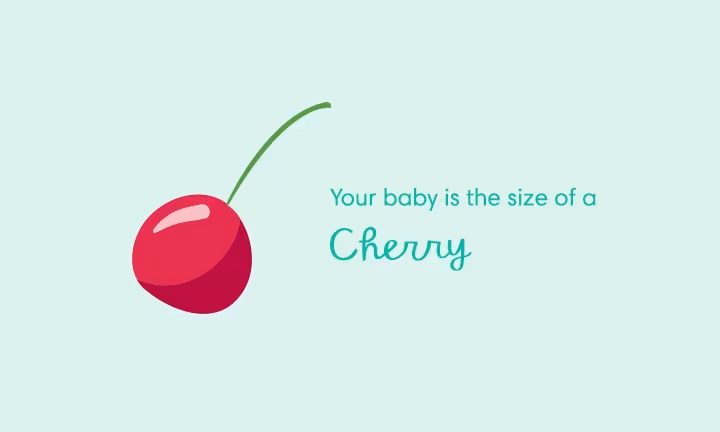
Your baby is the size of a
At 9 weeks pregnant, you’re nearing the end of your first trimester! During this exciting time, you may or may not be experiencing symptoms such as bloating, cramping, or spotting. Keep reading to learn more about being 9 weeks pregnant, including new symptoms, checklist items, and baby development updates.
Highlights at 9 Weeks Pregnant
Here’s a quick summary of some important highlights and developments to look forward to at 9 weeks pregnant:
9 Weeks Pregnant: Your Baby's Development
At 9 weeks pregnant, your little one is starting to take shape and looks more like a mini baby! Even the tail that was present in earlier weeks has almost disappeared. Other important developmental changes this week include the following:
Now that you’re 9 weeks pregnant, you might wonder if you can feel your baby move, whether that feeling consists of little flutters or gentle movements. Your little one is certainly moving, thanks to some recent muscle development, but you’ll have to wait until sometime in the second trimester to actually feel these movements.
Curious about what else is happening during your pregnancy? Download our Pregnancy Guide for advice and information on prenatal care, nutrition, weight gain, and more.
How Many Months Is 9 Weeks Pregnant?
Weeks are commonly used to gauge your stage of pregnancy, but perhaps you’re also curious about what month you’re in. Although there are different ways to group the 40 weeks of pregnancy into months, at 9 weeks pregnant, you’re thought to be in your third month of pregnancy, even if you haven’t noticed any belly bump or symptoms!
If you're up for a fun way to guess whether you're having a girl or a boy, check out this quiz!
How Big Is a Baby at 9 Weeks Pregnant?
At 9 weeks, your baby is about the size of a cherry! Your little one may now measure close to an inch long and may weigh about 1/8 of an ounce.
Your Baby: What Does 9 Weeks Pregnant Look Like?
Check out the illustration below to help you imagine how things are taking shape within the uterus when you are 9 weeks pregnant.

Your Body at 9 Weeks Pregnant
As your body continues to go through normal pregnancy changes, now is a great time to consult your healthcare provider about exercise during pregnancy. If you're already active, you may need to make some adjustments to your fitness routine. If you haven't been as active, you can begin with something safe and gentle to get you moving.
Moderate exercise will help you develop the strength and stamina you'll need during labor and delivery. Walking, prenatal yoga, swimming, and water aerobics are all excellent choices as they're gentle on your joints. In general, try to avoid activities that involve bouncing or sudden changes of direction, which could put too much strain on your joints. Consult your healthcare provider for advice about what type of exercise is right for you.
9 Weeks Pregnant: Your Symptoms
What “should” you be feeling at 9 weeks pregnant? This is a natural question, especially if you don’t feel pregnant or you're dealing with symptoms that come and go at 9 weeks pregnant. Here are some of the symptoms you may experience at this time:
How Big Is a Pregnant Belly at 9 Weeks?
Can you feel your baby bump at 9 weeks pregnant? Most likely, you won’t start showing or notice any difference in your belly’s size at 9 weeks, especially if this is your first baby or if you’re overweight or pregnant with twins. Symptoms and the way your body changes can be different during a second pregnancy. Still, remember, your little one is only the size of a cherry! Everyone is different, but, typically, a baby bump doesn’t usually show until around weeks 12 to 16, when your uterus starts to move outside your pelvis area.
What Does 9 Weeks Pregnant Look Like?
Check out the image below for a better idea of what your belly might look like around 9 weeks pregnant, when you’re in your third month of pregnancy.

9 Weeks Pregnant: Things to Consider
Now that you’re in your third month of pregnancy, there’s probably a lot on your mind—and many things to consider. From starting to research baby gear to adjusting your diet, check out our list below.
Tip for Partners Join your pregnant partner in some light exercise. Going on a walk, for a swim, or to a prenatal yoga class may be a good way for you both to get your daily exercise. It may also help to lift your partner’s mood and is a great way to spend some quality time together. |

9 Weeks Pregnant: Questions for Your Healthcare Provider
Even if you’ve only just found out you’re pregnant, you may wish to consult your healthcare provider about any questions or concerns you have in these early weeks. Some common questions at this time include:
FAQS AT A GLANCE
Everyone is different, so how someone “should” feel at 9 weeks pregnant is difficult to specify. There are several symptoms you might experience at this time, including morning sickness, fatigue, and mood swings, which can all impact the way you feel.
9 Weeks Pregnant: Your Checklist
As you work through this week of pregnancy and anticipate the weeks to come, consider the following to-do items:
□ Find out what your health insurance covers, or how to get care if you don't have insurance. Your healthcare provider's office is a good place to start, and you can also check Healthcare.gov for up-to-date information about programs and health plans that are available in your state.
□ Ask your healthcare provider to give you the green light on beginning a simple fitness routine or activity, if you're not already doing some form of exercise.
□ Have some fun with our Baby Name Generator. You've got plenty of time to choose a name you love!
9 weeks pregnant - checklist
How We Wrote This Article The information in this article is based on the expert advice found in trusted medical and government sources, such as the American Academy of Pediatrics and the American College of Obstetricians and Gynecologists. You can find a full list of sources used for this article below. The content on this page should not replace professional medical advice. Always consult medical professionals for full diagnosis and treatment.
- American College of Obstetricians and Gynecologists. Your Pregnancy and Childbirth: Month to Month, 6th ed. (Washington, DC: American College of Obstetricians and Gynecologists, 2015).
- Mayo Clinic. Guide to a Healthy Pregnancy, 2nd ed. (Rochester, MN: Mayo Clinic Press, 2018).
- ACOG. “Vulvovaginal Health.”
- ACOG. “Bleeding During Pregnancy.”
- ACOG. “Ultrasound Exams.”
- Cleveland Clinic. “Heartburn During Pregnancy.”
- Cleveland Clinic. “Fetal Development Stages of Growth.”
- Cleveland Clinic. “Hormonal Acne.”
- Cleveland Clinic. “Pregnancy Nutrition.”
- KidsHealth. “Find Care.”
- KidsHealth. “Week 9 Pregnancy.”
- KidsHealth. “Exercising in Pregnancy.”
- Mayo Clinic. “Symptoms of Pregnancy.”
- Mayo Clinic. “Second Trimester.”
- Mayo Clinic. “Pregnancy Week by Week.”
- Mayo Clinic. “Prenatal Care.”
13 Weeks Pregnant
At 13 weeks, your baby's organs are fully formed and hard at work, but there’s still lots more growing to do. Find out what else is happening this week.
Read more
11 Weeks Pregnant
At 11 weeks pregnant, you’re nearing the end of the first trimester. Discover what pregnancy symptoms are common around this time, and when they may subside.
Read more
4 Weeks Pregnant
At 4 weeks pregnant, implantation occurs, and the embryo is about the size of a poppy seed. Learn more about being 4 weeks pregnant.
Read more
10 Weeks Pregnant
At 10 weeks pregnant, discover how your baby’s developing and learn about the symptoms you might experience this week.
Read more
1, 2, and 3 Weeks Pregnant
Educate yourself on the very early signs of pregnancy, spanning from 1 to 3 weeks, with detailed insights. Understanding what to expect in those crucial time.
Read more
38 Weeks Pregnant
At 38 weeks, your pregnancy is almost full term. Given most babies aren’t born on their due dates, you could meet your little one any day now. Learn more here.
Read more
5 Weeks Pregnant
At 5 weeks pregnant, the placenta and umbilical cord are forming. Discover some of the most common pregnancy symptoms at 5 weeks.
Read more
20 Weeks Pregnant
Did you know that at 20 weeks, in addition to moving and kicking, most babies get the hiccups? Read more about this and your symptoms at 20 weeks pregnant!
Read more
6 Weeks Pregnant
At 6 weeks, lots of exciting developments are in the works! Learn about common pregnancy symptoms and get tips you can use at 6 weeks pregnant.
Read more
7 Weeks Pregnant
Find out how the embryo—now about the size of a blueberry—is developing at 7 weeks pregnant, and read up on the symptoms you may be experiencing.
Read more13 Weeks Pregnant
At 13 weeks, your baby's organs are fully formed and hard at work, but there’s still lots more growing to do. Find out what else is happening this week.
Read more11 Weeks Pregnant
At 11 weeks pregnant, you’re nearing the end of the first trimester. Discover what pregnancy symptoms are common around this time, and when they may subside.
Read more4 Weeks Pregnant
At 4 weeks pregnant, implantation occurs, and the embryo is about the size of a poppy seed. Learn more about being 4 weeks pregnant.
Read more10 Weeks Pregnant
At 10 weeks pregnant, discover how your baby’s developing and learn about the symptoms you might experience this week.
Read more1, 2, and 3 Weeks Pregnant
Educate yourself on the very early signs of pregnancy, spanning from 1 to 3 weeks, with detailed insights. Understanding what to expect in those crucial time.
Read more38 Weeks Pregnant
At 38 weeks, your pregnancy is almost full term. Given most babies aren’t born on their due dates, you could meet your little one any day now. Learn more here.
Read more5 Weeks Pregnant
At 5 weeks pregnant, the placenta and umbilical cord are forming. Discover some of the most common pregnancy symptoms at 5 weeks.
Read more20 Weeks Pregnant
Did you know that at 20 weeks, in addition to moving and kicking, most babies get the hiccups? Read more about this and your symptoms at 20 weeks pregnant!
Read more