18 Weeks Pregnant
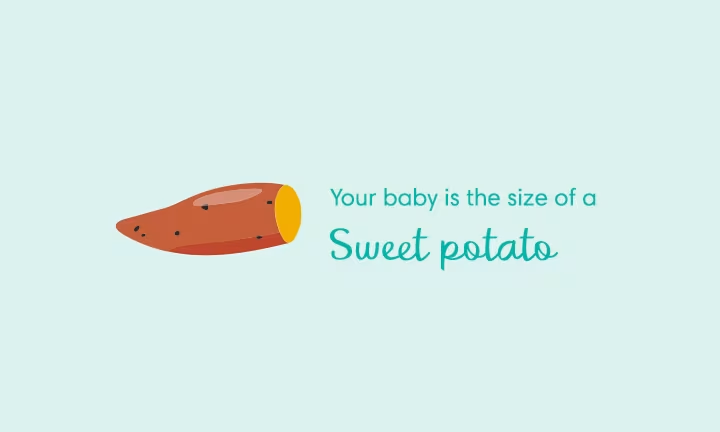
Your baby is the size of a
At 18 weeks pregnant, there may be some big and exciting changes in your symptoms, how you fee and your baby’s growth and development. Around this time is when milestones like feeling your baby move might occur, which is surely something to look forward to! We’ve included those common symptoms you may experience this week and added a few helpful insights and tips on what might occur at 18 weeks pregnant.
Highlights at 18 Weeks Pregnant
You've got a lot going on right now, and we've gathered a few highlights about being 18 weeks pregnant, so you know what to look forward to:
Pregnancy Weight Gain Calculator
Fill out your details:
18 Weeks Pregnant: Your Baby’s Development
The developments your little one is making right now are super exciting and important. Here's the scoop on what's happening inside your belly bump at 18 weeks pregnant:
How Many Months Is 18 Weeks Pregnant?
You’ve heard your pregnancy described in weeks, but how many months is that? Though there are various methods of assigning the 40 weeks of pregnancy into months, at 18 weeks pregnant you’re likely in your fifth month of pregnancy, even if you haven’t noticed any belly bump or symptoms!

How Big Is a Baby at 18 Weeks Pregnant?
When you’re 18 weeks pregnant, the fetus is around the size of a sweet potato, measuring about 14 centimetres long from crown to rump, and weighing around 7 ounces.
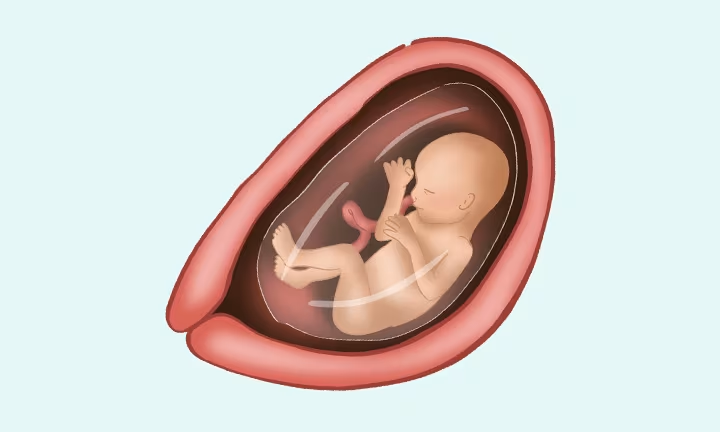
Your Baby: What Does 18 Weeks Pregnant Look Like?
The illustration below helps you visualize what your baby may look like inside your belly at 18 weeks pregnant:
Your Body at 18 Weeks Pregnant
At this stage of your pregnancy, you're experiencing changes in circulation, such as increased blood volume and rapidly expanding blood vessels, which can cause your blood pressure to drop. This can leave you feeling lightheaded if you’re not getting enough blood flow to your head and upper body.
You may also notice at 18 weeks pregnant that your feet are getting bigger. A part of this is due to swelling caused by water retention, known as edema, which can occur from the second trimester onward.
Hormones also play a part in growing feet. The pregnancy hormone relaxin, which relaxes your pelvic joints so your baby can fit through the birth canal, loosens the ligaments in your feet, causing the foot bones to spread. You can relieve the swelling with a footbath of cool water and by keeping your feet raised; don’t worry (and have fun!) if you need to head out shoe shopping for a bigger size. Or you can always ask other parents in your friend circle if you can borrow a bigger pair for the time being.
18 Weeks Pregnant: Your Symptoms
Are you asking yourself, “what pains should I feel at 18 weeks pregnant?” This is a common question and, luckily, you shouldn’t ever feel severe or consistent pain during pregnancy. If this happens to you, contact your healthcare provider right away.
But is it normal to be uncomfortable at 18 weeks pregnant? Every pregnancy is different, but at 18 weeks pregnant, here are some of the symptoms you may be experiencing; and yes, some might feel uncomfortable:
How Big Is a Pregnant Belly at 18 Weeks?
Every pregnancy is unique, so perhaps your baby bump is barely there at 18 weeks pregnant, or maybe it’s becoming pretty obvious by now. At 18 weeks pregnant and in the coming weeks, your uterus is expanding and growing up and out of your pelvis, which may also be affecting your centre of gravity.
If this is your first pregnancy, you may feel the baby begin to move inside your belly now or sometime soon. This fluttering feeling is known as quickening.
As your baby gets bigger, you may notice stronger movements and maybe even kicks in the weeks to come. Because each pregnancy is different, you may feel this movement earlier (this is common if it’s not your first baby) or in some cases even later. So, try not to worry if you don’t feel any baby movements at 18 weeks pregnant.
What Does 18 Weeks Pregnant Look Like?
For a better idea of what your belly might look like around 18 weeks pregnant, check out the image below.

18 Weeks Pregnant: Things to Consider
Your pregnancy is well underway at 18 weeks, so you may have a lot on your mind, from maintaining a healthy diet to dealing with pregnancy advice from every other expectant parent you meet. Here are some things to consider at 18 weeks pregnant:
Tip for Partners You and your pregnant partner might be feeling anxious about all the new changes in your life right now. Talk to your partner about how you’re feeling and encourage them to share how they’re feeling too. This can help you both understand each other better and work as a team throughout the pregnancy. |
18 Weeks Pregnant: Questions for Your Healthcare Provider
Your healthcare provider is always there to provide you with information and guidance throughout pregnancy, addressing any and all of your questions and concerns. Here are some questions you might want to ask at 18 weeks pregnant:
FAQS AT A GLANCE
Every pregnancy is unique, so you may or may not be feeling certain symptoms at any point in your journey. Still, it’s nice to know what to anticipate. Here are some symptoms you may experience at 18 weeks pregnant:
- Belly flutters as you feel your baby’s movements for the first time
- Dizzy spells
- Lower back pain
- Leg cramps
- Nasal congestion and nosebleeds
- Swollen feet.
18 Weeks Pregnant: Your Checklist
For a little help along your pregnancy journey, check out this to-do list:
☐ Adjust your diet in pregnancy and make a list of foods rich in omega-3s, adding them to your weekly shopping list.
☐ Start collecting books to read to your baby. Find ones you read and loved as a child, or head to the local library or bookstore.
☐ Think about baby names for your little one! Check out our various lists of baby names, as well as our Baby Name Generator for inspiration.
18 weeks pregnant - checklist
How We Wrote This Article The information in this article is based on the expert advice found in trusted medical and government sources, such as the American Academy of Pediatrics and the American College of Obstetricians and Gynecologists. You can find a full list of sources used for this article below. The content on this page should not replace professional medical advice. Always consult medical professionals for full diagnosis and treatment.
- American College of Obstetricians and Gynecologists. Your Pregnancy and Childbirth: Month to Month, 6th ed. (Washington, DC: American College of Obstetricians and Gynecologists, 2015).
- Mayo Clinic. Guide to a Healthy Pregnancy, 2nd ed. (Rochester, MN: Mayo Clinic Press, 2018).
- ACOG. “How Your Fetus Grows During Pregnancy.”
- American Pregnancy. “Dizziness During Pregnancy.”
- Cleveland Clinic. “Quickening in Pregnancy.”
- Columbia.edu. “Birth: Fetus to Neonate.”
- Mayo Clinic. “Fetal Development.”
- Mayo Clinic. “Low Blood Pressure.”
13 Weeks Pregnant
At 13 weeks, your baby's organs are fully formed and hard at work, but there’s still lots more growing to do. Find out what else is happening this week.
Read more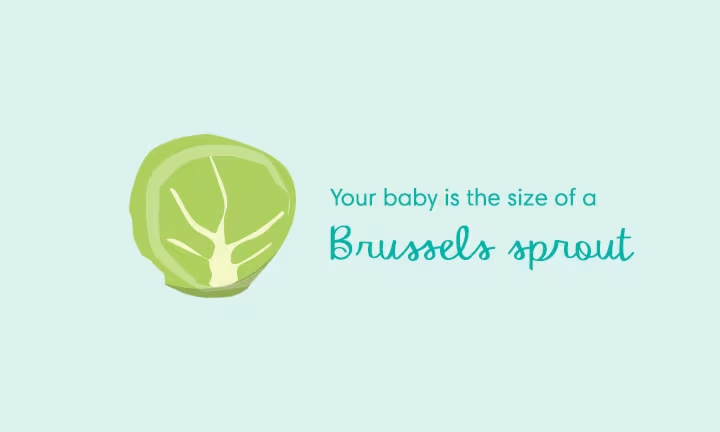
11 Weeks Pregnant
At 11 weeks pregnant, you’re nearing the end of the first trimester. Discover what pregnancy symptoms are common around this time, and when they may subside.
Read more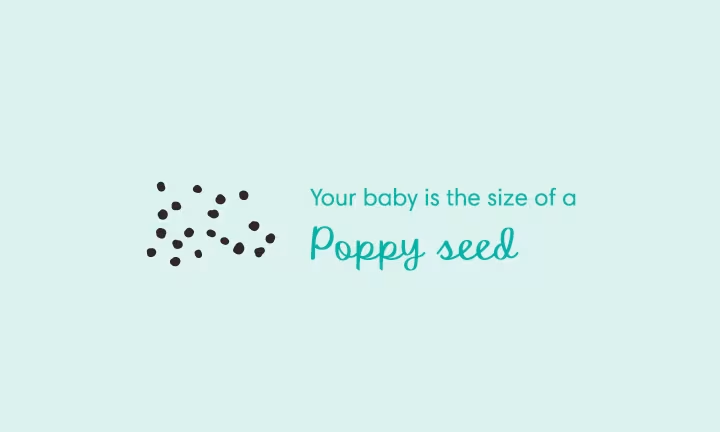
4 Weeks Pregnant
At 4 weeks pregnant, implantation occurs, and the embryo is about the size of a poppy seed. Learn more about being 4 weeks pregnant.
Read more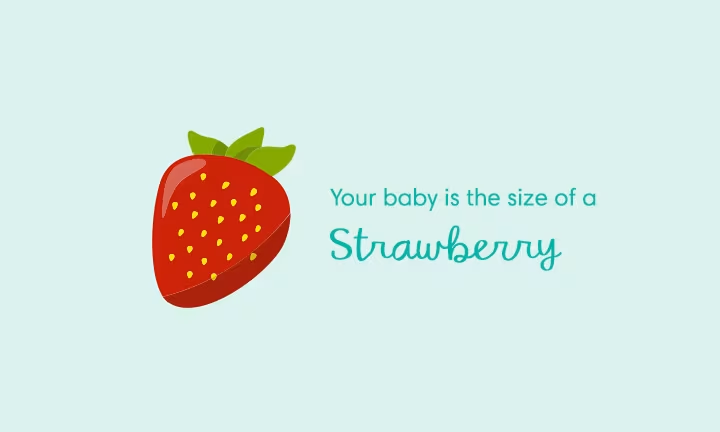
10 Weeks Pregnant
At 10 weeks pregnant, discover how your baby’s developing and learn about the symptoms you might experience this week.
Read more
1, 2, and 3 Weeks Pregnant
Educate yourself on the very early signs of pregnancy, spanning from 1 to 3 weeks, with detailed insights. Understanding what to expect in those crucial time.
Read more
38 Weeks Pregnant
At 38 weeks, your pregnancy is almost full term. Given most babies aren’t born on their due dates, you could meet your little one any day now. Learn more here.
Read more
5 Weeks Pregnant
At 5 weeks pregnant, the placenta and umbilical cord are forming. Discover some of the most common pregnancy symptoms at 5 weeks.
Read more
20 Weeks Pregnant
Did you know that at 20 weeks, in addition to moving and kicking, most babies get the hiccups? Read more about this and your symptoms at 20 weeks pregnant!
Read more
6 Weeks Pregnant
At 6 weeks, lots of exciting developments are in the works! Learn about common pregnancy symptoms and get tips you can use at 6 weeks pregnant.
Read more
7 Weeks Pregnant
Find out how the embryo—now about the size of a blueberry—is developing at 7 weeks pregnant, and read up on the symptoms you may be experiencing.
Read more13 Weeks Pregnant
At 13 weeks, your baby's organs are fully formed and hard at work, but there’s still lots more growing to do. Find out what else is happening this week.
Read more11 Weeks Pregnant
At 11 weeks pregnant, you’re nearing the end of the first trimester. Discover what pregnancy symptoms are common around this time, and when they may subside.
Read more4 Weeks Pregnant
At 4 weeks pregnant, implantation occurs, and the embryo is about the size of a poppy seed. Learn more about being 4 weeks pregnant.
Read more10 Weeks Pregnant
At 10 weeks pregnant, discover how your baby’s developing and learn about the symptoms you might experience this week.
Read more1, 2, and 3 Weeks Pregnant
Educate yourself on the very early signs of pregnancy, spanning from 1 to 3 weeks, with detailed insights. Understanding what to expect in those crucial time.
Read more38 Weeks Pregnant
At 38 weeks, your pregnancy is almost full term. Given most babies aren’t born on their due dates, you could meet your little one any day now. Learn more here.
Read more5 Weeks Pregnant
At 5 weeks pregnant, the placenta and umbilical cord are forming. Discover some of the most common pregnancy symptoms at 5 weeks.
Read more20 Weeks Pregnant
Did you know that at 20 weeks, in addition to moving and kicking, most babies get the hiccups? Read more about this and your symptoms at 20 weeks pregnant!
Read more