
34 Weeks Pregnant
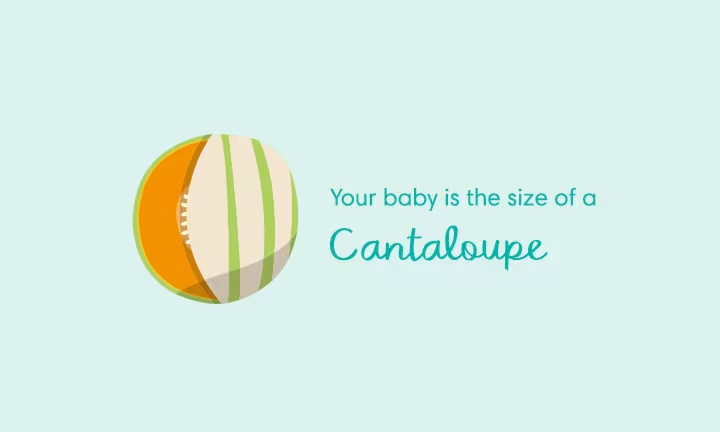
Your baby is the size of a
At 34 weeks pregnant, you're getting closer to the finish line. Your body continues to undergo remarkable changes at 34 weeks pregnant, especially your growing belly as your little one prepares for their big debut, and there may be various symptoms you encounter. Read on for more information and some support and guidance along the way.
Highlights at 34 Weeks Pregnant
Before we get into all the details, here are a few highlights and helpful to-dos for 34 weeks pregnant: • At 34 weeks, your baby is about the size of a cantaloupe! • Have you started doing kick counts yet? It’s a good idea to become familiar with your little one’s movements. • If you notice some pressure in your pelvic area, this may be your baby dropping down in preparation for birth. • Are you familiar with the difference between Braxton Hicks contractions and real labour contractions? If not, take time to learn the signs and symptoms. • Week 34 might be a good time to get serious about packing your hospital bag, preparing and freezing some meals, and speaking to your other children about the upcoming new arrival. • Still deciding on baby names? Check out our Baby Name Generator for some extra inspiration when searching for that elusive perfect name: [INSERT TOOL] BNG https://www.pampers.ca/en-ca/pregnancy/baby-names/find-your-baby-name <H2>34 Weeks Pregnant: Your Baby’s Development<H2> Check out what your little one is up to when you're 34 weeks pregnant: • At 34 weeks pregnant, your baby is getting bigger, and there’s less room in your womb for those cartwheels! As a result, you may notice that their movements feel different—possibly a little less forceful now—but you’ll still sense their wiggles and stretches. To keep track of your baby’s movements at 34 weeks and throughout your third trimester, you can start counting kicks and see how long it takes for you to feel 10 movements. Around 34 weeks pregnant, it’s common to feel 10 little kicks, pokes, or jabs within 2 hours; if you don’t, your baby may be sleeping, and you can try again when they’re awake or seem to be very active. • Around this time, your baby may also be dropping lower as they get ready to make their grand entrance. At 34 weeks pregnant or maybe in the weeks following, you may learn from your healthcare provider that your baby has moved into a head-down position in preparation for giving birth [https://www.pampers.ca/en-ca/pregnancy/giving-birth]. • Your baby is continuing to gain weight at 34 weeks pregnant and adding more fat under their skin. • Wondering what colour eyes your baby will have at birth? Eye colour depends on the amount of the pigment melanin that's present. Babies born with little or no pigment will have blue eyes, but that colour may change over the first year or two. If your little one has darker eyes at birth, the colour is less likely to change. You can read more about when a baby’s eyes change colour [https://www.pampers.ca/en-ca/newborn-baby/development/article/baby-eyes-color-vision-and-more]. • Speaking of giving birth, at 34 weeks, your due date is fast approaching, and you'll want to get a head start on those final preparations. Take this quiz to find out how close you are to being ready for your baby’s arrival [https://www.pampers.ca/en-ca/pregnancy/quizzes/baby-arrival-checklist-quiz]. • If you’re expecting a boy, his testicles are likely to have dropped into the scrotum by now. Sometimes, one or both of the testicles don’t descend before birth. If this is the case for your little one, the testicles are likely to drop by the time your baby is 6 months old. <H3>How Many Months Is 34 Weeks Pregnant?<H3> If you’re 34 weeks pregnant, what is that in months? You’re likely in your eighth month of pregnancy this week, and in just a couple of weeks, you’ll enter your final month! <H2>Baby's Size at 34 Weeks Pregnant<H2> If you’re wondering how big your baby is at 34 weeks pregnant, we’ve got the answer! At 34 weeks, the average fetus is about the size of a cantaloupe. They may measure around 30.5 centimetres (12 inches) long, crown to rump, and weigh more than 2 kilograms (4 1/2 pounds). <H3>Your Baby: What Does 34 Weeks Pregnant Look Like? <H3> Check out the illustration below for a rough idea of what your baby might look like and what position they may be in at 34 weeks. [INSERT VISUAL] [ALT TEXT] baby at 34 weeks pregnant [SOURCE] <H2>Your Body at 34 Weeks Pregnant<H2> At 34 weeks and in the coming weeks, watch out for any signs of preterm labour [https://www.pampers.ca/en-ca/pregnancy/pregnancy-symptoms/article/signs-of-preterm-labor-symptoms-and-causes]. Preterm labour is when labour starts before 37 weeks of pregnancy. Preterm labour and preterm birth are of concern because babies born too early may not be developed enough and are at high risk of having serious health problems. Some of the signs of preterm labour to look out for at 34 weeks and in the coming weeks include: • mild abdominal cramps with or without diarrhea • increased vaginal discharge • change in vaginal discharge—watery, bloody, or with more mucus • constant dull backache in the lower back • regular or frequent contractions • your water breaking, which could be a large flow or just a slow stream. If you’re 34 weeks pregnant with twins, it's especially important not to ignore these signs and symptoms of preterm labour. When you're expecting twins or multiples, you have about a 50 percent greater chance of going into early labour [https://www.pampers.ca/en-ca/pregnancy/giving-birth/article/early-symptoms-of-labor] than if you're having just one baby. Don’t hesitate to contact your healthcare provider if you have any questions or concerns, and learn more about your babies in our guide to being pregnant with twins [https://www.pampers.ca/en-ca/pregnancy/multiples/article/twin-pregnancy]. <H2>34 Weeks Pregnant: Your Symptoms<H2> At 34 weeks pregnant, here are some of the symptoms you may be experiencing: • Braxton Hicks contractions. It’s common to wonder, “What do contractions feel like at 34 weeks pregnant?” At 34 weeks and as you near your due date, Braxton Hicks contractions—also known as pre-labour or practice contractions—are more likely to get stronger and occur more often. It’s most likely nothing to worry about if these cramping sensations come at irregular intervals and subside when you change positions, but if you suspect that you’re having preterm labour contractions at 34 weeks pregnant, or in the weeks ahead, contact your healthcare provider right away. Your provider is the best person to assess your symptoms, but take the time to learn more about the difference between Braxton Hicks contractions and true labour contractions [https://www.pampers.ca/en-ca/pregnancy/giving-birth/article/braxton-hicks-contractions-what-are-they] as it might help put your mind at ease. • Enlarged breasts. Your breasts are probably becoming even fuller as you roll into the last few weeks of the third trimester [https://www.pampers.ca/en-ca/pregnancy/pregnancy-calendar/third-trimester]. This could cause some discomfort as the skin stretches and becomes itchy. By this time, you’re no stranger to the bit of relief a good moisturizing lotion can provide, but don’t forget that a properly fitting bra can also help. Many specialty underwear shops and department stores have bra fitting specialists who can help you find a bra that fits correctly and gives you maximum support. You may also have to adjust the strap length or use a bra clasp extender as the weeks progress as well as in the first few months of motherhood. • Pelvic pain. At 34 weeks pregnant, if your baby has dropped lower into your pelvis in preparation for birth, you might experience some symptoms like pelvic pain, lower-back discomfort, or pressure on your bladder. On the bright side, because your baby has dropped, you may feel less pressure on your diaphragm and lungs, making it easier to breathe. To help relieve any pelvic pain at 34 weeks pregnant, try to stay off your feet when you feel most uncomfortable. A soak in a warm bath may also give you some relief. If these ideas don’t work, speak to your healthcare provider for further advice on what to do. • Swollen ankles and feet. It’s not uncommon for women to have swelling in their ankles and feet at this stage of pregnancy. One way to help relieve the swelling is to reduce standing time as much as you can. Plus, when you’re sitting down, you can prop up your legs on a pillow. For those times when you’re feeling discomfort from the swelling and you can’t sit, wearing supportive shoes might help. • Constipation. Bowel movements that are hard to pass and infrequent may occur for many different reasons. Whatever the cause, they can be very uncomfortable! If you have constipation during pregnancy, some good tactics include drinking plenty of water, prune juice, or other fruit juices, as well as eating high-fibre foods like fruits, vegetables, whole grain bread, and bran cereal. Also, try walking or gentle exercises to help your digestive system. Finally, eating smaller, more frequent meals rather than a few large meals might improve your digestion and reduce heartburn at 34 weeks pregnant. <H2>How Big Is a Pregnant Belly at 34 Weeks?<H2> Although every bump is different, it’s likely your belly is pretty big at 34 weeks pregnant and may be causing you some discomfort, especially in your lower body. If your fundal height (the distance between your pubic bone and the top of the uterus) is measured this week, it may be around 34 centimetres (13 to 14 inches). <H3>What Does 34 Weeks Pregnant Look Like?<H3> For an insight into how your belly might look around 34 weeks pregnant, check out our visual below: [INSERT VISUAL] [ALT-TEXT] 34 weeks pregnant belly [SOURCE] <H2>34 Weeks Pregnant: Things to Consider<H2> Here are some things to consider at 34 weeks gestation as you get closer to your due date: • The arrival of a new baby may be hard for older siblings to handle, given all of the changes and disruptions in their daily routine. Parents put a lot of effort into preparing for the new baby and, after the baby arrives, caring for the newborn requires much of the family’s attention. It’s not unusual for older siblings to feel some jealousy and react to the changes by acting out. However, parents can take steps to ease the transition and prepare siblings for the new addition to the family. Talking about the pregnancy in a way that makes sense to older siblings is a good strategy. And including kids in preparation tasks, such as shopping for baby items, can help them adjust to the idea of your newborn joining the family. Be sure to spend one-on-one quality time with your older children so they understand they’re still valued and loved members of the family. • Calcium helps form and harden your baby’s bones and teeth, so getting enough calcium during pregnancy is a top priority, both for your baby's health and for your own. Your prenatal vitamins may contain calcium, but it’s also important to eat foods that are rich in calcium. Some great food sources other than dairy products like milk, cheese, and yogurt include sardines, leafy green vegetables like broccoli, and calcium-fortified juices. This means lactose-intolerant parents-to-be have great options for getting extra calcium, too! Learn more about how much calcium you need during pregnancy [https://www.pampers.ca/en-ca/pregnancy/healthy-pregnancy/article/healthy-diet-how-much-iron-and-calcium-is-too-much] and ask your healthcare provider whether you’re getting enough. Your provider may recommend you take a calcium supplement or get more by making changes to your diet. • The last thing you want to worry about when you go into labour is deciding what to throw into your bag to take to the hospital. That’s why we've compiled a comprehensive hospital bag packing checklist [https://www.pampers.ca/en-ca/pregnancy/giving-birth/article/what-to-pack-in-your-hospital-bag-go-bag-checklist] to make sure you don’t leave out those must-haves and nice-to-haves you might want to take with you on the big day. We list the things you, your partner, and your newborn baby will need. • If you have time this week, consider stocking up your pantry and pre-cooking batches of food to freeze now and enjoy after your baby’s arrival. Getting these tasks done in advance saves time later when you’re busy tending to your newborn. You could also set up some online grocery deliveries now so that they’re ready to go or ask friends and family members to pitch in with delivering some home-cooked meals during those first few weeks postpartum. • If you haven’t already, start thinking about what comfort measures you might like during labour, and ask your healthcare provider what options may be available to you. Your options could include medical pain relief like an epidural [https://www.pampers.ca/en-ca/pregnancy/giving-birth/article/epidural] as well as non-medical pain relief like massage or focused breathing. Tip for Partners Try to attend all the prenatal care appointments with your pregnant partner during these final weeks. The appointments are usually more frequent during this period and your partner might be grateful for the support. As you get closer to the birth of your child, it’s good for you both to prepare for it together as a team. <H2>34 Weeks Pregnant: Questions for Your Healthcare Provider<H2> Consider some of the following questions during your appointment with your healthcare provider at 34 weeks pregnant or in the coming weeks: • What is my baby’s position at 34 weeks pregnant? • Will I be offered an ultrasound at 34 weeks pregnant? • If my baby is breech[https://www.pampers.ca/en-ca/pregnancy/giving-birth/article/breech-baby], what are the chances they’ll move into a head-down position? • If my baby is breech closer to the due date, what would you recommend? • What are some symptoms not to ignore at 34 weeks pregnant? And what should I do if I experience vaginal bleeding, nausea or sudden vomiting, severe headaches, fever, or severe abdominal pain at 34 weeks pregnant? • What exercises or stretches can I do to help relieve the pressure on my lower back? • Is there an infant CPR training course you recommend? • Are lower abdominal cramps at 34 weeks pregnant a sign of labour? • Is labour near if my baby has dropped at 34 weeks pregnant?
34 Weeks Pregnant: Your Baby’s Development
At 34 weeks pregnant, your baby is getting bigger, and there’s less room in your womb for those cartwheels! As a result, you may notice that his movements feel different—possibly a little less forceful now—but you’ll still sense his wiggles and stretches.
Around this time, your baby may also be dropping deeper into your pelvis as he gets ready to make his grand entrance. As early as this week, or maybe in the weeks following, if you have an ultrasound or checkup with your healthcare provider, you may learn that your baby has moved into a head-down position in preparation for birth.
Wondering what colour eyes your baby will have when he's born? Eye colour depends on the amount of the pigment melanin that's present. Babies born with little or no pigment will have blue eyes, but that colour may change over the first year or two. If your little one has darker eyes at birth, the colour is less likely to change. You can read more about your baby’s eye colour here.
Speaking of birth, your due date is fast approaching, and you'll want to get a head start on those final preparations.
If you’re expecting a boy, his testicles are likely to have dropped into the scrotum by now. Sometimes, one or both of the testicles don’t descend before birth. If this is the case for your little one, the testicles are likely to drop by the time your baby is 6 months old.
RELATED PREGNANCY TOOL

Baby Name Generator
Filter by gender:
Filter by theme:
The Size of the Fetus at 34 Weeks Pregnant
At 34 weeks, the average fetus is about the size of a cantaloupe. He may measure nearly 12 inches long, crown to rump, and weigh more than 4 1/2 pounds.
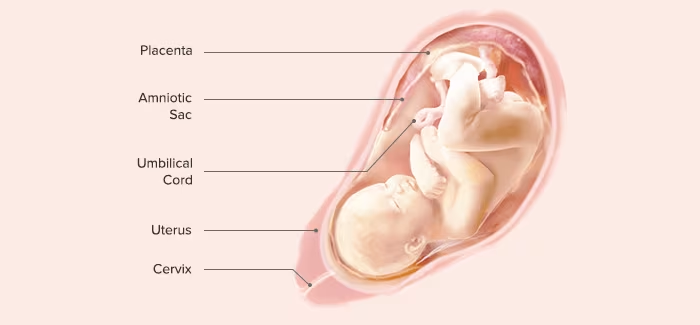
Check out the illustration below for a rough idea of what your little one might look like and how your baby may be positioned at 34 weeks.
Mom’s Body at 34 Weeks Pregnant
Wondering how many months pregnant you are at 34 weeks? As pregnancy doesn't fit neatly into full months, you could be around seven or eight months pregnant.
In the coming weeks, it’s a good idea to watch out for the signs of preterm labour. Preterm labour is when labour starts before 38 weeks of pregnancy.
Preterm labour and preterm birth are of concern because babies born too early may not be developed enough and are at high risk of having serious health problems.
Some of the signs of preterm labour include
If you’re 34 weeks pregnant with twins, it's especially important to watch for these signs. When you're expecting twins or multiples, you have about a 50 percent greater chance of going into early labour than if you're having just one baby.
Don’t hesitate to contact your healthcare provider if you have any questions or concerns, and learn more about your babies in our twin pregnancy FAQ.
34 Weeks Pregnant: Your Symptoms
At 34 weeks pregnant, here are some of the symptoms you may be experiencing:
34 Weeks Pregnant: Things to Consider
34 Weeks Pregnant: Ask Your Doctor
34 Weeks Pregnant: Your Checklist
34 weeks pregnant - checklist
How we wrote this article
The information in this article is based on the expert advice found in trusted medical and government sources, such as the American Academy of Pediatrics and the American College of Obstetricians and Gynecologists. The content on this page should not replace professional medical advice. Always consult medical professionals for full diagnosis and treatment.
13 Weeks Pregnant
At 13 weeks, your baby's organs are fully formed and hard at work, but there’s still lots more growing to do. Find out what else is happening this week.
Read more
11 Weeks Pregnant
At 11 weeks pregnant, you’re nearing the end of the first trimester. Discover what pregnancy symptoms are common around this time, and when they may subside.
Read more
4 Weeks Pregnant
At 4 weeks pregnant, implantation occurs, and the embryo is about the size of a poppy seed. Learn more about being 4 weeks pregnant.
Read more
10 Weeks Pregnant
At 10 weeks pregnant, discover how your baby’s developing and learn about the symptoms you might experience this week.
Read more
1, 2, and 3 Weeks Pregnant
Educate yourself on the very early signs of pregnancy, spanning from 1 to 3 weeks, with detailed insights. Understanding what to expect in those crucial time.
Read more
38 Weeks Pregnant
At 38 weeks, your pregnancy is almost full term. Given most babies aren’t born on their due dates, you could meet your little one any day now. Learn more here.
Read more
5 Weeks Pregnant
At 5 weeks pregnant, the placenta and umbilical cord are forming. Discover some of the most common pregnancy symptoms at 5 weeks.
Read more
20 Weeks Pregnant
Did you know that at 20 weeks, in addition to moving and kicking, most babies get the hiccups? Read more about this and your symptoms at 20 weeks pregnant!
Read more
6 Weeks Pregnant
At 6 weeks, lots of exciting developments are in the works! Learn about common pregnancy symptoms and get tips you can use at 6 weeks pregnant.
Read more
7 Weeks Pregnant
Find out how the embryo—now about the size of a blueberry—is developing at 7 weeks pregnant, and read up on the symptoms you may be experiencing.
Read more13 Weeks Pregnant
At 13 weeks, your baby's organs are fully formed and hard at work, but there’s still lots more growing to do. Find out what else is happening this week.
Read more11 Weeks Pregnant
At 11 weeks pregnant, you’re nearing the end of the first trimester. Discover what pregnancy symptoms are common around this time, and when they may subside.
Read more4 Weeks Pregnant
At 4 weeks pregnant, implantation occurs, and the embryo is about the size of a poppy seed. Learn more about being 4 weeks pregnant.
Read more10 Weeks Pregnant
At 10 weeks pregnant, discover how your baby’s developing and learn about the symptoms you might experience this week.
Read more1, 2, and 3 Weeks Pregnant
Educate yourself on the very early signs of pregnancy, spanning from 1 to 3 weeks, with detailed insights. Understanding what to expect in those crucial time.
Read more38 Weeks Pregnant
At 38 weeks, your pregnancy is almost full term. Given most babies aren’t born on their due dates, you could meet your little one any day now. Learn more here.
Read more5 Weeks Pregnant
At 5 weeks pregnant, the placenta and umbilical cord are forming. Discover some of the most common pregnancy symptoms at 5 weeks.
Read more20 Weeks Pregnant
Did you know that at 20 weeks, in addition to moving and kicking, most babies get the hiccups? Read more about this and your symptoms at 20 weeks pregnant!
Read more