
39 Weeks Pregnant
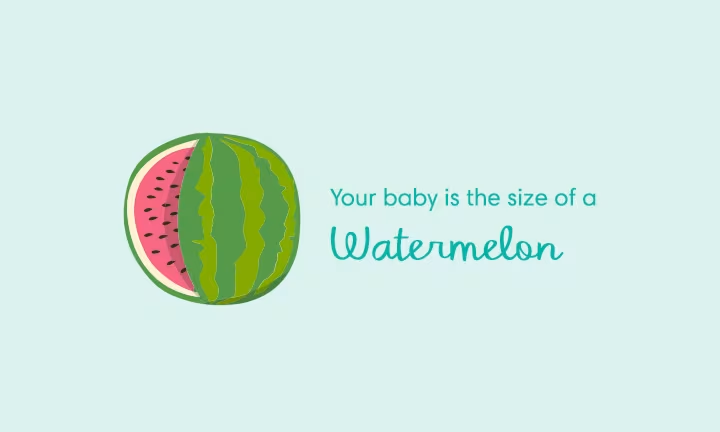
Your baby is the size of a
As you embark on the 39th week of pregnancy, you’re just about ready to meet your little one! You’ve been patient and nurtured your baby through the months, and now it's almost time to cradle them in your arms. Let’s explore all that might be happening at 39 weeks pregnant, including what your baby may be doing in preparation for birth, the symptoms you might experience, and some things to consider before labour begins.
Highlights at 39 Weeks Pregnant
During your 39th week of pregnancy, you’re counting down the days until your little one arrives. Here are a few highlights:
RELATED PREGNANCY TOOL

Baby Name Generator
Filter by gender:
Filter by theme:
39 Weeks Pregnant: Your Baby’s Development
You’ve made it this far, and now that you’re 39 weeks pregnant, your baby is considered full-term. The end of the third trimester, and your pregnancy, is now in sight.
39 Weeks Pregnant In Months
How many months is 39 weeks of pregnancy? At 39 weeks, you’re generally considered nine months pregnant.
Baby’s Size at 39 Weeks Pregnant
What fruit is your baby the size of at 39 weeks pregnant? They’re now about the size of a mini watermelon, but remember that healthy, happy babies come in many sizes. Space is probably at a premium inside your belly at 39 weeks!
Your Baby: What Does 39 Weeks Pregnant Look Like?
This illustration can give you a general idea of how your baby may be positioned at 39 weeks pregnant:

Your Body at 39 Weeks Pregnant
At this point, you may be more than ready for your baby to be born! Some may find it hard to walk, and moving around a lot or even a little might be a struggle at 39 weeks pregnant.
Try to move slowly and carefully and get as much rest as you can. Sleep might not come easily, so try to save your energy by getting some downtime or a short catnap during the day, if possible.
39 Weeks Pregnant: Your Symptoms
Here are some symptoms you might experience at 39 weeks pregnant:
How Big Is a Pregnant Belly at 39 Weeks?
Your uterus has expanded throughout your pregnancy. It started out weighing about two ounces before you were pregnant, and it’s now grown to weigh about two and a half pounds.
After you give birth, your uterus will gradually shrink back to its pre-pregnancy size and settle back down below your pubic bone. After about six weeks, it should be back to its normal size.
It’s also common to be concerned about your baby’s movements during this period. Many parents wonder if decreased fetal movement at 39 weeks is a sign of labour or if a baby moving a lot, or a feeling of pressure, could also be a sign of labour. Every baby is unique, and only you truly know your little one’s movements; however, it may be common to feel fewer kicks at 39 weeks pregnant and more rolls. If you’re concerned about your baby’s movements, contact your healthcare provider for more advice.
What Does 39 Weeks Pregnant Look Like?
If you want a general idea of how your belly might look around 39 weeks pregnant, take a peek at the image below.


39 Weeks Pregnant: Things to Consider
Here are some things you might like to consider during your 39th week of pregnancy:

Tip for Partners
|
39 Weeks Pregnant: Questions for Your Healthcare Provider
Don’t hesitate to ask your healthcare provider any of the following questions this week:
Can I expect skin-to-skin contact with my baby immediately after she’s born?
FAQs at a Glance
At thirty-nine weeks pregnant, it’s a good time to focus on relaxation and preparation for labour. Consider practicing relaxation techniques and ensuring your hospital bag is fully packed.
39 Weeks Pregnant: Your Checklist
Our short checklist may help you out at 39 weeks gestation:
How We Wrote This Article The information in this article is based on the expert advice found in trusted medical and government sources, such as the American Academy of Pediatrics and the American College of Obstetricians and Gynecologists. You can find a full list of sources used for this article below. The content on this page should not replace professional medical advice. Always consult medical professionals for full diagnosis and treatment.
- American College of Obstetricians and Gynecologists. Your Pregnancy and Childbirth: Month to Month, 7th ed. (Washington, DC: American College of Obstetricians and Gynecologists, 2021).
- Cleveland Clinic. “Kick Counts.”
- Cleveland Clinic. “Welcome to The Third Trimester.”
- NCBI. “Diagnosis and Management of Clinical Chorioamnionitis.”
- Women’s Health. “Stages of Pregnancy.”
13 Weeks Pregnant
At 13 weeks, your baby's organs are fully formed and hard at work, but there’s still lots more growing to do. Find out what else is happening this week.
Read more
11 Weeks Pregnant
At 11 weeks pregnant, you’re nearing the end of the first trimester. Discover what pregnancy symptoms are common around this time, and when they may subside.
Read more
4 Weeks Pregnant
At 4 weeks pregnant, implantation occurs, and the embryo is about the size of a poppy seed. Learn more about being 4 weeks pregnant.
Read more
10 Weeks Pregnant
At 10 weeks pregnant, discover how your baby’s developing and learn about the symptoms you might experience this week.
Read more
1, 2, and 3 Weeks Pregnant
Educate yourself on the very early signs of pregnancy, spanning from 1 to 3 weeks, with detailed insights. Understanding what to expect in those crucial time.
Read more
38 Weeks Pregnant
At 38 weeks, your pregnancy is almost full term. Given most babies aren’t born on their due dates, you could meet your little one any day now. Learn more here.
Read more
5 Weeks Pregnant
At 5 weeks pregnant, the placenta and umbilical cord are forming. Discover some of the most common pregnancy symptoms at 5 weeks.
Read more
20 Weeks Pregnant
Did you know that at 20 weeks, in addition to moving and kicking, most babies get the hiccups? Read more about this and your symptoms at 20 weeks pregnant!
Read more
6 Weeks Pregnant
At 6 weeks, lots of exciting developments are in the works! Learn about common pregnancy symptoms and get tips you can use at 6 weeks pregnant.
Read more
7 Weeks Pregnant
Find out how the embryo—now about the size of a blueberry—is developing at 7 weeks pregnant, and read up on the symptoms you may be experiencing.
Read more13 Weeks Pregnant
At 13 weeks, your baby's organs are fully formed and hard at work, but there’s still lots more growing to do. Find out what else is happening this week.
Read more11 Weeks Pregnant
At 11 weeks pregnant, you’re nearing the end of the first trimester. Discover what pregnancy symptoms are common around this time, and when they may subside.
Read more4 Weeks Pregnant
At 4 weeks pregnant, implantation occurs, and the embryo is about the size of a poppy seed. Learn more about being 4 weeks pregnant.
Read more10 Weeks Pregnant
At 10 weeks pregnant, discover how your baby’s developing and learn about the symptoms you might experience this week.
Read more1, 2, and 3 Weeks Pregnant
Educate yourself on the very early signs of pregnancy, spanning from 1 to 3 weeks, with detailed insights. Understanding what to expect in those crucial time.
Read more38 Weeks Pregnant
At 38 weeks, your pregnancy is almost full term. Given most babies aren’t born on their due dates, you could meet your little one any day now. Learn more here.
Read more5 Weeks Pregnant
At 5 weeks pregnant, the placenta and umbilical cord are forming. Discover some of the most common pregnancy symptoms at 5 weeks.
Read more20 Weeks Pregnant
Did you know that at 20 weeks, in addition to moving and kicking, most babies get the hiccups? Read more about this and your symptoms at 20 weeks pregnant!
Read moreJoin a World of Support
- TRACK WITH TOOLS
- LEARN WITH EXPERTS
- GET REWARDED
 TRACK WITH TOOLS
 LEARN WITH EXPERTS
 GET REWARDED