
26 Weeks Pregnant
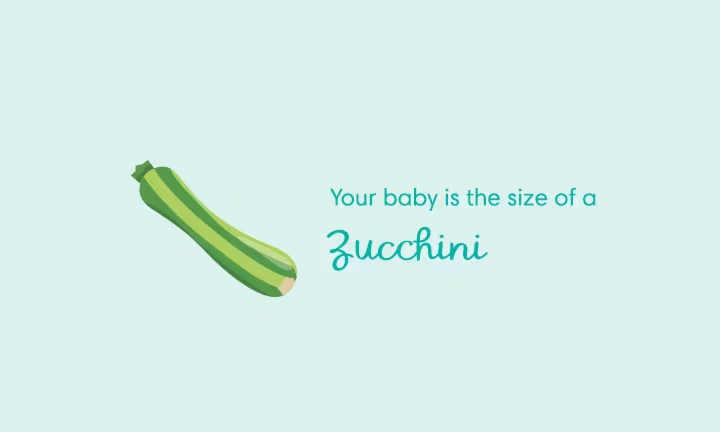
Your baby is the size of a
Welcome to the 26th week of your pregnancy journey. Here, you’ll discover valuable information about the symptoms you may experience at 26 weeks pregnant, the changes in your belly size, the thrilling movements of your baby, and even learn what month of gestation this week corresponds to. Keep reading to find out more about 26 weeks pregnant!
Highlights at 26 Weeks Pregnant
Here are a few highlights to keep in mind at 26 weeks pregnant:
RELATED PREGNANCY TOOL

Baby Name Generator
Filter by gender:
Filter by theme:
26 Weeks Pregnant: Your Baby’s Development
Here's what's going on with fetal development at 26 weeks pregnant:
When you're 26 weeks pregnant, you may want to start tracking your baby’s movements to keep track of their pattern, any changes, and if their fetal movements have decreased. Check with your healthcare provider beforehand to get individual advice. Download our pregnancy guide, which includes a movement tracker to keep a count of all those little kicks, flips, and pokes.
When you’re 26 weeks pregnant, your baby’s position may change from time to time, and in the coming weeks, it will be important to pay attention to the frequency of the fetal movements and whether they’ve decreased. Your healthcare provider will let you know more about how to do this.
How Many Months Is 26 Weeks Pregnant?
Pregnancies are often measured in weeks, so when it comes to months, it’s common to wonder “How far along is 26 weeks?” “How many months are in 26 weeks?” or “What month is 26 weeks?” At 26 weeks, you’re likely in your sixth month of pregnancy, although the 40 weeks of pregnancy can be divided into months in different ways.
What trimester is 26 weeks? The end of your second trimester is quickly approaching! In just two weeks, or from 28 weeks onward, you’ll begin your third trimester.
Baby's Size at 26 Weeks Pregnant
How big is a baby at 26 weeks? At 26 weeks pregnant, your baby is about the size of a zucchini. They could measure about 9 inches, from crown to rump, and your baby’s weight may be nearly 2 pounds at 26 weeks.
Your Baby: What Does 26 Weeks Pregnant Look Like?
Check out what your baby may look like during this week of pregnancy:

Your Body at 26 Weeks Pregnant
At 26 weeks pregnant, your belly and breasts are continuing to grow as you gain weight and your baby grows, so you’ll want to make sure you’re dressing comfortably and wearing a well-fitting, supportive bra with wide straps and ample cup coverage. A department store or specialty lingerie shop may stock a variety of maternity bras and provide professional fittings to make sure you’re wearing the right size.
You may notice stretch marks on your belly, breasts, and thighs at around 26 weeks pregnant. Unfortunately, you can't prevent these from appearing, but you can take some comfort in the fact that they usually fade after you give birth. If your expanding skin is itchy, try moisturizing more often.
If you experience any abdominal pain or discomfort around 26 weeks pregnant, your healthcare provider may suggest an ultrasound to check the amount of amniotic fluid in your uterus.

26 Weeks Pregnant: Your Symptoms
At 26 weeks pregnant, here are some of the symptoms you may be experiencing:
How Big Is a Pregnant Belly at 26 Weeks?
As your third trimester of pregnancy draws near, you may start seeing a big difference in the size of your belly bump at 26 weeks pregnant. Your baby is gaining a lot of weight during this period, so in turn, your uterus is expanding and becoming heavier. If your fundal height (distance from your pubic bone to the top of your uterus) is measured this week, it would be around 26 centimetres.
What Does 26 Weeks Pregnant Look Like?
For a general idea of what your belly might look like at 26 weeks pregnant, take a look at the image below.

26 Weeks Pregnant: Things to Consider
From creating a birth plan to picking out baby names, there’s a lot to consider as your pregnancy nears the third trimester. Check out our helpful list below:
Tip for Partners Your pregnant partner may have stretch marks on their bump and other areas right now, and it might be causing them some irritation. Offer to gently massage lotion or cream into their skin every evening. This can help relieve any itchiness and also help your partner relax and feel cared for. |
26 Weeks Pregnant: Questions for Your Healthcare Provider
FAQS AT A GLANCE
Your baby is still gaining weight and developing at 26 weeks gestation. At this point, your little one’s lungs are starting to produce surfactant, which will enable the lungs to function after birth. This will continue in the third trimester. Most of the major fetal developments will be complete by around 29 weeks, and your baby will continue to grow over the coming weeks.
26 Weeks Pregnant: Your Checklist
☐ If you’re interested, research local doulas to assist you with your labour and delivery. You can ask your healthcare provider, friends, and family to recommend someone.
☐ If you have started working on a birth plan, go over it with your healthcare provider and ask for their input and advice.
☐ Start looking for information and local resources to help with breastfeeding, such as breastfeeding classes and lactation consultants. It might help you feel more prepared if you do this research now, well before the birth of your baby.
☐ If you have a pet, you might like to ask your vet whether any special training or preparation needs to take place before you bring your baby home. Ask your vet how to safely go about introducing your pet dog or cat to your baby and what precautions you should take. Remember, experts advise against leaving a pet animal alone with a baby or young child.
26 weeks pregnant - checklist
How We Wrote This Article The information in this article is based on the expert advice found in trusted medical and government sources, such as the American Academy of Pediatrics and the American College of Obstetricians and Gynecologists. You can find a full list of sources used for this article below. The content on this page should not replace professional medical advice. Always consult medical professionals for full diagnosis and treatment.
- American College of Obstetricians and Gynecologists. Your Pregnancy and Childbirth: Month to Month, 6th ed. (Washington, DC: American College of Obstetricians and Gynecologists, 2015).
- American College of Obstetricians and Gynecologists. Your Pregnancy and Childbirth: Month to Month, 7th ed. (Washington, DC: American College of Obstetricians and Gynecologists, 2021).
- Mayo Clinic. Guide to a Healthy Pregnancy, 2nd ed. (Rochester, MN: Mayo Clinic Press, 2018).
- Cleveland Clinic. “Fetal development Stages of Growth.”
- Kids health. “Week 26.”
- Mayo Clinic. “Fundal Height.”
- Mayo Clinic. “High Fiber Foods.”
- Mayo Clinic. “Pregnancy Nutrition.”
- Mayo Clinic. “Second Trimester: What to Expect.”
- Mayo Clinic. “Twin Pregnancy.”
- NCBI. “Fetal Behavioural Responses to Maternal Voice and Touch.”
13 Weeks Pregnant
At 13 weeks, your baby's organs are fully formed and hard at work, but there’s still lots more growing to do. Find out what else is happening this week.
Read more
11 Weeks Pregnant
At 11 weeks pregnant, you’re nearing the end of the first trimester. Discover what pregnancy symptoms are common around this time, and when they may subside.
Read more
4 Weeks Pregnant
At 4 weeks pregnant, implantation occurs, and the embryo is about the size of a poppy seed. Learn more about being 4 weeks pregnant.
Read more
10 Weeks Pregnant
At 10 weeks pregnant, discover how your baby’s developing and learn about the symptoms you might experience this week.
Read more
1, 2, and 3 Weeks Pregnant
Educate yourself on the very early signs of pregnancy, spanning from 1 to 3 weeks, with detailed insights. Understanding what to expect in those crucial time.
Read more
38 Weeks Pregnant
At 38 weeks, your pregnancy is almost full term. Given most babies aren’t born on their due dates, you could meet your little one any day now. Learn more here.
Read more
5 Weeks Pregnant
At 5 weeks pregnant, the placenta and umbilical cord are forming. Discover some of the most common pregnancy symptoms at 5 weeks.
Read more
20 Weeks Pregnant
Did you know that at 20 weeks, in addition to moving and kicking, most babies get the hiccups? Read more about this and your symptoms at 20 weeks pregnant!
Read more
6 Weeks Pregnant
At 6 weeks, lots of exciting developments are in the works! Learn about common pregnancy symptoms and get tips you can use at 6 weeks pregnant.
Read more
7 Weeks Pregnant
Find out how the embryo—now about the size of a blueberry—is developing at 7 weeks pregnant, and read up on the symptoms you may be experiencing.
Read more13 Weeks Pregnant
At 13 weeks, your baby's organs are fully formed and hard at work, but there’s still lots more growing to do. Find out what else is happening this week.
Read more11 Weeks Pregnant
At 11 weeks pregnant, you’re nearing the end of the first trimester. Discover what pregnancy symptoms are common around this time, and when they may subside.
Read more4 Weeks Pregnant
At 4 weeks pregnant, implantation occurs, and the embryo is about the size of a poppy seed. Learn more about being 4 weeks pregnant.
Read more10 Weeks Pregnant
At 10 weeks pregnant, discover how your baby’s developing and learn about the symptoms you might experience this week.
Read more1, 2, and 3 Weeks Pregnant
Educate yourself on the very early signs of pregnancy, spanning from 1 to 3 weeks, with detailed insights. Understanding what to expect in those crucial time.
Read more38 Weeks Pregnant
At 38 weeks, your pregnancy is almost full term. Given most babies aren’t born on their due dates, you could meet your little one any day now. Learn more here.
Read more5 Weeks Pregnant
At 5 weeks pregnant, the placenta and umbilical cord are forming. Discover some of the most common pregnancy symptoms at 5 weeks.
Read more20 Weeks Pregnant
Did you know that at 20 weeks, in addition to moving and kicking, most babies get the hiccups? Read more about this and your symptoms at 20 weeks pregnant!
Read more