36 Weeks Pregnant
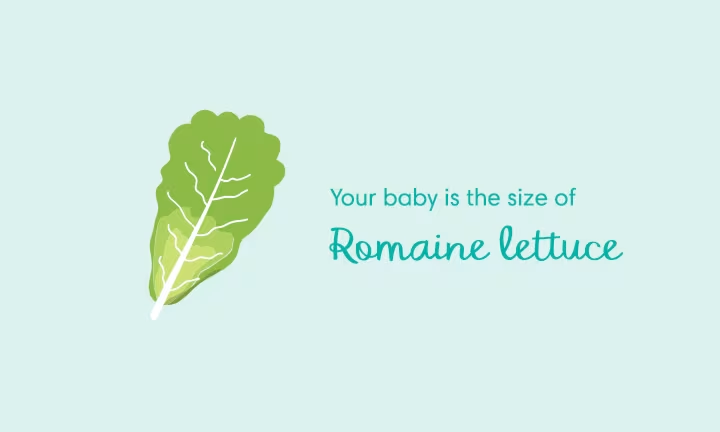
Your baby is the size of
36 Weeks Pregnant: Your Baby’s Development
Your baby will likely have gained about two pounds over the past few weeks, and he’s probably already reached the length he’ll be when he’s born.
He’s plumping up, becoming less wrinkled, and is generally starting to look more like the baby you’ll meet in just a few weeks. All that growth means he doesn’t have quite as much room to move around at this point, because he’s now taking up most of the available space inside the amniotic sac. However, you’ll probably still feel plenty of movement in there from time to time.
So, just how is your not-so-little guy going to make it through the birth canal when you go into labour?
At this point, his skull bones are developed, but they haven’t yet fused together. This means they can move and overlap, allowing the head and body to pass through your cervix and pelvis a little more easily.
For this reason, if you give birth vaginally, his head may look slightly misshapen when he’s born but will return to a more normal, rounded shape in a few hours or a few days. The skull bones will then fuse together over the first two years of his life.
RELATED PREGNANCY TOOL

Baby Name Generator
Filter by gender:
Filter by theme:
The Size of the Fetus at 36 Weeks Pregnant
At 36 weeks, the average fetus is about the size of a Romaine lettuce, and your baby may weigh about 6 pounds.
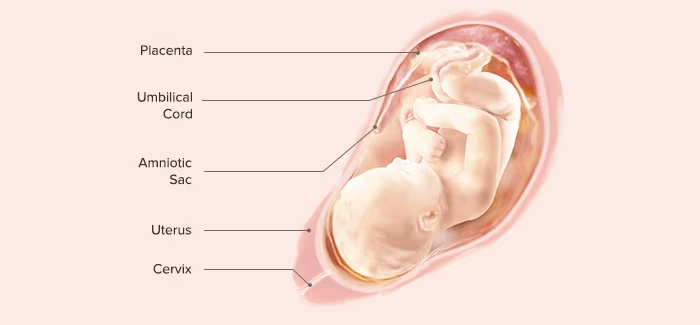
Although your healthcare provider would be able to confirm how your baby is positioned this week, here’s a general illustration of what your little one might look like and how your baby may be positioned at 36 weeks.
Mom’s Body at 36 Weeks Pregnant
You’re now 36 weeks pregnant, so just how many months along are you? Because the weeks of your pregnancy don’t always fit neatly into months, you could be considered 9 months pregnant, or even in your 10th month.
From now until you give birth, you may be going for checkups with your healthcare provider every week. During these appointments, you can expect to have your weight, blood pressure, and fundal height checked. Your provider may check your cervix to see if it’s preparing for labour.
Your baby’s position may also be checked at these checkups – your provider will be looking at whether your baby is in a head down position or not. If your baby is breech, your provider will advise whether an attempt should be made to turn your little one.
You may have started to notice extra pressure on your pelvis and bladder lately as your baby settles lower in your pelvis in preparation for birth. The upside of this change is that there is now less pressure on your diaphragm and lungs, which is why this change is sometimes called "lightening." Though you may be uncomfortable as your baby drops, at least you’ll be breathing a little easier!
36 Weeks Pregnant: Your Symptoms
At 36 weeks pregnant, here are some of the symptoms you may be experiencing:
36 Weeks Pregnant: Things to Consider
As your due date nears, here’s a collection of articles to read to help you get an idea of the kinds of things to look out for and expect as you go into labor:
36 Weeks Pregnant: Ask Your Doctor
36 Weeks Pregnant: Your Checklist
36 weeks pregnant - checklist
How we wrote this article
The information in this article is based on the expert advice found in trusted medical and government sources, such as the American Academy of Pediatrics and the American College of Obstetricians and Gynecologists. The content on this page should not replace professional medical advice. Always consult medical professionals for full diagnosis and treatment.
13 Weeks Pregnant
At 13 weeks, your baby's organs are fully formed and hard at work, but there’s still lots more growing to do. Find out what else is happening this week.
Read more
11 Weeks Pregnant
At 11 weeks pregnant, you’re nearing the end of the first trimester. Discover what pregnancy symptoms are common around this time, and when they may subside.
Read more
4 Weeks Pregnant
At 4 weeks pregnant, implantation occurs, and the embryo is about the size of a poppy seed. Learn more about being 4 weeks pregnant.
Read more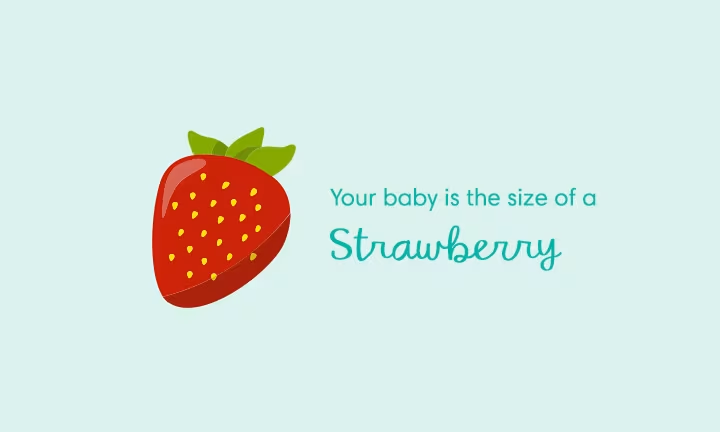
10 Weeks Pregnant
At 10 weeks pregnant, discover how your baby’s developing and learn about the symptoms you might experience this week.
Read more
1, 2, and 3 Weeks Pregnant
Educate yourself on the very early signs of pregnancy, spanning from 1 to 3 weeks, with detailed insights. Understanding what to expect in those crucial time.
Read more
38 Weeks Pregnant
At 38 weeks, your pregnancy is almost full term. Given most babies aren’t born on their due dates, you could meet your little one any day now. Learn more here.
Read more
5 Weeks Pregnant
At 5 weeks pregnant, the placenta and umbilical cord are forming. Discover some of the most common pregnancy symptoms at 5 weeks.
Read more
20 Weeks Pregnant
Did you know that at 20 weeks, in addition to moving and kicking, most babies get the hiccups? Read more about this and your symptoms at 20 weeks pregnant!
Read more
6 Weeks Pregnant
At 6 weeks, lots of exciting developments are in the works! Learn about common pregnancy symptoms and get tips you can use at 6 weeks pregnant.
Read more
7 Weeks Pregnant
Find out how the embryo—now about the size of a blueberry—is developing at 7 weeks pregnant, and read up on the symptoms you may be experiencing.
Read more13 Weeks Pregnant
At 13 weeks, your baby's organs are fully formed and hard at work, but there’s still lots more growing to do. Find out what else is happening this week.
Read more11 Weeks Pregnant
At 11 weeks pregnant, you’re nearing the end of the first trimester. Discover what pregnancy symptoms are common around this time, and when they may subside.
Read more4 Weeks Pregnant
At 4 weeks pregnant, implantation occurs, and the embryo is about the size of a poppy seed. Learn more about being 4 weeks pregnant.
Read more10 Weeks Pregnant
At 10 weeks pregnant, discover how your baby’s developing and learn about the symptoms you might experience this week.
Read more1, 2, and 3 Weeks Pregnant
Educate yourself on the very early signs of pregnancy, spanning from 1 to 3 weeks, with detailed insights. Understanding what to expect in those crucial time.
Read more38 Weeks Pregnant
At 38 weeks, your pregnancy is almost full term. Given most babies aren’t born on their due dates, you could meet your little one any day now. Learn more here.
Read more5 Weeks Pregnant
At 5 weeks pregnant, the placenta and umbilical cord are forming. Discover some of the most common pregnancy symptoms at 5 weeks.
Read more20 Weeks Pregnant
Did you know that at 20 weeks, in addition to moving and kicking, most babies get the hiccups? Read more about this and your symptoms at 20 weeks pregnant!
Read more