
37 Weeks Pregnant
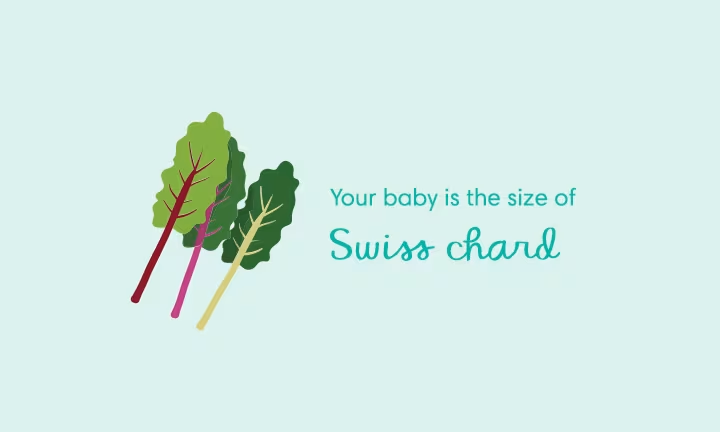
Your baby is the size of a
At 37 weeks pregnant, it’s only a couple more weeks until you’re considered full-term. It won’t be long until you meet your little one now! As you navigate this final stretch, you might notice your belly feeling particularly crowded, experiencing symptoms such as bloating, heartburn, and increased pressure. Let’s explore 37 weeks pregnant, including the symptoms you may experience, and how to prepare yourself for labour, birth and meeting- your new bundle of joy.
Highlights at 37 Weeks Pregnant
Before we get into all the details, here are a few highlights from 37 weeks gestation:
RELATED PREGNANCY TOOL

Baby Name Generator
Filter by gender:
Filter by theme:
37 Weeks Pregnant: Your Baby’s Development
As your due date gets nearer, your little one continues to grow and develop. Here’s what’s going on:
37 Weeks Pregnant in Months
Are you wondering “How many months is 37 weeks pregnant?” Though the weeks of pregnancy don't divide neatly into months, at 37 weeks, you’re generally considered 9 months pregnant.
Baby’s Size at 37 Weeks Pregnant
At 37 weeks gestation, the average baby is about the size of a bunch of Swiss chard. Last week your baby may have weighed over 6 pounds and is continuing to add about half an ounce a day.
Your Baby: What Does 37 Weeks Pregnant Look Like?
Wondering how your baby may be positioned at 37 weeks? Check out this illustration for a general idea of what you might see if you could take a peek inside:

Your Body at 37 Weeks Pregnant
At 37 weeks pregnant, your cervix may be beginning to dilate. When this starts to happen, you may lose the seal that protected your uterus from infection throughout your pregnancy. This seal is known as the mucus plug.
If, at 37 weeks pregnant, you notice some extra vaginal discharge that is clear, pinkish, or slightly bloody, this may be the mucus plug. Seeing this mucus discharge is an indication that labour is starting or is not far off.
Keep in mind, that you can lose the mucus plug hours, days, or even weeks before labour begins. Some pregnant people don’t notice it at all. Losing your mucus plug or having a little spotting isn't unusual around 37 weeks pregnant; however, if you notice severe bleeding now or at any time during your pregnancy, contact your healthcare provider.
At 37 weeks, if you do notice the mucus plug on your underwear or the toilet paper after you wipe, or if you are unsure if this means your labour has started, you may want to call your healthcare provider for advice on what to do next.
Twins and triplets are more likely to be born earlier than a single baby, so keep an eye out for signs of labour if you’re 37 weeks pregnant with twins or more.
37 Weeks Pregnant: Your Symptoms
At 37 weeks pregnant, here are some of the symptoms you may be experiencing:
Contractions. At 37 weeks pregnant, you could start to feel contractions that you might recognize as being similar to period-like cramps. Contractions that are irregular and go away when you move or change positions are likely Braxton Hicks “practice” contractions. But, if you feel contractions that occur regularly, get progressively stronger, and don’t subside if you move or change positions, you’ll want to call your healthcare provider for advice. It’s helpful to time your contractions and have this information ready to give your provider on the phone.
How Big Is a Pregnant Belly at 37 Weeks?
In this final month of pregnancy, your uterus will finish expanding—so, your belly might be as big as it gets at 37 weeks pregnant! When your pregnancy started, your uterus may have weighed around 2 ounces, whereas now, it may weigh about 2 ½ pounds.
What Does 37 Weeks Pregnant Look Like?
For a general idea of what your belly might look like at 37 weeks pregnant, take a look at the image below.

37 Weeks Pregnant: Things to Consider
Here are a few things to consider that might help you during this period of your pregnancy journey:
There are a variety of different birthing positions and comfort measures that can help during labour and delivery. Some require equipment such as a birthing bed, chair, pool, or ball. It’s a good idea to ask ahead of time what’s available at your hospital or birth centre. Also, try to keep an open mind; once you’re in labour, you may find that what you actually find comfortable is different from what you expected to find comfortable.

Tip for Partners As the due date draws near, you and your pregnant partner might be going through a busy time with all the preparations for your new arrival. If this is the case, take some time out to spend together. As a couple, engage in activities that you both enjoy, such as picnicking, watching movies, or having romantic dinners. |
37 Weeks Pregnant: Questions for Your Healthcare Provider
Here are a few questions you might like to ask your healthcare provider at 37 weeks pregnant:
FAQS AT A GLANCE
At 37 weeks pregnant, it's a good time to ensure that all preparations for your new arrival are in place. This includes finalizing the nursery setup, packing your hospital bag, and confirming your birth plan with your healthcare provider. Additionally, staying in regular contact with your healthcare provider for any last-minute guidance or concerns is important during this stage.
37 Weeks Pregnant: Your Checklist
Tick off some of these to-dos to ensure your prepared for your new arrival:
☐ If you haven’t already done so, pack your hospital bag. The big day could be just around the corner!
☐ Use our baby registry checklist to ensure you have all those essentials for your new arrival. It’s also a great way to show your loved ones or baby shower guests what you still need and want for your baby.
☐ Stock your freezer with meals you can simply heat up. After your baby is born, you may not have time to cook. ☐ Finalize your baby’s nursery, and get any baby essentials you haven’t bought yet. Keep in mind that most babies don’t arrive exactly on their due date and that yours could come early. ☐ Consider getting a waterproof sheet to protect your mattress in case your water happens to break while you’re asleep. ☐ If you see breastfeeding or pumping in your future, make sure you have several quality nursing bras. ☐ Start stocking up on diapers and collecting rewards points from our Pampers Rewards app.
37 weeks pregnant - checklist
How We Wrote This Article The information in this article is based on the expert advice found in trusted medical and government sources, such as the American Academy of Pediatrics and the American College of Obstetricians and Gynecologists. You can find a full list of sources used for this article below. The content on this page should not replace professional medical advice. Always consult medical professionals for full diagnosis and treatment.
- American College of Obstetricians and Gynecologists. Your Pregnancy and Childbirth: Month to Month, 7th ed. (Washington, DC: American College of Obstetricians and Gynecologists, 2021).
- Cleveland Clinic. “Pregnancy: Correct Posture & Body Mechanics.”
- Cleveland Clinic. “Your Guide To Healthy Pregnancy.”
- Kids Health. “Week 37.”
- March of Dimes. “What is Full Term?”
- Mayo Clinic. “Fetal Development: The 3rd Trimester.”
- Mayo Clinic. “Labor Positions.”
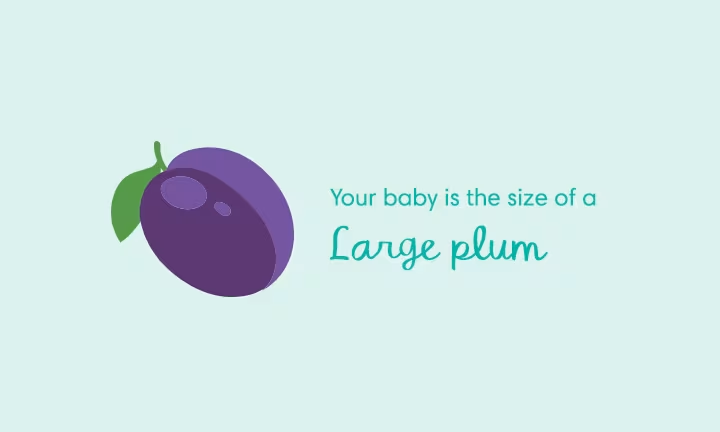
13 Weeks Pregnant
At 13 weeks, your baby's organs are fully formed and hard at work, but there’s still lots more growing to do. Find out what else is happening this week.
Read more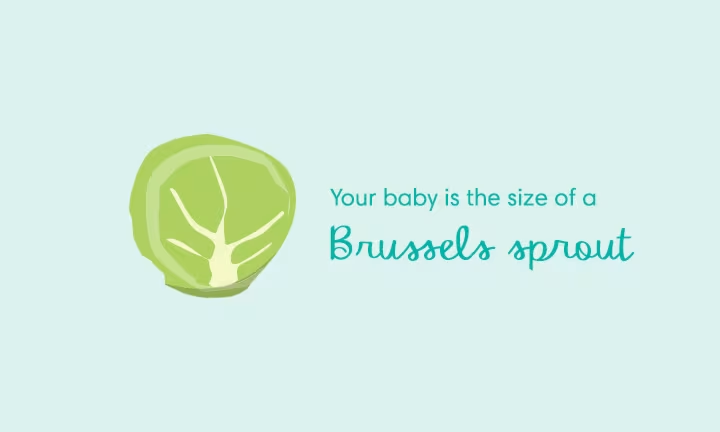
11 Weeks Pregnant
At 11 weeks pregnant, you’re nearing the end of the first trimester. Discover what pregnancy symptoms are common around this time, and when they may subside.
Read more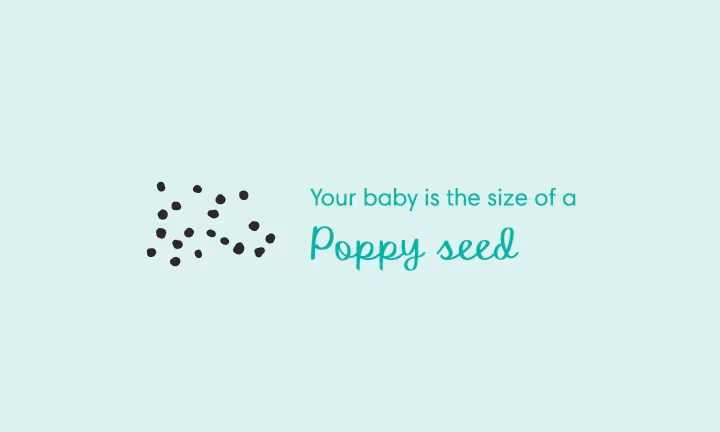
4 Weeks Pregnant
At 4 weeks pregnant, implantation occurs, and the embryo is about the size of a poppy seed. Learn more about being 4 weeks pregnant.
Read more
10 Weeks Pregnant
At 10 weeks pregnant, discover how your baby’s developing and learn about the symptoms you might experience this week.
Read more
1, 2, and 3 Weeks Pregnant
Educate yourself on the very early signs of pregnancy, spanning from 1 to 3 weeks, with detailed insights. Understanding what to expect in those crucial time.
Read more
38 Weeks Pregnant
At 38 weeks, your pregnancy is almost full term. Given most babies aren’t born on their due dates, you could meet your little one any day now. Learn more here.
Read more
5 Weeks Pregnant
At 5 weeks pregnant, the placenta and umbilical cord are forming. Discover some of the most common pregnancy symptoms at 5 weeks.
Read more
20 Weeks Pregnant
Did you know that at 20 weeks, in addition to moving and kicking, most babies get the hiccups? Read more about this and your symptoms at 20 weeks pregnant!
Read more
6 Weeks Pregnant
At 6 weeks, lots of exciting developments are in the works! Learn about common pregnancy symptoms and get tips you can use at 6 weeks pregnant.
Read more
7 Weeks Pregnant
Find out how the embryo—now about the size of a blueberry—is developing at 7 weeks pregnant, and read up on the symptoms you may be experiencing.
Read more13 Weeks Pregnant
At 13 weeks, your baby's organs are fully formed and hard at work, but there’s still lots more growing to do. Find out what else is happening this week.
Read more11 Weeks Pregnant
At 11 weeks pregnant, you’re nearing the end of the first trimester. Discover what pregnancy symptoms are common around this time, and when they may subside.
Read more4 Weeks Pregnant
At 4 weeks pregnant, implantation occurs, and the embryo is about the size of a poppy seed. Learn more about being 4 weeks pregnant.
Read more10 Weeks Pregnant
At 10 weeks pregnant, discover how your baby’s developing and learn about the symptoms you might experience this week.
Read more1, 2, and 3 Weeks Pregnant
Educate yourself on the very early signs of pregnancy, spanning from 1 to 3 weeks, with detailed insights. Understanding what to expect in those crucial time.
Read more38 Weeks Pregnant
At 38 weeks, your pregnancy is almost full term. Given most babies aren’t born on their due dates, you could meet your little one any day now. Learn more here.
Read more5 Weeks Pregnant
At 5 weeks pregnant, the placenta and umbilical cord are forming. Discover some of the most common pregnancy symptoms at 5 weeks.
Read more20 Weeks Pregnant
Did you know that at 20 weeks, in addition to moving and kicking, most babies get the hiccups? Read more about this and your symptoms at 20 weeks pregnant!
Read more